
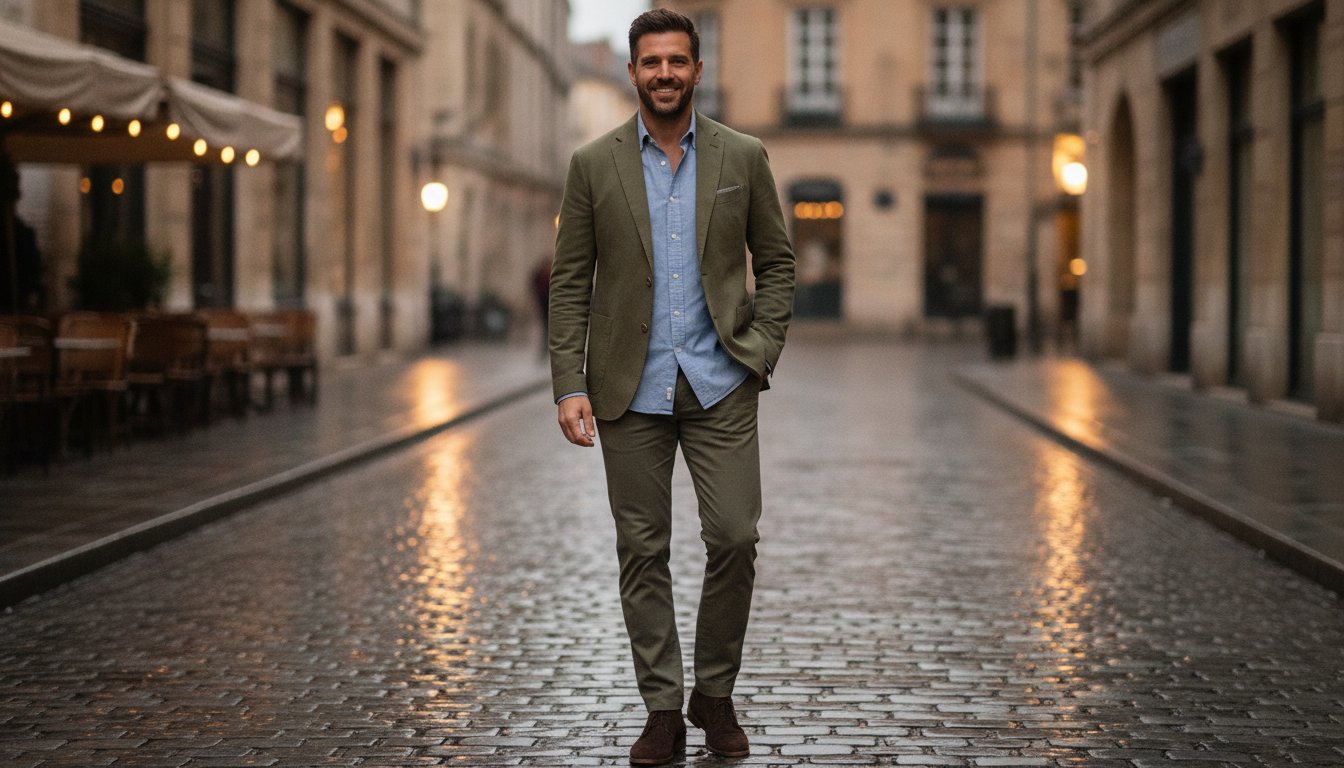
Most advice on casual blazers starts in the wrong place. It tells you how to dress down a formal jacket, then acts surprised when the result looks conflicted. A blazer doesn't become casual because you add jeans. It becomes casual because its construction, fabric, and proportions were right from the start.
That shift matters if you care about personal presence and cost-per-wear math. The right blazer isn't a costume change for one type of outing. It's a strategic piece that can move between lunch, travel, informal meetings, and dinner without looking as if you came from a boardroom or tried too hard to avoid one.
Redefining the Casual Blazer
A casual blazer isn't a formal garment in disguise. It's a separate category with its own job. The difference sounds subtle, but it changes every buying decision you make.
Most failed outfits happen because people reach for a suit jacket, swap the matching trousers for denim, and expect context flexibility to appear on its own. It rarely does. The jacket keeps broadcasting office signals, while the rest of the outfit tries to mute them.
A better approach is to treat the blazer as a foundation piece. It should be able to sit over a knit polo, an oxford shirt, or a clean tee without forcing the rest of the look into compensation mode. If the jacket only works when everything around it is carefully “dressed down,” it isn't doing enough.
Stop thinking in terms of dressing down
The useful question isn't “How do I make this blazer casual?” It's “Was this blazer built for casual use in the first place?” That means looking at shoulder softness, fabric behavior, pocket style, and how naturally it sits on the body.
If you want a helpful outside reference on how to wear a blazer casually, Cedar & Lily Clothier offers a solid starting point. The key is to go one step further and judge the garment as a long-term tool, not just an outfit add-on.
A blazer earns its place when it reduces decision-making. You should be able to reach for it often, not work around it carefully.
Think in systems, not outfits
A strong casual blazer multiplies your options because it supports different levels of polish. It can add professional authority to denim, restraint to textured trousers, or structure to a simple tee.
That's why the category is misunderstood. People shop it emotionally, then wear it tactically. The order should be reversed. Buy for context flexibility first, and the ease follows.
The Structural Anatomy of a Casual Blazer
Before you pair a blazer with anything, inspect the jacket itself. Casual credibility comes from construction, not styling tricks.

Start with the shoulder
The cleanest marker is a soft-shouldered or unstructured build. The casual blazer moved decisively toward unstructured cotton or linen options in a 2025 shift described by Westwood Hart, which also notes the move away from heavily structured worsted wool associated with formal business dress (Westwood Hart on unstructured casual blazers).
That change matters because soft construction lets the jacket move with the body instead of imposing shape from the outside. It reads easier, less ceremonial, and more intentional in everyday settings.
Look for these signs:
- Soft shoulder line with little or no visible padding
- Patch pockets rather than sleeker formal pocket treatments
- Less rigid internal structure, especially if the jacket is unlined or lightly lined
Get the sleeve length right
This is the technical detail people miss most often. The cuff relationship does more to signal intent than most color choices.
The measurement is specific. Expose exactly 1 to 1.5 cm of shirt cuff, approximately 0.5 inches, and the blazer reads relaxed rather than formal. A formal business jacket typically shows zero cuff exposure. The blazer sleeve itself should end where the wrist meets the hand, which keeps the line clean and prevents the jacket from dragging the silhouette downward (DET Shirts on blazer cuff exposure).
Practical rule: If the sleeve is too long, the entire outfit feels heavier and more corporate, even when everything else is casual.
Fabric decides the conversation
Fabric determines whether the blazer feels natural with casual clothes. Cotton, linen, and textured wool blends tend to project a more relaxed vibe than crisp business cloth. They crease, drape, and move in ways that support ease rather than rigidity.
A useful comparison looks like this:
| Construction detail | Reads casual | Reads formal |
|---|---|---|
| Shoulder | Soft, natural line | Padded, sharp line |
| Pocket style | Patch pockets | Sleeker business pockets |
| Fabric | Cotton, linen, textured wool blends | Crisp worsted wool |
| Interior | Unlined or light structure | Fully lined, more rigid |
If one of these markers is off, the blazer can still work. If all of them are off, you're usually trying to repurpose office clothing.
Selecting the Right Foundation Pieces
Once the jacket is right, the rest becomes easier. The goal isn't to “casualize” the blazer with random basics. It's to create proportion and texture that make the outfit feel coherent.

Use the balance rule
One of the clearest principles in casual blazer styling is the balance rule. If the blazer is oversized or boxy, the jeans should be slim to preserve shape. If the blazer is more fitted, looser straight-leg jeans work well because they keep the outfit from feeling top-heavy (YouTube guidance on blazer and jeans balance).
That doesn't mean every outfit needs denim. It means every outfit needs proportional logic.
A quick decision guide helps:
- Boxy blazer pairs best with cleaner, narrower trousers
- Trim blazer can handle more volume below
- Heavy fabric up top needs visual lightness somewhere else
- Relaxed trousers need a jacket that still gives the body definition
Choose denim and trousers with restraint
Skinny jeans often make a blazer look dated because the contrast is too abrupt. The jacket has visual mass, while the trouser line disappears. Straight-leg and barrel-leg shapes usually create a stronger foundation because they mirror the blazer's weight more naturally.
Dark denim is the safest route when you want professional authority without office formality. Lighter washes can work, but they ask more of the rest of the outfit. Shoes, knitwear, and the blazer's texture all have to support the choice.
Texture does more than color
It's easy to overthink color and overlook the importance of surface. A blazer over a flat, glossy shirt can look businesslike even when the fit is casual. A blazer over an oxford cloth shirt, fine merino knit, or a substantial cotton tee immediately feels more grounded.
Smooth fabric with smooth fabric often looks too composed. Texture introduces ease without making the outfit careless.
Try combinations like these:
- Linen blazer with a knit polo for a softer frame
- Textured wool blazer with dark denim for controlled contrast
- Cotton blazer over an oxford shirt when you want polish without stiffness
The strongest pairings don't fight the blazer. They support its role as a strategic piece that can move across settings.
Navigating the Oversized Versus Fitted Dilemma
The oversized blazer has created a real split in advice. One camp treats any extra volume as sloppy. The other acts as if proportion no longer matters. Both are incomplete.

Oversized only works when the cut is intentional
An oversized blazer should still sit correctly at the key anchors of the body. The drape can be generous, but the garment can't look as if you borrowed the wrong size. Soft construction helps because it allows volume without the aggressive architecture that makes a bigger jacket look accidental.
The contradiction in current advice is clear. 70% of style advice for men over 40 warns against ripped jeans, yet trend-conscious shoppers are also pairing oversized luxury blazers with distressed denim for a more high-fashion, street-style effect. Existing guides often don't resolve that tension for people who want refinement and ease at the same time (Jag Jeans on casual blazer contradictions).
Refinement comes from the anchors
If you want to wear an oversized blazer casually without losing authority, keep a few anchors disciplined:
- Neckline should stay clean. A sharp crewneck tee, knit polo, or fine gauge knit helps.
- Trouser line should be deliberate. Too much volume above and below becomes shapeless.
- Footwear should finish the argument. Loafers, minimal sneakers, or clean boots create control.
A useful parallel exists in accessories. The same principle that makes large silhouettes work in clothing also applies to jewelry. A guide on how to wear oversized earrings confidently makes the same underlying point: scale only looks elegant when the surrounding elements are edited.
Oversized isn't the opposite of tailored. The best oversized pieces are tailored differently.
Fitted doesn't mean rigid
A fitted blazer still works well, but it needs modern context. If the jacket is close to the body, give it some room elsewhere. Straight trousers, relaxed denim, and softer layers keep the look current.
The test is simple. Oversized should look chosen. Fitted should look easy. If either one feels strained, the proportions are wrong.
Practical Scenarios for Maximum Context Flexibility
Theory matters, but daily life decides whether a blazer deserves space in your closet. The jacket needs to function across real situations without constant adjustment.
Weekend brunch
A linen-blend blazer over a knit polo with straight-leg trousers and clean sneakers works because every piece shares the same relaxed intent. The knit softens the formality of the collarless layer underneath, while the sneakers keep the outfit from looking rehearsed.
It's common for individuals to overdress by mistake. They choose a crisp shirt and hard shoes, then wonder why the blazer feels too serious. Brunch usually rewards ease, not ceremony.
Creative client meeting
A textured wool blazer with dark denim and leather loafers gives you professional authority without resorting to corporate signals. The denim lowers the temperature. The loafers keep the meeting from drifting into weekend territory.
For readers who want more practical pairing logic in this area, Dandylion Style offers expert tips for smart casual combinations that align well with this approach.
The reason this combination works is contrast. The blazer brings structure. The denim introduces informality. The loafers keep both in conversation.
Refined travel uniform
An unstructured blazer makes sense in travel because it functions more like a light outer layer than a formal jacket. Wear it over a quality tee with comfortable trousers and understated shoes. It gives shape when the rest of the outfit is built for movement.
What matters here is tolerance. A travel blazer has to look better with a little wear, not worse. If a piece needs constant smoothing, careful folding, and visual babysitting, it isn't serving the role properly.
The best casual blazer outfit is often the one that survives a long day without needing to be corrected.
These scenarios all point to the same standard. A blazer should adapt to the setting while preserving your presence. That's context flexibility in practice.
Investment Protection for Your Casual Blazer
A soft, unstructured blazer asks for a different ownership mindset than a formal jacket. You're not preserving museum perfection. You're protecting shape, fabric integrity, and extended lifespan while allowing the piece to live.

Protect the shoulder and the fabric
One unresolved issue in the market is maintenance frequency. A key unanswered question for luxury shoppers is how often unstructured blazers need attention, especially when casual use invites a more rumpled attitude. As noted in discussion summarized by Dressed for My Day, some people treat them like light jackets and accept that they shouldn't be feared if they crease, but that can conflict with owning a piece as a long-term investment (Dressed for My Day on casual blazer maintenance concerns).
That uncertainty is exactly why handling matters. Focus on process, not perfection:
- Use a wide hanger so soft shoulders keep their line
- Steam instead of pressing when the fabric only needs release, not a sharp crease
- Spot clean early before a minor mark becomes a cleaning decision
- Give the blazer rest between wears so fibers can recover naturally
Lower the cost-per-wear through better handling
Pressing too often can flatten the character that makes an unstructured blazer useful in the first place. On the other hand, neglect shows quickly on linen, cotton, and softer wool. The middle ground is disciplined, light-touch care.
For a broader framework on seasonal buying and ownership logic, theFeinheit has a helpful perspective on strategic summer investment and cost-per-wear foundation.
The point isn't to make the blazer look untouched. It's to keep it looking intentional. That's investment protection. When a piece holds its shape, keeps its surface character, and still fits your life, the cost-per-wear math takes care of itself.
Conclusion
At theFeinheit, luxury is about finding pieces that multiply your options, not consume your budget. One strategic investment beats five impulse purchases. Explore our collection of over 13,000 products from 160+ leading brands to build wardrobe infrastructure that endures. Discover your power at theFeinheit.
Feinheit FZ LLC helps discerning shoppers make sharper buying decisions through a global edit of fashion, accessories, and beauty grounded in context flexibility, craftsmanship, and long-term value. Explore Feinheit FZ LLC to find strategic pieces that strengthen personal presence and justify their place over time.
