Understanding What Makes a Brand Luxury in Today's Market
Trying to define what makes a brand “luxury” can feel like trying to bottle lightning. Is it just a steep price tag? Or is it something more profound? At its heart, a true luxury brand offers more than just a product; it sells an identity, a story of masterful skill, and a sense of aspiration. Think of it less as buying an object and more as joining an exclusive world built on heritage and excellence.
Before diving into luxury, it helps to grasp the fundamentals of strong e-commerce branding, as these principles apply to all successful companies. However, luxury brands play a different game entirely. They don’t just sell you a watch; they share the legacy of an artisan who poured months into perfecting its intricate movement. They don’t just offer a handbag; they present a piece of history. This is the critical distinction that separates a Rolex or Hermès from other high-quality, premium goods. They are not just better; they are irreplaceable in the customer’s mind.
The Cornerstones of Modern Luxury
So, what are the pillars holding up this perception of supreme value? It comes down to a few key elements, carefully managed over decades, that blend to create an irresistible allure. These aren't happy accidents but the result of deliberate, long-term strategy. The most admired luxury houses have perfected this mix of artistry and business.
Here are the key characteristics:
- Exceptional Craftsmanship: This isn't just about being well-made. It's the visible proof of human expertise, the use of rare materials, and a fanatical attention to detail that mass production simply cannot match.
- Powerful Heritage and Storytelling: Luxury brands are the guardians of a compelling narrative. They weave their products into a rich history, whether it’s a century-old watchmaking dynasty or a groundbreaking fashion house.
- Strategic Scarcity: Rarity creates desire. By intentionally limiting production, introducing waitlists, or releasing limited editions, these brands cultivate an aura of exclusivity that makes their products highly coveted.
- An Elevated Experience: Every interaction is meticulously designed to reinforce the brand's worth. From the moment a client walks into a boutique to the after-sales service, the goal is to make the owner feel uniquely valued.
The Global Appetite for Authenticity
This unwavering focus on heritage and craftsmanship remains the core of what defines a luxury brand, creating a perception of unmatched quality and distinction. The global hunger for these qualities is clear. The luxury fashion market, for instance, was valued at approximately $201.6 billion in 2023. Projections show it expanding to $238 billion by 2025, largely powered by growing demand for authentic, prestigious brands in areas like the Asia-Pacific region. You can find more details on these figures in the latest trends in luxury goods statistics.
The chart below shows the steady upward trend in global revenue for the luxury goods market.
This data confirms that the appeal of luxury is not just stable but growing. It’s driven by a deep consumer desire for products that offer genuine substance and a story worth telling.
The Psychology Behind Premium Pricing That Actually Works
In a typical business, pricing is a simple formula: take the cost of production, add a healthy margin, and you have your price. But in the world of luxury, that math is thrown out the window. For these brands, a higher price tag doesn't just fail to scare customers away; it often makes the product even more appealing. This isn’t about picking a random high number; it’s about a sharp understanding of human psychology, where price is a signal for worth, exclusivity, and superior quality.
Think of it this way: a mass-market product’s price tells you what it costs to make and sell. A luxury product’s price tells you what it represents. When a brand like Patek Philippe or Rolls-Royce sets a price, they’re not just covering the cost of leather and steel. They are pricing the brand's history, the countless hours of an artisan's skilled labor, and the undeniable status that comes with owning one of their creations. This creates a psychological anchor, positioning the item not as a simple buy but as a major acquisition.
The Veblen Effect in Action
This seemingly backward logic is a real economic principle known as the Veblen Effect, where demand for an item actually increases as its price goes up. The high price tag becomes a core part of its appeal, signaling that the owner is part of a select, exclusive club. It’s a very fine line to walk. A price that’s too low or accessible can weaken the brand's mystique, making it feel ordinary. On the other hand, a price that feels earned and aspirational boosts its desirability. Luxury brands are experts at keeping this tension just right, turning their products into sought-after symbols of success.
This infographic captures the dedication to detail that justifies luxury value, highlighting the human touch that no machine can ever truly replace.
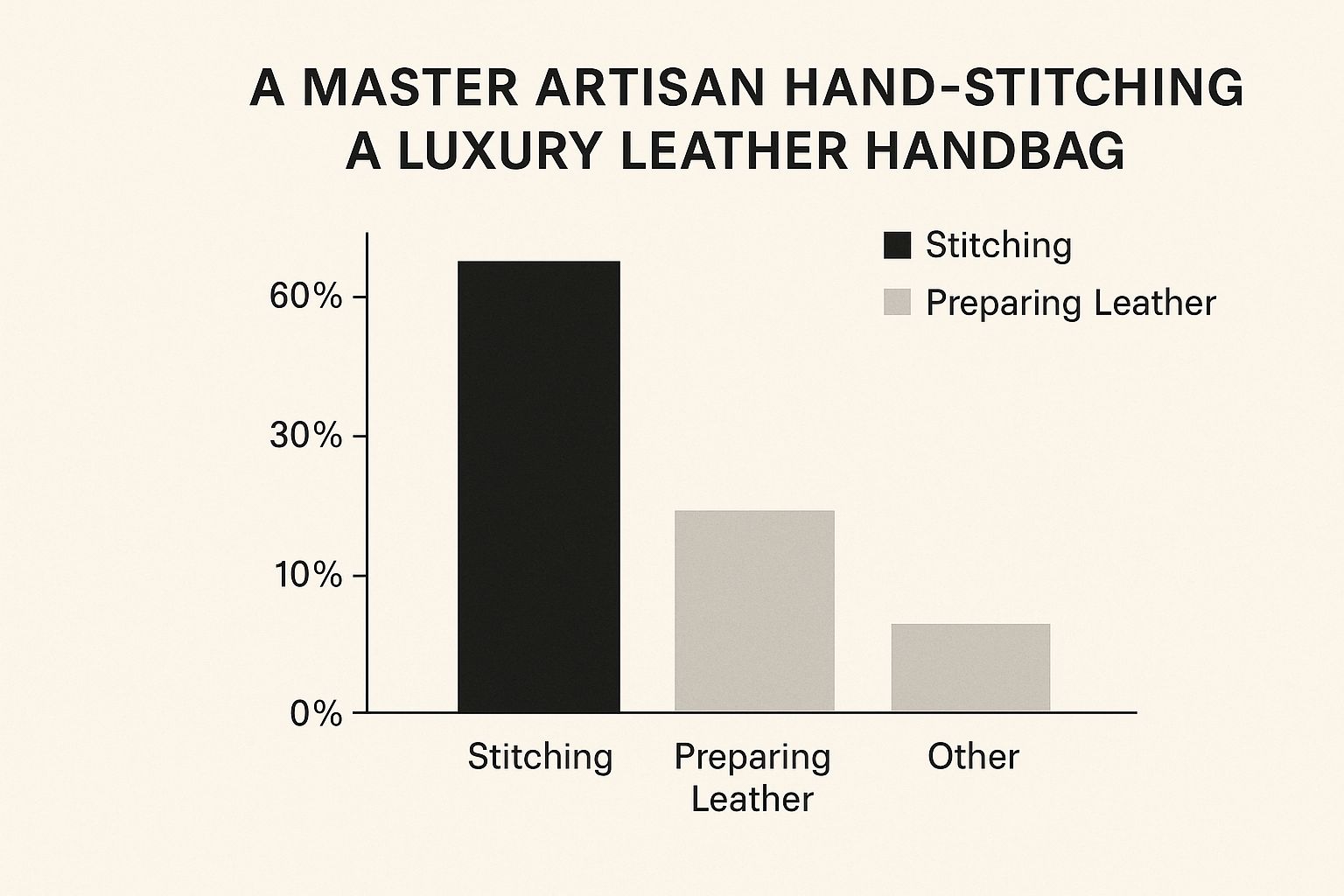
The image drives home the point that the premium price is supported by the incredible skill and time poured in by master craftspeople, which is a vital part of what defines a luxury brand.
Pricing as a Pillar of Growth
This strategy isn't just for show; it's a fundamental driver of business growth in the luxury world. One of the core elements that makes a brand a true luxury player is its ability to set high prices while keeping its products exclusive. In the luxury goods market, price hikes were responsible for over 80 percent of growth in recent years, a massive difference compared to growth from selling more items. This demonstrates that customers are more than willing to pay these high prices for the value they feel they are receiving. You can see more data on the growth of the luxury market on Statista.
This pricing philosophy takes a great deal of confidence. Instead of asking, "What's the absolute most we can charge?" luxury brands ask, "What price cements our place as the ultimate standard of quality?" This shifts pricing from a mere financial tool to a strategic instrument for building a powerful brand.
To better understand these differences, the table below compares how various market tiers handle this key business decision.
Luxury vs Premium vs Mass Market Pricing Strategies
Comparison of pricing approaches across different market tiers
| Brand Tier | Pricing Strategy | Volume Approach | Customer Response |
|---|---|---|---|
| Luxury | Value-Driven: Price reflects heritage, craftsmanship, and brand story, not just cost. | Highly Restricted: Scarcity is intentional to maintain exclusivity and desirability. | Aspirational Desire: The high price is part of the appeal, signaling status and success. |
| Premium | Quality-Based: Price is justified by superior materials, performance, and features. | Moderate: Production is controlled to signal quality but aims for a wider audience than luxury. | Rational Choice: Customers weigh the higher cost against tangible benefits and quality. |
| Mass-Market | Cost-Plus: Price is determined by production costs plus a set margin. | High Volume: The goal is to sell as many units as possible to a broad audience. | Price Sensitivity: Customers are highly focused on cost and look for deals and discounts. |
The key takeaway is that pricing strategies are not one-size-fits-all. While a mass-market brand competes on cost, a luxury brand competes on a story of value and desire.
Ultimately, effective luxury pricing is an art. It tells a story of unmatched quality and exclusivity, making the customer feel they are not just spending money, but investing in something truly extraordinary.
Crafting Stories That Command Luxury Status
Beyond premium materials and sky-high prices, the soul of a luxury brand lies in its story. While any company can invent a backstory, luxury brands master the art of turning their history into a powerful narrative. This story isn't just marketing fluff; it's the emotional framework that justifies the premium, connects with people on a deeper level, and turns a product into an icon. The goal is to make the brand's heritage feel not just old, but alive and relevant today.
Think of it like a vintage wine versus a generic table wine. Both are made from grapes, but one carries the story of its specific vineyard, the unique climate of its year, and the generations of winemakers who perfected its creation. That story is what gives it depth, character, and immense value. In the same way, the stories behind luxury brands provide the substance that commands respect and desire.
Heritage as a Differentiator
In a world filled with mass production, words like "handmade" and "artisanal" have become powerful markers of luxury. They signal a human touch and a level of care that machines simply can't replicate. A brand like Chanel doesn't just sell clothes; it sells the rebellious spirit of its founder, Coco Chanel, who shattered fashion conventions. This narrative of liberation and elegance is woven into every design, making each piece part of a larger, inspiring tale.
Similarly, Swiss watchmakers aren't just selling devices that tell time. They are selling centuries of watchmaking expertise passed down through generations in the isolated Jura mountains. Brands like Patek Philippe turn this history into marketing gold, emphasizing that their timepieces are not mere products but heirlooms. As one study on Swiss watchmaking history explains, this legacy of precision began in the 16th century, building a reputation for excellence that still defines the industry. Owning such a watch means owning a piece of that rich, enduring heritage.
The key elements that make these stories connect so well include:
- A compelling founder myth: A visionary person who challenged norms, like Louis-François Cartier.
- A unique place of origin: A specific location tied to the craft, such as Le Brassus for Audemars Piguet.
- A legacy of innovation: Historic breakthroughs that shaped the industry, like the first keyless winding system.
- Consistent brand codes: Signature motifs and designs that are instantly recognizable over decades.
Authenticity vs. a Made-Up Tale
So, what separates a genuine narrative from a fabricated one? It comes down to consistency and proof. A brand claiming a heritage of craftsmanship must demonstrate it at every opportunity. Hermès, for instance, skillfully showcases its dedication to artistry on its digital platforms.
The screenshot below from the Hermès website is a perfect example of storytelling in action.
Instead of a simple grid of products, the site draws the visitor into the world of the artisan, directly linking the object to the human skill needed to create it. This visual storytelling reinforces that you aren't just buying an item; you are acquiring a piece of art born from tradition and expertise.
Balancing this tradition with modern ideas is the final piece of the puzzle. A brand cannot simply rely on its history; it must also feel current. To connect with your audience and command luxury status, it helps to review compelling brand story examples that blend heritage with modern relevance. The most successful luxury brands honor their past while confidently moving into the future, making sure their story never gets old.
Creating Exclusivity That Drives Desire (Not Frustration)
A core part of what makes a brand feel luxurious is its delicate dance with exclusivity. This concept operates on a fascinating paradox: how do you stay rare and sought-after while also growing a profitable business? Master this balance, and you create intense desire. Mismanage it, and you create frustration that pushes potential customers away.
True luxury brands don’t just limit their supply; they build a framework of scarcity that makes access feel like a privilege, not a punishment. This is a carefully planned strategy, not a simple hiccup in the supply chain.
This calculated approach to access is an incredibly powerful tool. Take the streetwear brand Supreme, which turned artificial scarcity into an art form. Its legendary weekly "drops" release products in extremely limited quantities, creating block-long lines and a resale market where items command prices many times their original value. This isn't about failing to meet demand; it’s about intentionally under-supplying the market to fuel hype and reinforce the idea that owning a Supreme item makes you part of a select few.
The Architectures of Exclusivity
Exclusivity isn't a one-size-fits-all strategy. It's a multi-layered approach that can be tailored across different luxury sectors. Brands use various methods to manage access and foster a sense of being special, making customers feel like they're on the inside.
Some of the most effective strategies include:
- Waiting Lists and Application Processes: Brands like Ferrari and Hermès (for its famous Birkin bag) use long waiting lists or even require an application. This reframes the purchase from a simple transaction into an achievement—something earned over time.
- Invitation-Only Events and Access: Tesla creates more genuine excitement with its exclusive, invitation-only vehicle unveilings than it ever could with traditional advertising. Attendees feel like they are part of the brand's inner circle, which turns them into passionate advocates.
- Geographical Limitation: Some brands introduce new products only in specific flagship stores or cities. This can turn a trip to that location into a modern-day pilgrimage for dedicated fans, creating a sense of discovery and reward.
- Tiered Membership and VIP Programs: These programs offer loyal customers special treatment, like early access to new collections, private sales, or custom services. This strengthens their connection to the brand and encourages ongoing loyalty.
The secret is ensuring that exclusivity feels authentic and earned, not random. When a customer understands why an item is rare—whether due to superior craftsmanship, limited materials, or a curated community—they are far more likely to desire it. The table below shows how different luxury sectors apply these ideas.
To better illustrate this, let's look at how various luxury industries implement these strategies to cultivate that all-important sense of rarity and desirability.
Exclusivity Strategies Across Luxury Segments
How different luxury categories create and maintain exclusivity
| Industry | Exclusivity Method | Implementation | Consumer Impact |
|---|---|---|---|
| Haute Couture Fashion | Made-to-Order | Only a few pieces of each design are created, fitted specifically for the client. | Ownership feels deeply personal and unique, a one-of-a-kind creation. |
| High-End Automobiles | Limited Production Models | A specific, low number of vehicles are produced (e.g., 499 units of the LaFerrari). | Creates immense secondary market value and a sense of being a "collector." |
| Fine Dining | Reservation Scarcity | Restaurants like Noma have notoriously difficult-to-get reservations, released in batches. | The dining experience itself becomes a status symbol and a highly anticipated event. |
| Bespoke Tailoring | Client Relationship | Access to top tailors on Savile Row is often built on reputation and referrals. | Fosters a sense of belonging to an exclusive club of sartorial connoisseurs. |
This table shows that while the methods may differ, the goal is the same: to make the product or experience feel special and hard-won. The value is not just in the item itself, but in the journey to acquire it.
Ultimately, creating exclusivity that works is about building a world that people want to join. It elevates a product from a simple object to a coveted symbol of status, taste, and belonging. By making access a rewarding journey, luxury brands ensure that desire continues to burn brightly, driving both their mystique and their long-term success.
Delivering Experiences That Justify the Premium
The real measure of a luxury brand isn't just the product itself, but the quality of every single interaction that surrounds it. A high-end item can lose its shine if the buying process feels transactional or ordinary. The world’s leading luxury brands know this. They create a complete journey that constantly reminds customers their investment was not just worthwhile, but exceptionally smart. This experience is what shifts a high price from being an expense to a symbol of genuine value.
It's the difference between a premium car dealership and a standard one. At the luxury level, the environment, the way you're spoken to, and the seamless after-sales service are all carefully designed. This isn't about grand, over-the-top gestures. It’s about thoughtful, almost invisible details that make a customer feel seen and appreciated. This is the art of justifying the premium, where every touchpoint—from a digital interface to a human conversation—strengthens the brand's elite standing.
The Power of Anticipatory Service
One of the most effective tools in a luxury brand’s collection is anticipatory service. This is the practice of meeting a customer's needs before they even realize they have them. The Four Seasons hotel chain is a master of this, training its staff to observe and act on subtle cues. A guest who mentions they love a specific tea might find it waiting in their room later that day. This isn’t just good service; it's proof that the brand is listening on a personal level.
This level of attention makes the experience feel uniquely personal. It shows that the customer is an individual with specific tastes, not just another booking number. This proactive approach builds a deep sense of loyalty and makes the high price feel completely reasonable. It’s an investment in a relationship, not just a room for the night. The Four Seasons website, for instance, avoids generic booking portals and instead uses imagery that suggests a complete, curated experience.
This screenshot from their homepage shows how they sell an immersive world, not just a hotel stay.
The visual focus is on the entire journey and the emotional reward, reinforcing the idea that the value goes far beyond the physical room.
Designing the Complete Customer Journey
A truly luxurious experience is consistent across every channel, from physical boutiques to digital support. Apple, for example, extends its premium identity through programs like AppleCare+. These services are positioned not merely as warranties but as a continuation of the premium ownership experience, providing priority access and expert help that feels different from standard customer service. This reinforces the idea that you are part of an ecosystem built on quality.
To achieve this consistency, brands must map out every potential interaction and find any weak spots that could diminish their luxury status. Key areas to focus on include:
- Physical Environments: Boutiques and showrooms must be more than just stores. They should be immersive spaces that communicate the brand's story and values through architecture, scent, and overall feel.
- Digital Touchpoints: A brand’s website, app, and social media must provide a smooth, elegant, and intuitive user experience. A clunky or slow website can instantly make a luxury brand feel cheap.
- Human Connections: Every employee, from the salesperson to the support agent, must act as a brand ambassador. They need training not just on the products but on how to communicate the brand's principles with grace and knowledge. As explored in discussions around luxury loyalty programs, a well-designed program can greatly enhance the customer journey and reinforce brand values.
By elevating every interaction, brands build a strong defense around their premium position. The experience becomes an essential part of the product, making the high price tag feel less like a cost and more like a smart investment in exceptional quality and care.
Marketing Luxury Without Breaking the Spell
Marketing a luxury brand is a delicate art, more like a whisper in a crowded room than a shout from the rooftops. It requires setting aside the standard marketing playbook filled with loud promotions and aggressive sales funnels. Instead, true luxury marketing builds desire through subtlety and restraint. It creates a sense of mystique that pulls customers in, rather than pushing products on them. This approach turns marketing into a carefully orchestrated performance where the goal isn't just to sell, but to deepen the brand's allure.
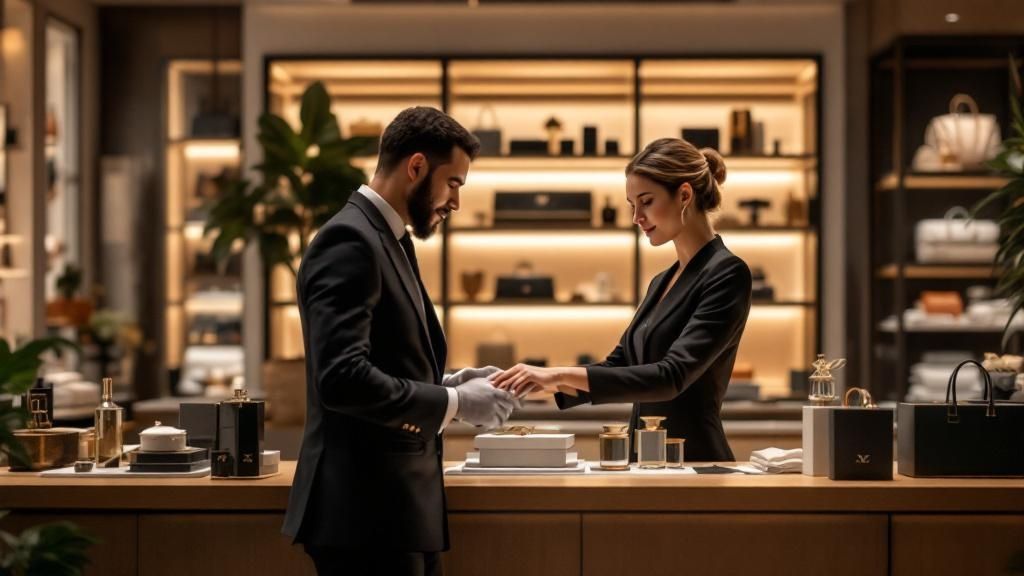
This strategy is all about communicating value without ever appearing desperate for a sale. Consider how brands like Cartier or Dom Pérignon present themselves. Their campaigns often feel more like cinematic short films than traditional commercials. They focus on evoking an emotion, telling a story, and connecting the brand with a timeless sense of elegance. The product itself is frequently a supporting character, not the hero. This is a very intentional choice. A study of luxury marketing showed that over 60% of luxury buyers name brand heritage as a key reason for their purchase, responding far more strongly to storytelling than to feature-based ads.
The Art of Subtle Promotion
Unlike mass-market brands that live and die by conversion rates and click-throughs, luxury brands are playing a much longer game. Their marketing success is measured by metrics that are harder to pin down but far more meaningful: brand perception and customer lifetime value. This is why they often choose very different channels and methods for promotion.
Here’s how luxury brands handle promotion with a lighter touch:
- Investing in Experiences, Not Just Ads: A brand like Bentley pours resources into exclusive owner events, track days, and private viewings. These experiences foster a powerful sense of community and belonging that no billboard or digital ad could ever match. The memory of the event becomes woven into the fabric of the brand itself.
- Prioritizing Editorial Over Paid Media: A feature article in a respected publication like Vogue or The Robb Report holds more sway than a full-page advertisement. Editorial coverage offers third-party validation, signaling that the brand is worthy of attention due to its merit, not its marketing budget.
- Cultivating Influencer Partnerships with Care: Luxury brands steer clear of purely transactional relationships with influencers. They seek out true brand ambassadors—individuals whose personal brand and values are in perfect alignment with their own. These partnerships are often long-term and feel organic, not like a temporary paid endorsement.
The Anti-Marketing Framework
Ultimately, luxury marketing is about creating a pull, not a push. It's a quiet confidence that says, "We are the standard," without needing to shout. This fundamental difference in philosophy shapes every aspect of their strategy.
| Marketing Tactic | Traditional Approach | Luxury Approach |
|---|---|---|
| Primary Goal | Drive immediate sales volume. | Build long-term brand desire. |
| Communication Style | Loud, frequent, and direct. | Subtle, infrequent, and indirect. |
| Promotional Focus | Discounts, offers, and calls-to-action. | Storytelling, heritage, and exclusivity. |
| Measurement of Success | Conversion rates and ROI. | Brand perception and customer loyalty. |
By mastering this "anti-marketing" mindset, brands create a powerful spell that makes their products feel truly special. They understand that what makes a brand a luxury is not just what they sell, but how they choose to share their story with the world—with grace, confidence, and an air of mystique that always leaves you wanting more.
Key Takeaways
After breaking down the world of luxury storytelling, pricing, and exclusivity, we can now map out a clear path to building a luxury brand. This isn't about ticking off items on a list; it’s about adopting a mindset that prizes long-term value over quick sales. This final section offers practical frameworks and highlights the essential elements for creating and safeguarding your brand’s elite status, whatever your industry.
The Foundation: Unwavering Principles
Before we get into tactics, it's vital to embrace the core principles that distinguish true luxury from premium alternatives. These are the pillars on which every other strategy rests. Think of them as your brand's constitution—they should guide every single decision, from product design to customer interactions.
- Prioritize Perception Over Volume: Your main objective is to build a specific image of unparalleled quality and desirability. Every decision should answer the question: "Does this enhance our brand's mystique or dilute it?"
- Embrace the Power of "No": Luxury is often defined by what a brand doesn’t do. Steer clear of promotions, discounts, and mass-market partnerships that can chip away at perceived value. Turning down easy money is a strong signal of brand confidence.
- Lead, Never Follow: Luxury brands are trendsetters, not followers. This demands a profound understanding of your brand's unique DNA and the boldness to innovate in a way that feels true to your story.
Actionable Frameworks for Building Luxury Status
Putting these principles into practice requires a structured approach. Below are three key frameworks to guide your journey. These aren't overnight solutions but long-term commitments that build brand equity over time.
-
The Heritage Narrative Framework:
- Pinpoint Your Origin Story: What unique problem did your founder address? What was the cultural setting at the time?
- Define Your Craftsmanship Signature: What specific techniques, materials, or design philosophies make your product stand out? This becomes your proof of excellence.
- Communicate Consistently: Weave this narrative into every touchpoint—from your website and packaging to the in-store experience. It must be genuine and consistent.
-
The Controlled Scarcity Model:
- Limited Editions: Launch products in finite numbers to create a sense of urgency and collectibility.
- Tiered Access: Create VIP programs or invitation-only events that reward loyal customers with exclusive access, making them feel like insiders.
- Strategic Waitlists: For sought-after items, a waiting list can turn a simple purchase into a genuine achievement.
-
The Immersive Experience Blueprint:
- Map the Entire Journey: Look at every customer interaction, from their first discovery of your brand to post-purchase support.
- Identify "Moments of Elevation": Find opportunities to deliver unexpected, personalized service that justifies the premium price.
- Empower Your Team: Make sure every employee understands and embodies the brand’s values. They are your most important ambassadors.
Gucci’s digital presence, for instance, expertly blends its rich history with a modern, immersive experience, telling its story through stunning visuals.
This method ensures that even a simple visit to their website feels exclusive and curated, reinforcing the brand's luxury status beyond the product itself.
Warning Signs: Avoiding Luxury Dilution
As your brand grows, it's easy to lose your way. Be on the lookout for these common traps that can quickly dismantle the perception you've worked so hard to create:
| Pitfall | Description | Antidote |
|---|---|---|
| Chasing Mass-Market Trends | Adopting popular trends that don't align with your brand's core identity. | Stay true to your brand's unique codes and aesthetic, even if it means being less "mainstream." |
| Over-exposure | Making your products too easy to get through excessive distribution or collaborations. | Keep tight control over your distribution channels and choose partners with extreme care. |
| Inconsistent Customer Service | Allowing any customer interaction to feel generic, rushed, or unhelpful. | Invest heavily in training your team to deliver a consistently elevated and personalized experience. |
Building a luxury brand is a marathon, not a sprint. It requires patience, discipline, and a steadfast commitment to excellence. By concentrating on these core principles and actionable frameworks, you can build a brand that not only commands a premium price but also secures a permanent place in the hearts of your customers.
Ready to find pieces that embody true luxury and craftsmanship? At Feinheit FZ LLC, we curate a world of style with substance, where every item is handpicked for its quality and story. Explore our collection and discover luxury that gives back.