Master winter layering with strategic foundation pieces. Expert guidance on building a functional luxury cold weather wardrobe from base to outer layers.
Winter dressing challenges extend beyond temperature alone. The professional navigating between heated offices and freezing commutes, indoor meetings and outdoor transit, requires a wardrobe architecture that adapts without constant outfit changes. This demands more than owning warm clothing—it requires understanding how garments function together as a system.
The layering approach addresses this complexity through modular construction: base layers manage moisture, mid layers provide insulation, outer layers block wind and precipitation. Each component serves a specific thermal and functional role. When properly structured, this system maintains comfort across temperature ranges while preserving professional appearance.
Building this foundation requires strategic investment in pieces that coordinate technically and aesthetically. The goal: a winter wardrobe where every piece works with multiple others, creating outfit combinations that respond to varying conditions without requiring extensive closet space or budget.
The Three-Layer System: Functional Architecture
Base Layer: Moisture Management Foundation
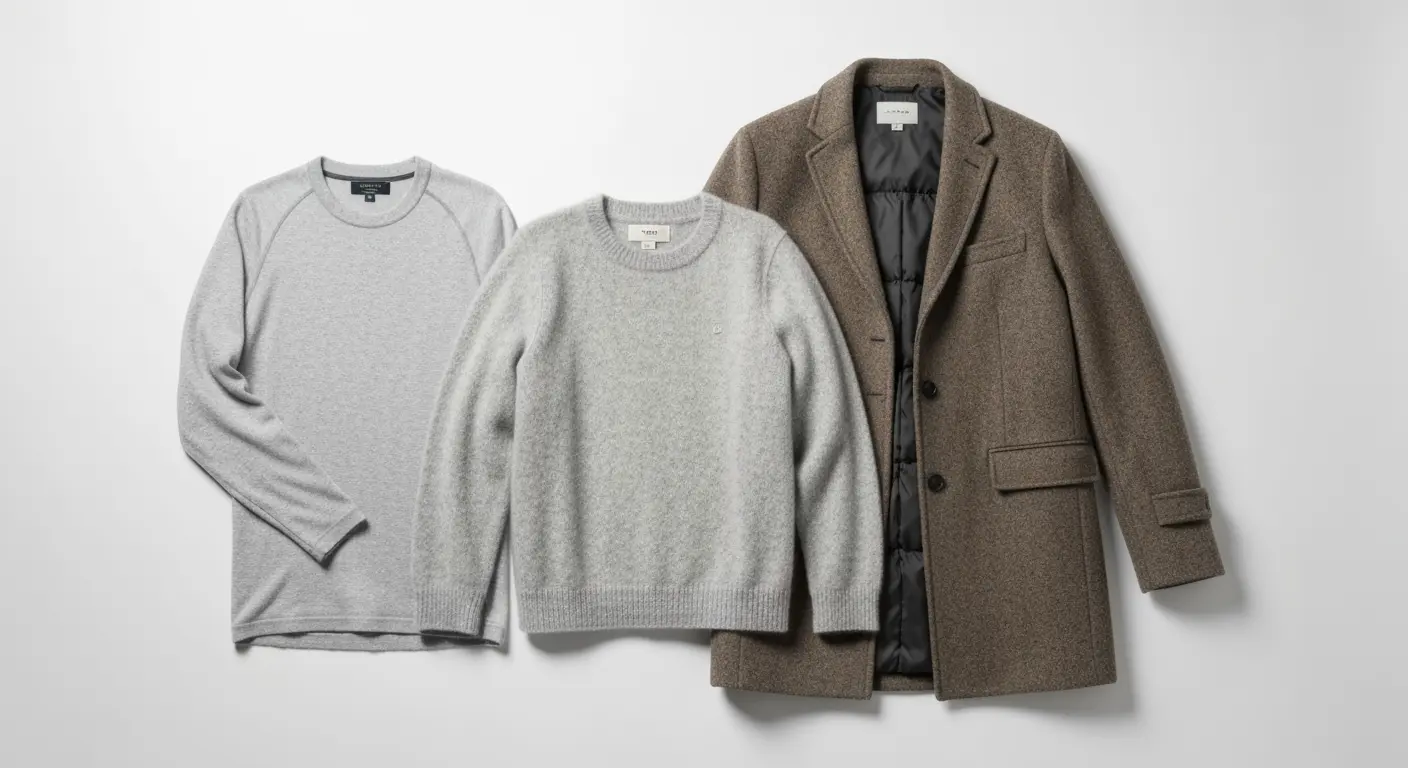
Base layers sit against skin, making fiber choice critical. Their primary function: moisture transport away from body to prevent dampness that compromises warmth. Cotton fails here—it absorbs moisture and holds it against skin. Effective base layers use fibers that wick moisture and dry quickly.
Merino Wool: Natural temperature regulation, odor resistance, comfort across wide temperature range. Merino feels warm when cold, cool when warm, through inherent fiber properties. Premium base layers (Icebreaker 200-weight, Smartwool Intraknit) use 18.5-19.5 micron merino—soft enough for sensitive skin while maintaining durability. Price range: $80-$150 per piece.
Silk: Lightweight warmth, elegant drape, ideal for business environments where athletic-appearing base layers seem inappropriate. Silk wicks moisture adequately though less effectively than merino. Best for moderate cold (30-50°F/0-10°C) rather than extreme temperatures. Price range: $60-$120 for quality silk base layers.
Synthetic Blends: Polyester or nylon-based fabrics engineered for moisture transport. More durable than natural fibers, faster drying, lower cost. Trade-off: odor retention requires more frequent washing. Brands like Uniqlo Heattech ($20-$40) and Patagonia Capilene ($50-$80) offer accessible performance.
Investment Priority: Two sets of base layers (top and bottom) allows rotation while laundering. Merino wool represents best value for most users—wearable multiple times between washes, suitable for office environments, effective across temperature ranges.
Mid Layer: Insulation Without Bulk
Mid layers trap warm air close to body while allowing moisture vapor to escape. This layer provides primary insulation and significantly impacts overall silhouette. Bulk here translates to restricted movement and unprofessional appearance.
Lightweight Merino Cardigans: Versatile enough for office wear alone or as mid layer under blazer or coat. Thin gauge (7-gauge or finer) maintains refined appearance. Recommended: Everlane Merino Cardigan ($100), Theory Essential Cardigan ($275), Loro Piana fine-gauge options ($800-$1,200). These pieces transition from layering component to standalone depending on indoor temperature.
Cashmere Sweaters: Superior warmth-to-weight ratio compared to standard wool. 2-ply cashmere (Everlane, Quince, $100-$150) provides adequate warmth for moderate cold. 4-ply or higher (Loro Piana, Brunello Cucinelli, $800-$2,000) delivers exceptional insulation without visible bulk. For layering purposes, avoid chunky knits—they add visual weight and restrict outer layer fit.
Quilted Vests: Core insulation without sleeve bulk, allowing unrestricted arm movement under tailored coats. Down-filled options (Patagonia Down Vest $150, Moncler $500-$700) compress easily when removed. Professional appearance requires refined styling—avoid overly sporty designs with excessive branding.
Technical Fleece: Synthetic insulation with excellent warmth-to-weight performance. Polartec fleece (used by Patagonia, Arc’teryx, $100-$200) provides consistent warmth even when damp, dries quickly, compresses small. Less appropriate for formal business environments but ideal for business casual or creative industries.
Investment Priority: Three mid-layer pieces covering different formality levels: one refined for office (cashmere or fine merino sweater), one versatile (cardigan or zip fleece), one technical (quilted vest or performance fleece). This range handles varied professional contexts.
Outer Layer: Weather Protection Shell
Outer layers must block wind and precipitation while accommodating base and mid layers without restriction. This is where most winter wardrobe failures occur—coats purchased for appearance rather than function, resulting in inadequate weather protection or poor fit over necessary underlayers.
Wool Overcoats: Traditional choice for business formal. Heavy wool (18-24 oz fabric weight) blocks wind effectively. Requires room in shoulders and chest to layer sweater underneath—try coats while wearing your typical mid layer. Recommended: Spier & Mackay ($400-$600), Brooks Brothers ($700-$900), Ring Jacket ($1,200-$1,800). Camel hair blends add warmth; cashmere blends add softness but reduce durability.
Technical Parkas: Superior weather protection through modern fabric engineering. Gore-Tex or similar membranes provide waterproofing and windproofing while allowing moisture vapor escape. Down or synthetic insulation built into shell eliminates need for heavy mid layers. Canada Goose ($900-$1,500), Arc’teryx ($600-$900), Patagonia ($400-$700). Consider professional context—some parkas read too casual for conservative industries.
Wool-Cashmere Topcoats: Refined alternative to traditional overcoats, lighter weight (12-16 oz), designed for car-to-door rather than extended outdoor exposure. Appropriate for milder winters (above 20°F/-7°C with minimal wind). Recommended: Theory ($600-$800), Ermenegildo Zegna ($1,500-$2,500). These work best in urban environments with limited outdoor exposure.
Hybrid Shells: Combining technical performance with business-appropriate styling. DWR-treated wool, Gore-Tex with refined tailoring, down-filled topcoats. Norse Projects ($600-$800), Loro Piana Storm System ($3,500-$6,000), Herno ($800-$1,200). Premium pricing reflects dual development—fashion design and technical engineering.
Investment Priority: One primary winter coat suited to your climate and professional requirements, plus one secondary option for different formality levels or weather conditions. Total investment: $800-$2,000 for quality pieces that last 10+ years.
Category-Specific Layering Strategies
Business Formal Environments
Traditional corporate settings impose appearance constraints that limit layering flexibility. The challenge: maintaining professional polish while achieving adequate warmth.
Base Layer Strategy: Silk or ultra-fine merino (under 19 micron) in neutral colors (black, navy, grey) that don’t show through dress shirts. Avoid visible texture or seaming that creates lines under fitted clothing.
Mid Layer Options:
- Fine-gauge merino or cashmere V-neck sweater under suit jacket
- Cashmere cardigan replacing suit jacket for in-office warmth
- Quilted vest under suit jacket (removes easily for meetings)
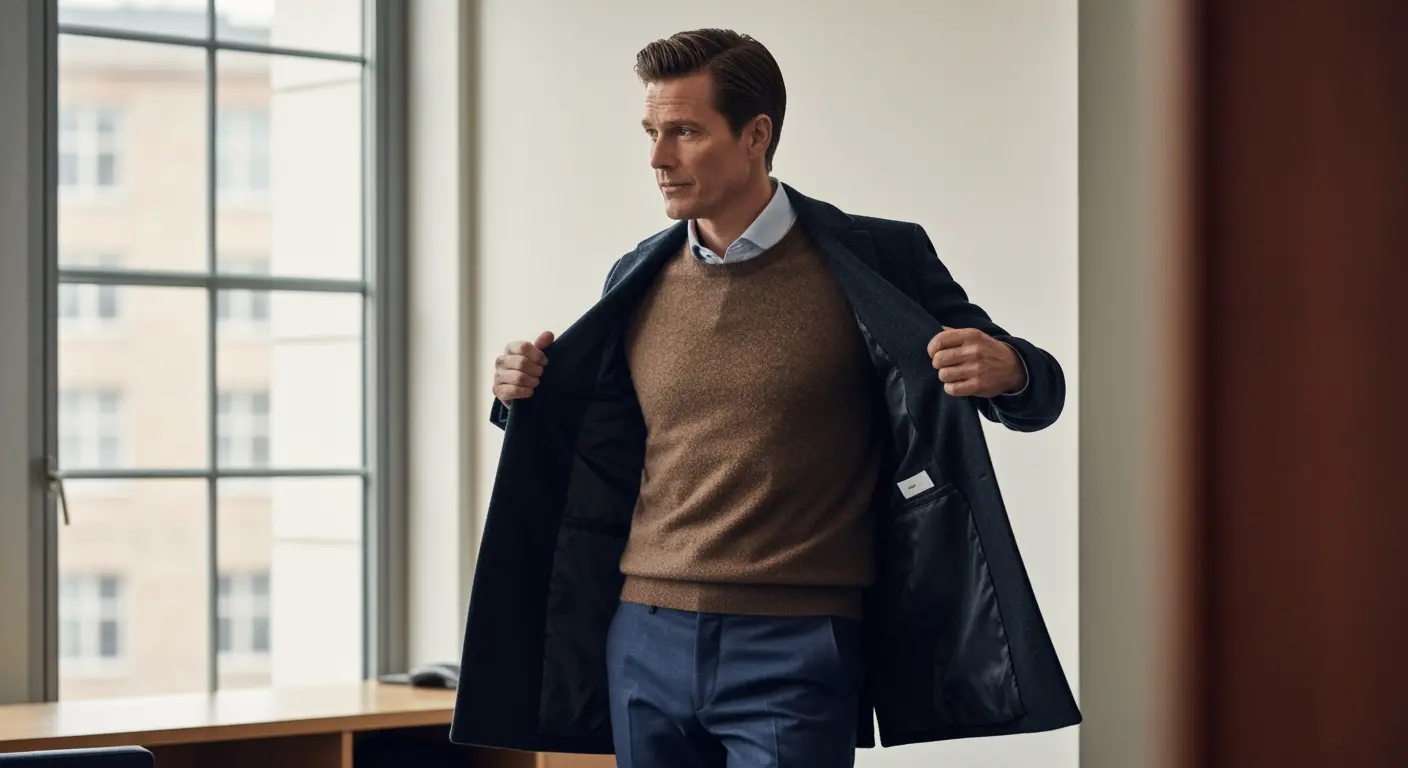
Outer Layer Requirements: Wool overcoat in conservative styling (single-breasted, notch lapel, knee-length). Navy or charcoal coordinates with business suiting. Ensure coat accommodates suit jacket plus sweater without pulling across shoulders or chest.
Professional Polish: Layers must appear deliberate, not improvised. Each piece should look intentional if outer layers are removed—avoid wearing technical base layers visible at neck or wrists.
Business Casual Settings
Relaxed dress codes expand layering options significantly. More room for technical fabrics, visible layering, personal style expression.
Base Layer Strategy: Merino wool in colors beyond neutrals—burgundy, forest green, camel tones add visual interest. Technical fabrics acceptable if styling is refined (Patagonia Capilene, Icebreaker).
Mid Layer Options:
- Merino crew neck or quarter-zip sweaters worn visibly
- Flannel shirts as mid layer under sweaters or vests
- Technical fleece in solid colors (avoid loud branding)
- Shawl collar cardigans for texture variation
Outer Layer Freedom: Field jackets, quilted blazers, down vests as outerwear, technical shells in refined styling. Brands like Taylor Stitch ($200-$400), Corridor ($300-$500), and Portuguese Flannel ($150-$250) offer pieces that bridge outdoor performance and urban style.
Layering Visibility: Business casual allows showing your layering system—contrasting textures, visible collars, complementary colors create intentional, sophisticated appearance.
Creative Industry Flexibility
Design, media, tech, and creative fields often embrace individual style. Layering becomes opportunity for personal expression while maintaining professional competence.
Base Layer Creativity: Patterned merino, textured fabrics, unconventional colors. Brands like Folk ($100-$200) and Universal Works ($150-$300) offer base and mid layers with design interest.
Mid Layer Expression:
- Unconventional textures (bouclé, cable knit, ribbed patterns)
- Layering shirts over turtlenecks
- Mixing formal and casual (quilted vest over Oxford shirt)
- Color blocking across layers
Outer Layer Statement: Opportunity for standout pieces—shearling jackets, bold colored parkas, vintage-inspired outerwear, designer pieces with distinctive silhouettes. Investment in statement coat ($800-$2,000) justifies through versatility—pairs with simple underlayers across seasons.
Outdoor/Active Professional Needs
Roles requiring extended outdoor time (real estate, construction oversight, site management, outdoor industries) prioritize function over formality.
Base Layer Performance: Merino-synthetic blends for superior moisture management during physical activity. Icebreaker BodyFitZone ($120-$150), Smartwool Intraknit ($100-$130) integrate zones of varying weights—more insulation at core, lighter at high-output areas.
Mid Layer Efficiency: Synthetic insulation (PrimaLoft, Polartec Alpha) provides warmth that performs when wet, dries faster than down. Patagonia Nano Puff ($200), Arc’teryx Atom LT ($300), Outdoor Research Refuge ($150).
Outer Layer Protection: Hard shells with Gore-Tex or equivalent waterproofing. Extended outdoor exposure requires serious weather protection—casual fashion brands inadequate. Arc’teryx Beta AR ($575), Patagonia Torrentshell ($150), Outdoor Research Foray ($200).
Transition Strategy: Keep mid layer refined enough (solid colors, minimal branding) to wear into office or meetings when shell removed. This avoids needing complete outfit changes.
Temperature-Based Layering Combinations
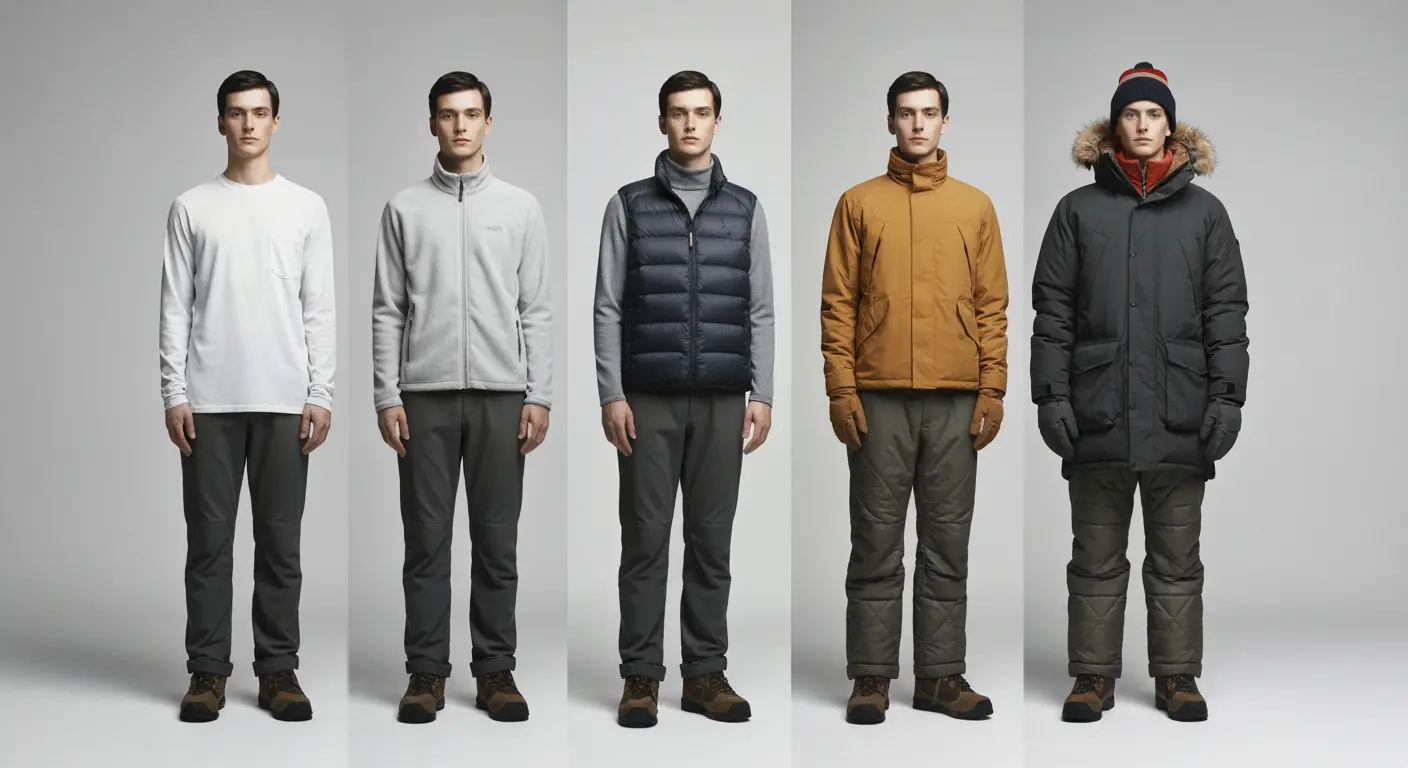
Extreme Cold: Below 10°F (-12°C)
Base: Merino wool 200-weight or heavier (Icebreaker 260 BodyFitZone, Smartwool 250)
Mid: Thick cashmere sweater or fleece jacket plus quilted vest
Outer: Heavy down parka or insulated technical shell
Accessories Critical: Cashmere-lined leather gloves, merino beanie, wool scarf
Total layers: 4-5 pieces. At extreme cold, bulk becomes necessary—prioritize warmth over silhouette refinement.
Cold: 10-32°F (-12 to 0°C)
Base: Merino wool 150-200 weight
Mid: Merino or cashmere sweater
Outer: Wool overcoat or insulated topcoat
Accessories: Leather gloves, optional scarf
Total layers: 3-4 pieces. This range covers most winter conditions in major US/European cities. System allows removing mid layer indoors while maintaining professional appearance.
Cool: 32-45°F (0-7°C)
Base: Lightweight merino (120-150 weight) or silk
Mid: Light cardigan or thin sweater
Outer: Unlined topcoat or wool blazer
Accessories: Optional, depending on wind
Total layers: 2-3 pieces. Spring/fall transition weather or mild winter climates. Focus on versatile mid layers that function alone when outer layer removed.
Variable: 20-50°F (-7 to 10°C)
Days starting cold, warming significantly by afternoon. This scenario requires most strategic layering—enough warmth for morning, ability to shed layers without looking incomplete.
Strategy:
- Base: Merino 150-weight (comfortable across full range)
- Mid: Merino cardigan (removes easily, looks intentional alone)
- Outer: Unlined wool coat (substantial enough for cold morning, not excessive at 50°F)
Carry outer layer and potentially mid layer in bag once temperature rises. This requires both pieces looking deliberate when carried—avoid puffy jackets that don’t compress well.
Color and Texture Coordination
Neutral Foundation Strategy
Building winter layering around neutral base maximizes piece compatibility. When every item must work with multiple others, color restrictions increase versatility.
Core Neutrals:
- Charcoal grey (most versatile—warmer than black, more formal than medium grey)
- Navy (professional, coordinates with both warm and cool tones)
- Camel/tan (adds warmth to winter palette)
- Black (powerful but can appear harsh in all-black layering)
- Cream/oatmeal (sophisticated alternative to white, less stark)
System Approach: Outer and mid layers in neutrals, base layers in neutrals plus 1-2 accent colors (burgundy, forest green, navy). This allows any base to work under any mid layer under any outer layer.
Texture Variation: With limited color palette, texture creates visual interest. Combine smooth and textured knits, matte and subtle sheen fabrics, different weave patterns. Example: smooth merino base, cable-knit cardigan, herringbone wool coat—three neutral pieces, three distinct textures.
Intentional Accent Strategy
For those comfortable with color, strategic accents elevate winter wardrobe beyond neutral monotony.
Accent Placement:
- Mid layer in accent color (burgundy cashmere sweater) under neutral outer layer
- Outer layer in accent (camel overcoat) over neutral mid and base
- Accessories as accent (navy coat, grey sweater, burgundy scarf)
Professional Color Choices:
- Burgundy/wine (sophisticated, works with grey and navy)
- Forest green (rich, pairs with tan and grey)
- Rust/burnt orange (adds warmth, coordinates with navy and charcoal)
- Deep purple (unexpected but professional, works with grey)
Limit accent colors to 2-3 across entire winter wardrobe. More creates coordination complexity that defeats layering system purpose.
Practical Investment Framework
Minimal Winter Wardrobe (Budget: $1,000-$1,500)
Base Layers:
- 2x Merino base layer tops (Uniqlo or Icebreaker, $80-$120 total)
- 2x Merino base layer bottoms ($80-$120 total)
Mid Layers:
- 1x Merino crew neck sweater (Everlane or Uniqlo, $60-$100)
- 1x Merino cardigan (Everlane, $100)
- 1x Quilted vest (Uniqlo or Patagonia, $80-$150)
Outer Layer:
- 1x Wool overcoat (Spier & Mackay or J.Crew, $400-$600)
Total: $800-$1,190
This minimal system handles most winter conditions through strategic layering. Every piece works together. All items appropriate for professional environments.
Complete Winter Wardrobe (Budget: $2,500-$4,000)
Base Layers:
- 3x Merino base tops in varied weights (Icebreaker, $240-$360)
- 3x Merino base bottoms ($240-$360)
- 1x Silk base layer set for business formal ($120-$180)
Mid Layers:
- 2x Cashmere sweaters (Everlane/Theory, $200-$550)
- 2x Merino cardigans in different weights ($200-$400)
- 1x Technical fleece (Patagonia, $150-$200)
- 1x Down vest (Patagonia/Moncler, $150-$500)
Outer Layers:
- 1x Wool overcoat (Ring Jacket/Brooks Brothers, $800-$1,200)
- 1x Technical parka or alternative coat ($400-$900)
Total: $2,500-$4,650
Complete system covering extreme cold to mild winter, business formal to casual, with redundancy allowing piece rotation during cleaning.
Investment Tier Winter Wardrobe (Budget: $5,000-$8,000)
Base Layers:
- 4x Premium merino bases (Icebreaker BodyFitZone, $480-$600)
- 2x Silk base sets (Zimmerli, $400-$600)
Mid Layers:
- 3x Cashmere sweaters (Loro Piana/Brunello Cucinelli, $2,400-$6,000)
- 2x Fine merino cardigans (Theory/Vince, $400-$800)
- 1x Premium technical fleece (Arc’teryx, $250-$350)
Outer Layers:
- 1x Investment overcoat (Loro Piana/Kiton, $2,500-$4,000)
- 1x Technical shell (Arc’teryx/Canada Goose, $600-$1,500)
Total: $6,630-$13,850
Investment tier prioritizes exceptional materials and construction. Cost-per-wear over 10-15 years justifies premium: $3,000 Loro Piana coat worn 100x/year for 15 years = $2 per wear.
Maintenance and Longevity
Base Layer Care
Merino Wool: Hand wash or machine wash delicate cycle, cool water, wool-specific detergent (Eucalan, Soak). Lay flat to dry. Merino’s natural odor resistance means 3-5 wears between washes for base layers not worn during heavy activity. Overwashing causes fiber breakdown.
Silk: Hand wash only, cool water, pH-neutral detergent. Never wring—roll in towel to remove excess water. Hang or lay flat away from direct heat. Dry cleaning acceptable but unnecessary for regular maintenance.
Synthetics: Machine washable, warm water, regular detergent. Air dry to preserve elasticity. Wash after each wear—synthetics retain odor unlike natural fibers.
Mid Layer Preservation
Cashmere/Merino Sweaters: Fold, never hang (hanging causes shoulder distortion). Store with cedar blocks, not mothballs. Wash only when necessary—spot clean minor issues. Use cashmere comb for pilling after 3-4 wears. Professional cleaning once per season recommended for valuable pieces.
Technical Mid Layers: Follow manufacturer instructions precisely. Down requires special down wash (Nikwax Down Wash) and low-heat drying with tennis balls to restore loft. Synthetic insulation is less delicate but still benefits from gentle washing and air drying.
Outer Layer Investment Protection
Wool Coats: Professional cleaning once per season, more if worn daily in harsh conditions. Brush after each wear with garment brush to remove surface dirt and restore nap. Store on wide wooden hangers that support shoulder structure. Use breathable garment bags, never plastic.
Technical Shells: Machine wash periodically to maintain DWR (durable water repellent) coating effectiveness. Tumble dry low heat reactivates DWR. Reapply DWR treatment (Nikwax TX.Direct) when water stops beading on surface. Gore-Tex and similar membranes require cleaning to function properly—body oils clog pores.
Storage: Clean all pieces before seasonal storage. Use acid-free tissue in folds to prevent creasing. Cedar products deter moths but don’t replace proper cleaning—moths are attracted to body oils and food particles, not clean wool itself.
Conclusion
Winter layering transforms from daily frustration to systematic confidence when approached architecturally. The three-layer framework—base for moisture management, mid for insulation, outer for weather protection—provides structure for building a wardrobe that functions across temperature ranges and professional contexts.
Investment in this system pays returns throughout each winter and across years. Quality base layers last 5-7 years with proper care. Mid layers in premium natural fibers endure 10+ years. Outer layers represent 15-20 year investments when well-maintained. The cost-per-wear mathematics favor strategic spending on fewer, better pieces over accumulating marginal items.
The result: mornings without wardrobe paralysis, comfort during temperature fluctuations, professional appearance maintained regardless of weather, and ownership confidence that comes from pieces working together as designed.
At Feinheit FZ LLC, we believe that luxury is about more than just a label—it’s about finding pieces that empower your personal and professional journey. Explore our curated collection of over 11,000 products from the world’s leading brands to find the timeless garments that will define your signature style. Our winter essentials collection features base layers, mid layers, and outerwear engineered to work together—discover pieces that transform your cold weather wardrobe from challenge to system. Discover your power at theFeinheit.
