
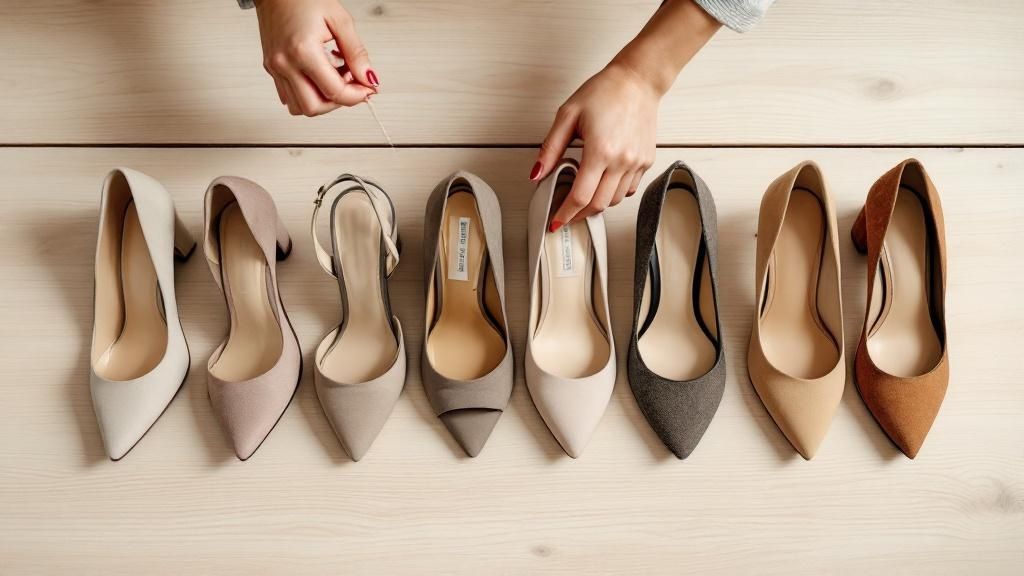
Stepping Up Your Style: A Guide to the World of Heels
The right pair of heels can instantly transform an outfit, elevating your confidence and silhouette. But with a dizzying array of styles available, navigating the world of elevated footwear can feel overwhelming. From the towering drama of a stiletto to the grounded comfort of a block heel, each design serves a unique purpose and offers distinct advantages. Understanding the different types of shoe heels is the first step toward building a versatile and functional wardrobe that empowers you to step out in style for any occasion.
This comprehensive guide will walk you through the most popular heel types, detailing their defining characteristics and practical styling advice. We'll explore how to choose the perfect heel for every event, how to wear them with confidence, and which styles offer the best blend of fashion and function. Whether you're a seasoned heel enthusiast or a curious newcomer, consider this your definitive roadmap to mastering the art of the heel. While this guide focuses on classic heel structures, many of these concepts also apply to modern footwear. For insights into contemporary footwear trends, you might also be interested in the latest boot styles from Revolve.
1. Stiletto Heel
The stiletto is arguably the most iconic and dramatic of all types of shoe heels. Named after the slender Italian stiletto dagger, this heel is defined by its exceptionally thin, high profile. Its primary characteristic is a heel that tapers to a tiny point, often with a diameter of less than one centimeter at the tip. This distinctive design creates a powerful optical illusion, significantly elongating the legs and adding instant, dramatic height.
Stilettos are a fixture in high fashion, synonymous with luxury and glamour. Designers like Christian Louboutin, with his signature red-soled creations, and Manolo Blahnik have built empires around this elegant silhouette. From Carrie Bradshaw's obsession in Sex and the City to Marilyn Monroe's famous quote about conquering the world in the right shoes, the stiletto has cemented its place as a symbol of feminine power and confidence.
When to Wear a Stiletto Heel
Stilettos are the quintessential choice for formal events and occasions where making a statement is key. Think black-tie galas, weddings, cocktail parties, and upscale dinners. They elevate any outfit, from a simple little black dress to a full-length evening gown. In a professional setting, a lower stiletto pump can add a polished, authoritative touch to a tailored suit or pencil skirt.
The following infographic highlights the core attributes that define the stiletto heel.
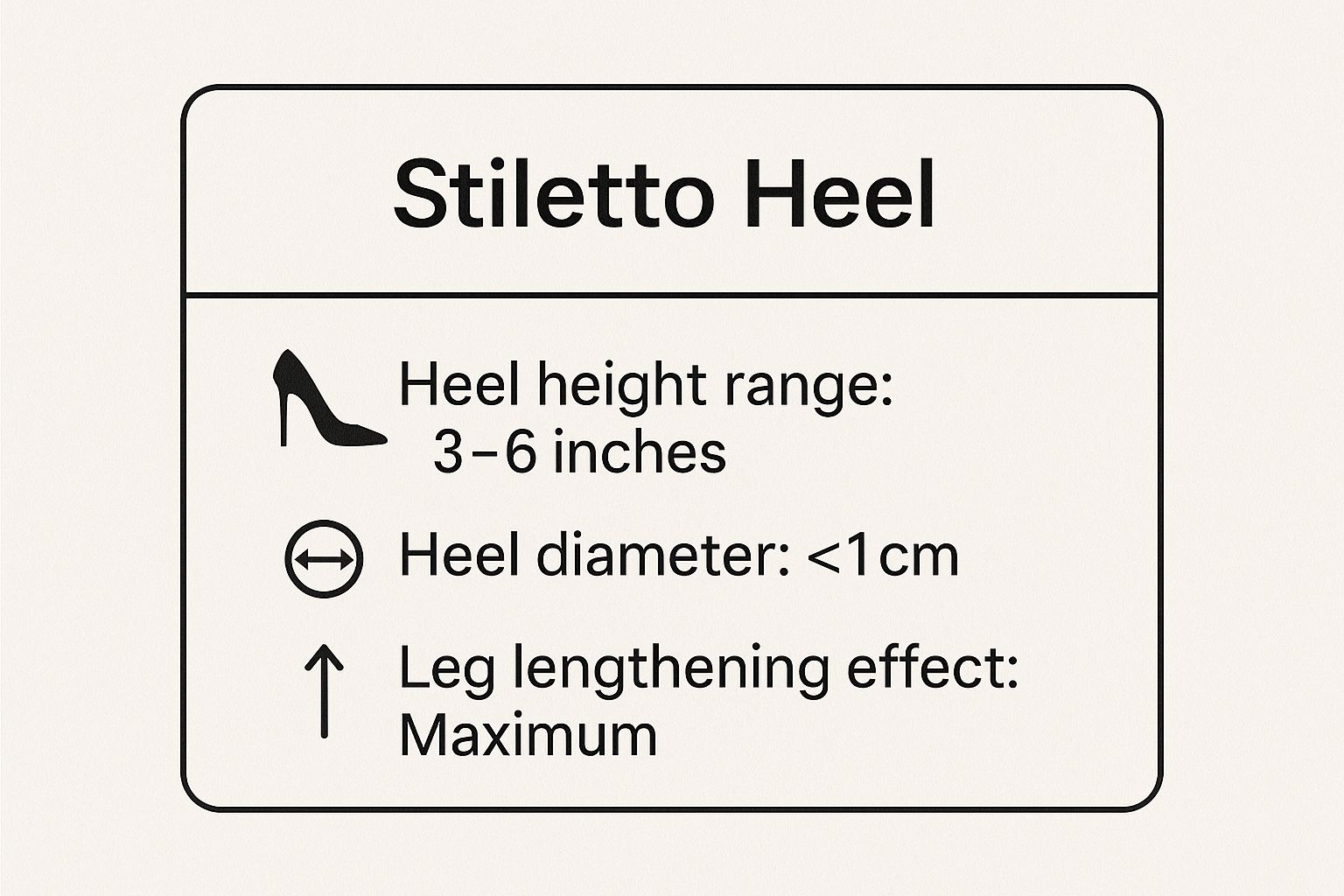
As the data shows, the stiletto's combination of significant height and a minuscule tip is precisely what delivers its maximum leg-lengthening effect.
Tips for Wearing Stilettos Comfortably
While stunning, stilettos can be challenging to wear. To master them, start with a lower height of 2-3 inches and gradually work your way up. Prioritize styles with an ankle strap, which provides crucial stability and prevents your foot from sliding. For added comfort during long events, use cushioned gel insoles to relieve pressure on the ball of your foot and heel grips to prevent slipping.
For a visual guide on mastering the stiletto walk, the video below offers excellent tips on posture and movement.
2. Block Heel
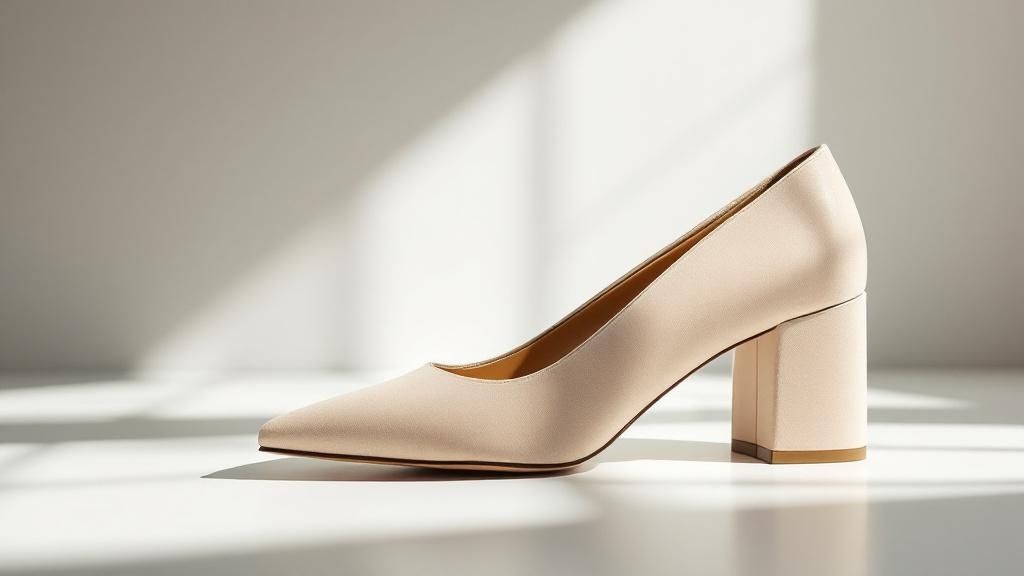
In stark contrast to the stiletto, the block heel offers a blend of style and stability, making it one of the most versatile types of shoe heels. It is defined by its substantial, solid heel that is often square or rectangular in shape. This design distributes weight more evenly across the foot, providing significantly more support and comfort than its thinner counterparts. With heights ranging from a low one inch to a more elevated four inches, the block heel delivers height without sacrificing practicality.
Its widespread appeal lies in this perfect balance. Brands known for comfort-forward design like Clarks and Naturalizer have long embraced it, while high-fashion houses such as Stuart Weitzman and minimalist brands like Everlane regularly feature it in their collections. This heel gained immense popularity during the 1960s mod fashion movement and has seen a major resurgence, becoming a modern wardrobe staple for its chic, functional form.
When to Wear a Block Heel
The block heel is the ultimate all-rounder, suitable for almost any occasion. It is an ideal choice for the workplace, especially for jobs that require long periods of standing or walking. Block heel pumps or loafers add a professional polish to office attire without the discomfort of a thinner heel. For social events like garden parties, outdoor weddings, or brunches, block heel sandals are a smart pick as they won't sink into the grass. They also pair effortlessly with casual outfits, from jeans and a t-shirt to a summery dress.
Tips for Wearing Block Heels Stylishly
The block heel’s sturdy nature makes it incredibly easy to style. If you are new to wearing heels, its stable base makes it the perfect starter heel to build your confidence. To elevate the look, choose a pair in a metallic finish or patent leather for a more sophisticated, evening-appropriate feel. You can also showcase the unique architectural shape by pairing your block heels with cropped trousers or ankle-length jeans. For a more relaxed, bohemian vibe, opt for styles with a wooden or cork block heel, which look fantastic with maxi skirts and linen pants.
3. Wedge Heel
The wedge heel offers a masterful blend of height and stability, making it one of the most comfortable and versatile types of shoe heels. Its defining feature is a sole that is thick at the heel and tapers down toward the toe, creating a solid, triangular profile. Unlike other heels, the wedge’s heel and sole are integrated into a single, continuous piece. This ingenious design distributes body weight evenly across the entire foot, providing elevation without the pressure points associated with thinner heels.
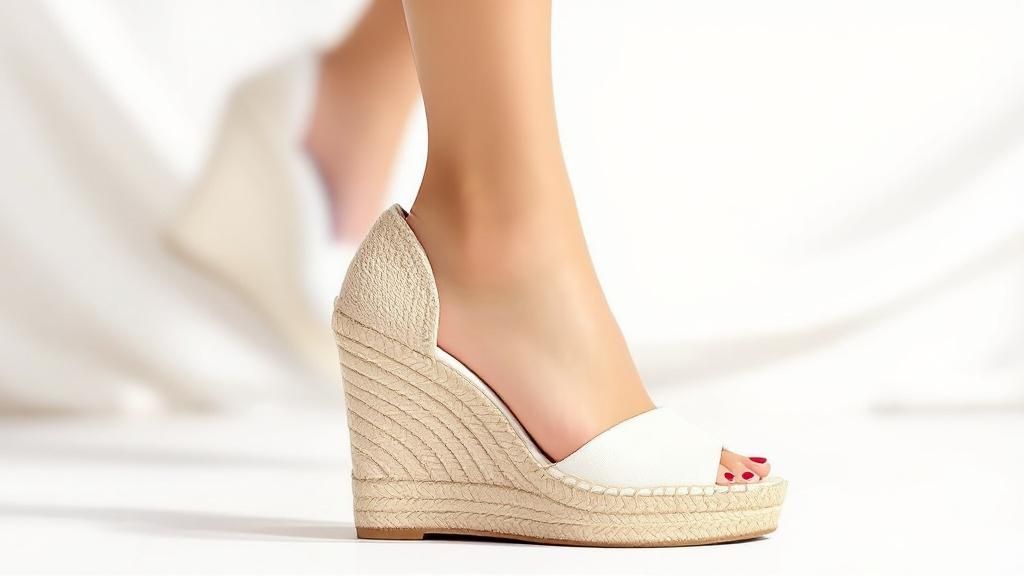
The modern wedge was pioneered by Italian designer Salvatore Ferragamo in the 1930s, but it was the bohemian, free-spirited fashion of the 1970s that cemented its iconic status. Today, it remains a beloved silhouette, favored by brands like Castañer, whose espadrille wedges are famously worn by royalty like Kate Middleton, and Tory Burch, known for classic cork styles. From casual sandals to sophisticated leather pumps, the wedge proves that style and comfort can coexist beautifully.
When to Wear a Wedge Heel
The wedge heel’s inherent stability makes it the perfect choice for outdoor events where stilettos would sink into the ground. Think garden parties, daytime weddings, and countryside get-togethers. Raffia or cork-wrapped espadrille wedges are a summer staple, pairing effortlessly with flowing maxi dresses, wide-leg linen pants, and cropped jeans. For a more polished look, a closed-toe leather or suede wedge pump is an excellent, comfortable alternative for the office or a smart-casual dinner.
Tips for Wearing Wedges Stylishly
- Embrace Textures for the Season: Choose raffia, rope, or canvas wedges for a quintessential summer or vacation look. Opt for sleek leather or rich suede for more formal or transitional-weather outfits.
- Look for Ankle Straps: A style with an ankle strap not only adds a delicate, feminine detail but also provides crucial security, keeping your foot firmly in place as you walk.
- Balance Your Proportions: The substantial silhouette of a wedge pairs best with clothing that balances its visual weight. Flowing skirts, A-line dresses, and wide-leg trousers create a harmonious and flattering look.
4. Kitten Heel
The kitten heel is a classic choice among the many types of shoe heels, offering a graceful blend of comfort and modest elevation. It is defined by its short, slender heel, which typically measures between 1.5 and 2 inches. This delicate design provides a subtle lift without the strain of higher heels, making it a sophisticated yet practical option. Originally introduced in the 1950s as a "trainer heel" for young girls, it was quickly adopted by fashion icons for its understated elegance.
The kitten heel was famously championed by style mavens like Audrey Hepburn and Jackie Kennedy, who cemented its status as a symbol of timeless chic. Today, luxury designers continue to celebrate this silhouette. Chanel's iconic two-tone slingbacks and Manolo Blahnik's 'Carolyne' pumps demonstrate the kitten heel's enduring appeal, proving it can be both classic and contemporary. Its ability to add polish to an outfit while ensuring all-day wearability makes it a wardrobe staple.
When to Wear a Kitten Heel
Kitten heels are incredibly versatile, making them ideal for professional settings, daytime events, and occasions that require a lot of standing or walking. They are a perfect choice for the office, adding a refined touch to tailored trousers, midi skirts, or sheath dresses. Their practicality also makes them an excellent option for garden parties, brunches, or even for expectant mothers who desire a bit of height without compromising on stability.
For a sophisticated look, consider a pointed-toe kitten heel, as this style visually elongates the leg more effectively than a rounded toe. The subtle height is just enough to improve posture and add a touch of formality.
Tips for Wearing Kitten Heels Comfortably
While kitten heels are inherently more comfortable than their taller counterparts, maximizing comfort is still key. Opt for styles crafted from soft, flexible materials like leather or suede to prevent pinching and blisters. Slingback versions are particularly effective, as the strap provides extra security and prevents your heel from slipping out as you walk.
Because of their lower height, kitten heels distribute weight more evenly across the foot. However, if you plan to wear them for an extended period, a thin, discreet gel insole can offer additional cushioning for the ball of your foot, ensuring you remain comfortable from morning to night.
5. Platform Heel
For those who crave dramatic height without the extreme arch of a stiletto, the platform heel is an essential entry in the catalog of types of shoe heels. Its defining feature is a thick sole under the front part of the foot, which accompanies the heel. This elevated platform effectively reduces the pitch, or the angle of your foot, making towering heights more manageable and comfortable. By raising both the heel and the toe, the design distributes body weight more evenly across the foot, alleviating pressure on the ball of the foot.
Platform heels have a rich history, from the iconic shoes of 1970s disco culture to the rebellious punk creations of Vivienne Westwood. In modern luxury, designers like Giuseppe Zanotti have made ultra-high platform sandals a signature, while the Spice Girls famously brought them back into mainstream pop culture in the 1990s. The platform remains a symbol of bold, unapologetic style, offering both elevation and attitude.
When to Wear a Platform Heel
Platforms are incredibly versatile, transitioning from day to night with ease. A platform sandal or espadrille is perfect for summer parties, brunch, or casual outings where you want a height boost without sacrificing comfort. For evening events, glamorous metallic or embellished platforms pair beautifully with cocktail dresses and wide-leg trousers, adding a powerful, retro-inspired touch. They are a go-to choice for occasions that require a lot of standing or dancing, as the platform provides built-in comfort.
Tips for Wearing Platforms Comfortably
While more stable than other high heels, platforms require some practice. Start with a lower platform of 1-2 inches to get accustomed to the elevated feel. A secure fit is critical to prevent your foot from sliding, so look for styles with sturdy ankle straps for maximum support. Before a big event, practice walking in them at home, paying special attention to navigating stairs and uneven surfaces where the solid sole can be tricky. Using an anti-slip sole grip can provide extra traction and confidence on slick floors.
6. Cone Heel
The cone heel is a uniquely stylish and versatile entry in the world of types of shoe heels. As its name suggests, this heel is shaped like a cone or an inverted triangle: it is wider where it connects to the sole of the shoe and tapers down to a narrower, often rounded, tip. This distinctive geometry provides significantly more surface area and stability than a stiletto while still offering a graceful, sculpted look that elongates the leg.
Often associated with the mid-century modern fashion movement of the 1950s and 60s, the cone heel has seen numerous revivals. Its retro charm is celebrated in pin-up culture and vintage-inspired collections, but contemporary designers also frequently reimagine it in modern boots, mules, and pumps. This blend of vintage flair and structural integrity makes the cone heel a timeless choice that feels both nostalgic and refreshingly current.
When to Wear a Cone Heel
The cone heel's brilliant balance of style and stability makes it suitable for a wide range of occasions. It is an excellent choice for events that require prolonged standing or walking, such as cocktail parties, weddings, or art gallery openings. A pair of cone heel pumps adds a sophisticated, retro-chic touch to office wear like A-line skirts or wide-leg trousers. For a more casual yet polished look, cone heel boots or mules pair perfectly with jeans or midi dresses.
Tips for Wearing Cone Heels Comfortably
The inherent stability of the cone heel makes it one of the more comfortable heeled options. To maximize its versatility, select a pair in a neutral tone like nude, black, or a metallic finish, which can easily transition from day to night. Since the design already provides a solid base, focus on finding a shoe with a cushioned footbed for all-day wearability. If you are new to heels, a lower cone heel of 2-3 inches is a fantastic starting point for building confidence without sacrificing elegance.
7. Cuban Heel
The Cuban heel is one of the most versatile and practical types of shoe heels, bringing a touch of grounded, vintage-inspired style to modern footwear. Characterized by its moderate height, typically ranging from 1.5 to 3 inches, this heel is defined by its solid, blocky construction. It has a broad top where it meets the shoe, a relatively straight profile, and a slight taper down to the ground, offering excellent stability.
Originally found on men's boots, particularly cowboy and flamenco styles, the Cuban heel was adopted into women's fashion for its comfort and confident aesthetic. Its sturdy design distributes weight more evenly than slender heels, making it a reliable choice for daily wear. This heel has seen a resurgence through vintage and retro fashion movements, celebrated by designers who prioritize both function and form in professional and everyday footwear.
When to Wear a Cuban Heel
The Cuban heel is an exceptional choice for professional and workwear settings where you might be on your feet for extended periods. Its sensible height and stable base make it perfect for pairing with tailored trousers, A-line skirts, and structured dresses for a polished, competent look. It's also a go-to for smart-casual occasions, such as brunches, business lunches, or city exploring, where you want a bit of lift without sacrificing comfort. Ankle boots featuring a Cuban heel are a fall and winter staple.
Tips for Wearing Cuban Heels Comfortably
The inherent comfort of the Cuban heel means it requires less "mastering" than more dramatic styles, making it an excellent transitional heel for those accustomed to flats.
- Opt for Quality Materials: Choose shoes made from high-quality leather or suede. These materials will mold to your foot over time, enhancing comfort and ensuring durability.
- Pair with Tailored Silhouettes: The solid, grounded nature of the Cuban heel complements structured and tailored clothing beautifully, creating a balanced and sophisticated profile.
- Consider Foot Support: Even with a comfortable heel, ensure the shoe itself provides good arch support, especially if you plan to wear them all day.
- Embrace the Ankle Boot: The most popular incarnation of this heel is the ankle boot. A well-fitting boot provides additional ankle support, making it one of the most comfortable heeled options available.
8. Spool Heel
The spool heel is one of the more architecturally interesting types of shoe heels, easily recognized by its distinctive hourglass silhouette. Also known as a Louis heel or bobbin heel, it is wide at the top where it connects to the shoe, narrows in the middle, and then flares out again at the base. This unique design, reminiscent of an old-fashioned thread spool, offers a graceful aesthetic combined with greater stability than a stiletto.
This heel has a rich history, with origins tracing back to the Baroque and Rococo periods in Europe. It experienced a major revival in the 1950s and has since been revisited by contemporary designers who appreciate its vintage charm and structural artistry. Modern interpretations by brands like Miu Miu and Dries Van Noten have brought the spool heel back to the runway, proving its timeless appeal as a statement-making yet wearable option.
When to Wear a Spool Heel
Spool heels are incredibly versatile, striking a balance between flair and function. Their unique shape makes them an excellent choice for adding a touch of vintage sophistication to an outfit, making them perfect for daytime events, garden parties, or creative professional settings. They pair beautifully with A-line skirts, cropped trousers, and midi dresses, allowing the distinct heel shape to be the center of attention. They offer more stability than a stiletto, making them a more comfortable choice for occasions that involve standing or walking for extended periods.
Tips for Wearing Spool Heels Comfortably
The flared base of a spool heel provides a solid foundation, but a proper fit is key to leveraging its stability. Ensure your foot is well-supported and doesn't slide forward, which can disrupt the shoe's balance. Because the heel is a design focal point, let it shine by pairing it with classic, minimalist outfits in solid colors. For a modern twist, look for spool heels on mules or ankle boots. These styles often feel more secure and contemporary while still celebrating the heel's retro heritage.
8 Types of Shoe Heels Comparison
| Heel Type | Implementation Complexity 🔄 | Resource Requirements ⚡ | Expected Outcomes 📊 | Ideal Use Cases 💡 | Key Advantages ⭐ |
|---|---|---|---|---|---|
| Stiletto Heel | High – requires metal reinforcement and precision | Moderate to high – durable thin heel materials | Maximum leg lengthening, dramatic height increase | Formal, evening occasions, fashion-forward | Elegant, fashionable, maximizes height gain |
| Block Heel | Low – simple thick heel construction | Low to moderate – various materials possible | Excellent stability and comfort | Professional, office, all-day wear | Stable, comfortable, beginner-friendly |
| Wedge Heel | Moderate – integrated continuous sole | Moderate – materials like cork, wood, foam | Height with stability and even weight distribution | Outdoor events, casual, warm seasons | Comfortable, stable, great for uneven surfaces |
| Kitten Heel | Low – low slender heel design | Low – minimal materials due to height | Subtle lift, comfortable all-day wear | Office, daily wear, subtle elegance | Comfortable, easy to walk in, sophisticated |
| Platform Heel | High – requires elevated sole integration | High – solid platform structures needed | Dramatic height with reduced foot pitch angle | Bold fashion statements, nightlife | Makes very high heels more wearable, bold look |
| Cone Heel | Moderate – tapered shape manufacturing | Moderate – stable yet slender materials | Moderate height with better stability than stilettos | Semi-formal, cocktail parties | Elegant, more stable than stilettos |
| Cuban Heel | Low to moderate – sturdy straight heel | Low to moderate – durable for daily use | Moderate height with strong support | Professional, workwear, versatile | Stable, durable, comfortable |
| Spool Heel | Moderate – distinctive hourglass shape | Moderate – careful shaping for stability | Balanced elegance with unique design | Special occasions, fashion-focused | Eye-catching, stable than thin heels |
Finding Your Perfect Fit: Style with Soul
Navigating the diverse world of footwear is a journey of personal discovery. We've explored the landscape of the most essential types of shoe heels, from the architectural precision of the stiletto to the grounded confidence of the block heel. Each style serves a unique purpose, offering a distinct blend of aesthetics, comfort, and functionality that can transform an outfit from simple to statement-making. Understanding these differences is the first step toward building a truly versatile and expressive shoe collection.
The key takeaway is that the "perfect" heel is not a universal concept; it is deeply personal and context-dependent. The graceful, low-profile kitten heel that elevates your workwear might be swapped for a bold platform for a night out. The bohemian-chic wedge offers a comfortable yet stylish solution for summer events, while the vintage-inspired spool heel adds a touch of unique character to a tailored look. Mastery of these styles isn't about owning every single one, but about knowing which to select to feel your most confident and authentic self for any given occasion.
Curating Your Collection with Intention
To truly make your footwear work for you, consider a strategic approach to building and maintaining your collection. Think about your lifestyle, the events you most frequently attend, and the silhouettes that bring you joy.
- Audit Your Needs: Review your daily and special occasion attire. Where are the gaps? Do you need a reliable, comfortable heel for long days, like a Cuban or block heel? Or is your collection missing a show-stopping evening option, like a metallic stiletto?
- Prioritize Versatility: Start with foundational styles. A classic black pump with a block heel or a neutral-toned wedge can serve countless looks, providing a fantastic return on investment.
- Organize for Success: A well-curated collection deserves proper care. Once you've selected your ideal heel styles, learn how to keep them perfectly stored and easily accessible with useful closet organization tips. This not only protects your investment but also makes getting dressed a more seamless and enjoyable experience.
Ultimately, each pair of heels you choose is a tool for self-expression. They are the punctuation mark on your personal style story, capable of shifting your posture, attitude, and the entire energy of your ensemble. The knowledge of different types of shoe heels empowers you to make intentional choices, moving beyond fleeting trends to cultivate a collection that has longevity, purpose, and soul. Step forward with the confidence that comes from finding your perfect fit.
Ready to find the heels that speak to your style? Explore the curated collection at Feinheit FZ LLC, where we bring together over 500 luxury brands and 20,000 authentic products. Discover the perfect pair that combines impeccable craftsmanship with timeless design.
