

Beyond the blazer, strategic sourcing matters more than copying a formula. The calendar reminder appears. Industry mixer, 7 PM. The core question isn't just what to wear, but what your clothing says before you introduce yourself.
Most advice on networking event outfit ideas stops at a uniform. Navy blazer. Silk blouse. Trousers. Done. That shortcut misses the actual job of professional dressing. You need context flexibility, comfort that survives hours of standing, and enough distinction to be remembered for the right reason.
That's why the best resources aren't just outfit galleries. They're editorial systems that help you build repeatable combinations. For most professional networking events, smart business casual remains the accepted standard, and the most useful working formula is the “2+1 Rule”: two conservative pieces plus one conversation starter, with neutral bases such as navy, black, gray, and camel doing most of the work, and one deliberate accent carrying the personality, as outlined in Women CEO's networking event dressing guidance.
The sources below are the ones I'd send a client who needs reliable direction quickly. They help you think like an investor, not a trend follower.
1. NET-A-PORTER | PORTER Workwear Edits and Shopping Guides
If your networking calendar leans polished, client-facing, or metropolitan, start with NET-A-PORTER. Its PORTER workwear edits are useful because they show complete, current combinations rather than isolated items. That matters when you're trying to judge proportion, shoe choice, and the line between sharp and overdressed.
The value here is visual calibration. You can assess how a strong-shoulder blazer works with flat shoes, or how softer tailoring reads when paired with a structured bag. For women building networking event outfit ideas that need to move from office to evening, this is one of the clearest editorial references available.
Where it performs best
PORTER is strongest when you already know your professional context and need sharper judgment on refinement. It's especially effective for finance-adjacent events, gallery dinners, founder meetups, and brand-hosted panels where the room expects polish without theatrics.
A few practical strengths stand out:
- Seasonal workwear direction: It updates regularly enough to help you avoid stale formulas.
- Shoppable context: You can move from inspiration to purchase without reconstructing the outfit yourself.
- Strong accessories logic: Bags, shoes, and jewelry are shown as part of the outfit equation, not afterthoughts.
For anyone thinking beyond clothing, a structured work bag often does as much for professional authority as a blazer. That's why theFeinheit's guide to the best designer bags for work, travel, and everyday belongs beside this resource.
Practical rule: Use PORTER to study balance, not to copy looks item for item. The goal is to understand why one clean silhouette reads stronger than three interesting pieces competing at once.
The trade-off
This is not the place to solve a tight budget. Price points are high, and the strongest pieces often disappear quickly. You also won't get much men-specific advice.
Still, NET-A-PORTER is one of the best editorial references for women who need better taste filters, not more noise. If you want extra guidance on suit calibration, Dandylion Style's suit color guide is a useful companion read.
2. MR PORTER | What to Wear Hub and The Journal
Men usually need less inspiration and more calibration. That's where MR PORTER is effective. Its “What to Wear” hub and The Journal translate dress codes into combinations that make sense for real professional settings.
This is one of the better places to solve the common problem of being either too rigid or too casual. If you're dressing for a networking breakfast, office drinks, a conference reception, or a members-club panel, MR PORTER gives you enough structure to make clean decisions fast.
Why men should start here
MR PORTER organizes advice by occasion, which is useful when you're trying to distinguish “work” from “evening” without changing your entire wardrobe logic. That saves time and reduces bad purchases.
It's also good at showing restraint. You'll see enough tailoring, knitwear, loafers, and minimalist outerwear to build combinations that feel credible without looking costume-like.
A few reasons it earns a place on this list:
- Occasion filtering: It helps you judge formality before you buy.
- Editorial plus commerce: Guidance and product selection sit in the same ecosystem.
- Clear seasonal interpretation: Useful if your event calendar shifts across climates.
The limitation
The budget threshold is high. If you're shopping strategically, you need to use the platform as a decision tool first, store second. That's the right mindset anyway.
In affluent networking rooms, understatement often communicates more authority than obvious branding. A shift toward quiet luxury has become pronounced, with 78% of prestige shoppers in New York, London, and Dubai prioritizing understated tailored clothing over visible logos, according to Luxury Lifestyle. For men, MR PORTER is one of the clearest places to study that principle in practice.
If eyewear is part of your signature, South Florida's destination for YSL men's sunglasses is a relevant specialty reference.
3. Nordstrom | Women's Work Clothing
Sometimes you don't need editorial aspiration. You need options, filters, and reliable delivery. That's why Nordstrom belongs on this list.
Its women's work clothing hub is practical in the best sense. You can sort by category, price, size, and occasion quickly, which makes it strong for last-minute networking event outfit ideas. If your event is in three days and your current blazer doesn't fit correctly, this is one of the most efficient places to solve the problem.
Best use case
Nordstrom works well for professionals who want a broad market view before committing. You can compare dresses, suiting, blouses, pumps, and accessories across different price levels without losing time moving between sites.
That makes it particularly useful for:
- Deadline shopping: Good for fast decisions when an event appears suddenly.
- Fit problem-solving: Helpful if you need petite, plus, or other extended sizing options.
- Budget range control: Better than luxury-only platforms if you're balancing polish and discipline.
There's another reason this site suits investment-minded buying. Cost-per-wear math is straightforward. The formula is total cost divided by number of times worn, with total cost including purchase price plus tailoring, alterations, dry cleaning, maintenance, and any resale recoupment. For frequently used basics, under $1 per wear is exceptional, $1 to $3 is excellent, $3 to $7 is good for statement or occasion pieces, and anything over $20 per wear is hard to justify unless the item is irreplaceable, according to the Clueless Clothing cost-per-wear guide.
What it won't give you
Nordstrom won't give you the strongest editorial point of view. You'll need your own judgment on proportion and mood. That's fine if you already understand your industry.
For warm-weather event planning with an investment lens, theFeinheit's strategic summer investment guide pairs well with Nordstrom's broad selection.
4. Shopbop | Capsule Work Wardrobe
Shopbop is useful when your main problem is decision fatigue. Its editor-led work wardrobe guidance tends to translate professional dressing into clean capsules, which is exactly how one should approach networking attire.
You don't need ten separate event looks. You need a small set of foundation pieces that combine without friction. Shopbop is strong at showing that logic through dresses, loafers, shirting, knitwear, and outer layers that can move between daytime obligations and evening introductions.
Why it's good for repeat wear
This is one of the better sources for professionals who need context flexibility. The outfits often feel modern without losing structure, and that's a useful balance for industries that aren't fully corporate but still expect professional authority.
Its strongest value is formula-building:
- Capsule thinking: Better for repeat use than one-off event dressing.
- Contemporary brand mix: Often easier to translate into everyday professional life.
- Clear layering ideas: Helpful for conference travel and day-to-night shifts.
Build around a repeatable base first. Add distinction second. That order protects both your budget and your presence.
Shopbop also suits readers who want to sharpen their own eye instead of outsourcing every decision. If you're building a tighter rotation, theFeinheit's guide to creating your perfect capsule wardrobe for each season is the right companion.
The caution
Some of the strongest pieces rotate out quickly, and the platform can lean more contemporary than conservative. If your industry is formal, filter with discipline. Prioritize clean jackets, measured hemlines, and shoes you can stand in for hours.
For broader wardrobe thinking, this guide on how to build a timeless wardrobe adds a useful external perspective.
5. Harper's Bazaar | Shoppable Work Outfit Guides
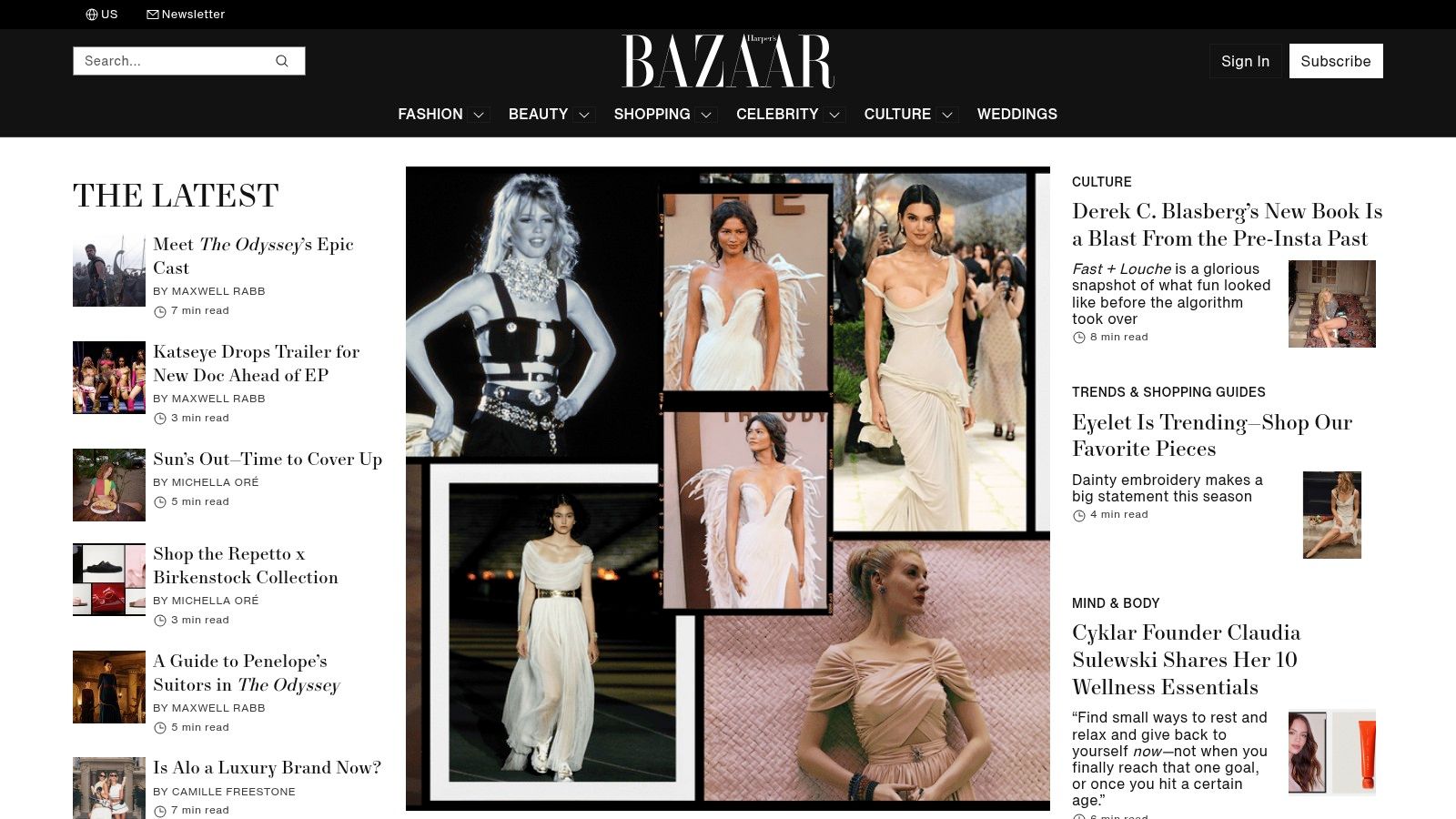
Harper's Bazaar is where I'd send someone who understands clothing but needs sharper seasonal judgment. Networking doesn't happen in a vacuum. A July rooftop mixer and a November conference reception ask for different fabric behavior, footwear logic, and layering discipline.
Bazaar is good at handling those distinctions. Its work-outfit guides usually frame clothing in relation to weather, occasion, and mood, which makes them more useful than generic “office wear” advice.
Why seasonal context matters
Most networking event outfit ideas fail because they ignore conditions. If you're overheating, tugging at fabric, or limping by the second hour, your clothing is no longer supporting your performance.
That matters even more now because hybrid formats have changed what clothing needs to do. Styled by Weathersby reports that 68% of professional networking occurs in hybrid formats as of 2025, while only 12% of “what to wear” guides address issues such as fabric reflectivity, structured shoulders for screens, and comfortable footwear for movement. Bazaar isn't framed exclusively around hybrid dressing, but it often gives enough seasonal and visual context to help you make those adjustments.
Use it for refinement, not rules
Bazaar is particularly strong when you need help interpreting heat-wave suiting, winter layering, or transitional footwear without collapsing into obvious formulas. It can also help you understand when a softer color palette still reads credible, and when it doesn't.
Its limitation is retail fragmentation. Articles often point across multiple sellers, so stock can vary. Treat the publication as a judgment tool first.
6. Who What Wear | Networking-Specific Outfit Advice
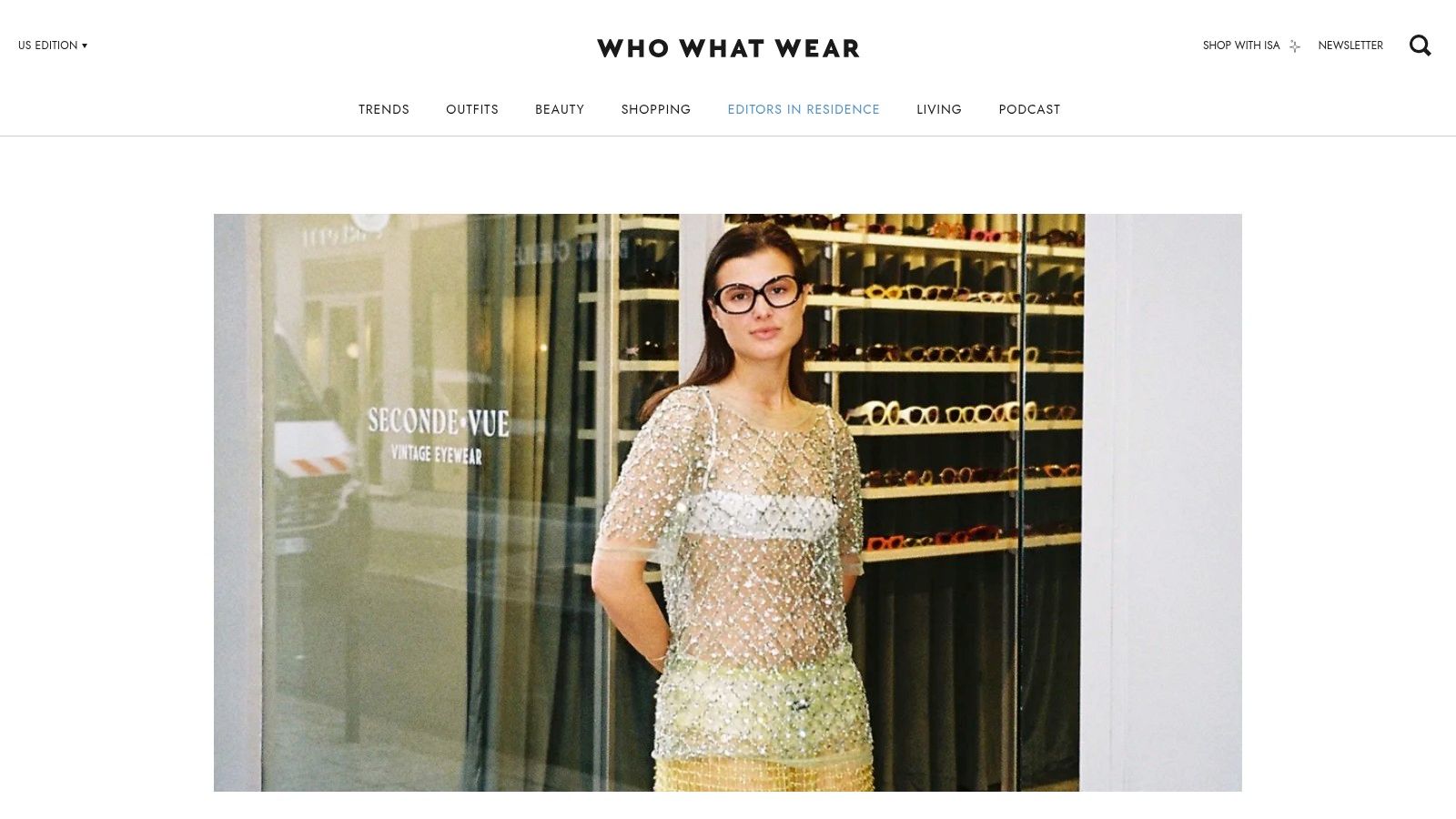
Most fashion media discuss workwear broadly. Who What Wear is one of the few editorial sources that addresses networking events directly. That alone makes it valuable.
If you're deciding between a career fair, a cocktail-style mixer, a lunch meeting, or a creative-industry event, this site helps break the “networking” label into actual scenarios. That's a better approach than pretending one outfit formula fits every room.
Where it's especially useful
This resource works best for women who want practical, wearable combinations with enough personality to avoid looking anonymous. It tends to show how to introduce color, print, or a distinctive shoe without losing professional footing.
That makes it useful for:
- Scenario-specific dressing: More precise than generic officewear galleries.
- Dress-code decoding: Good when the invite language is vague.
- Personality control: Helpful if you want memorability without noise.
One detail many people ignore is fit beneath the outfit. For networking settings, visible bra lines, panty lines, and poor hemming weaken professional authority. Meg Gallagher also advises attendees to skip athleisure unless the event necessitates it, and to hem sleeves and pant lengths so the outfit fits precisely, as outlined in her networking outfit guidance.
Clothing should disappear once you enter the room. If you're adjusting straps, smoothing seams, or thinking about your hemline, the outfit is still wearing you.
The drawback
Some articles and linked products age out. Verify stock before you commit. Even so, the site remains one of the strongest quick references for event-specific networking event outfit ideas.
If your anchor piece is a jacket, theFeinheit's guide to the best blazers for women is the right next step.
7. FARFETCH | Workwear Style Guide
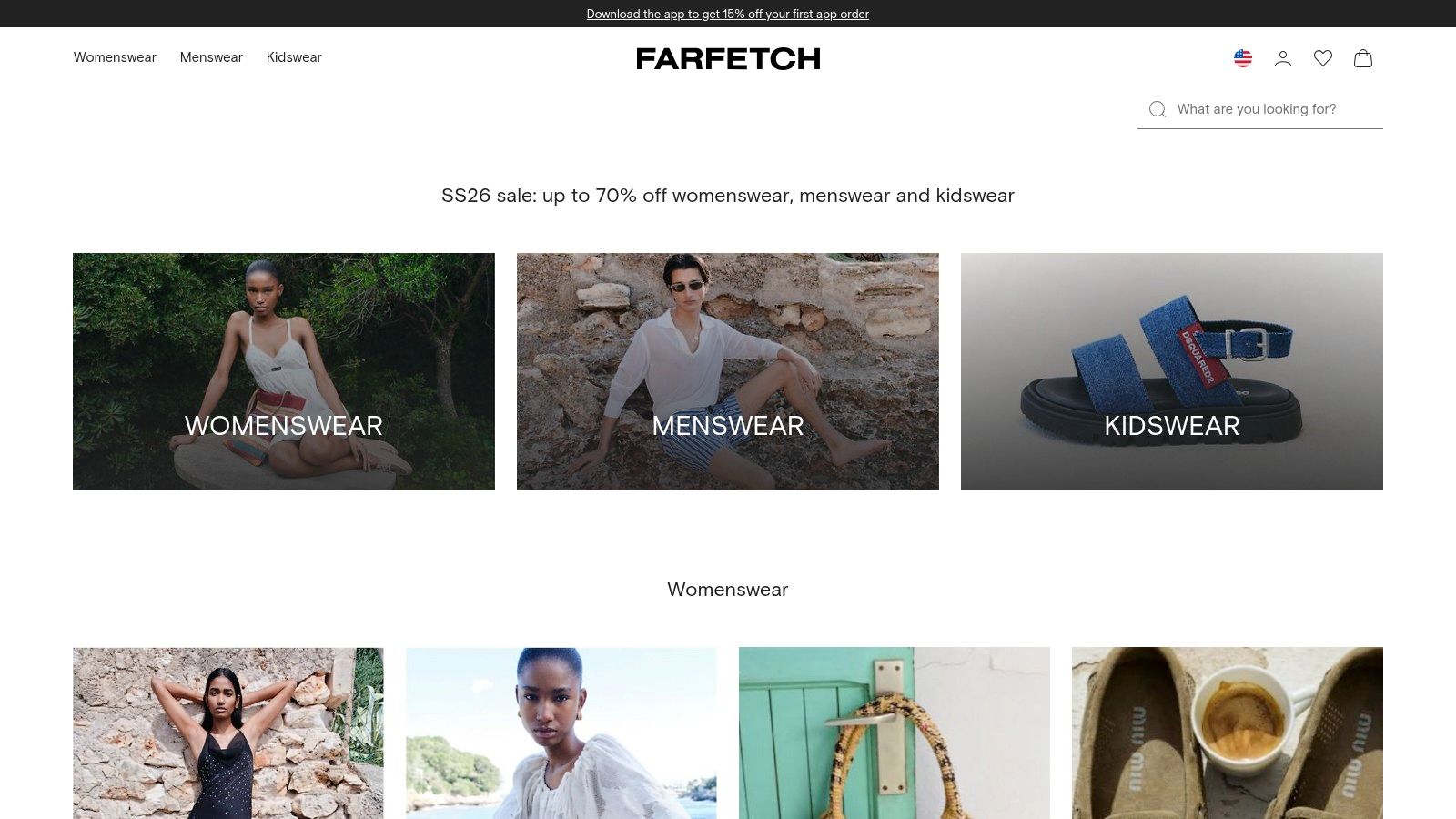
FARFETCH is the most useful option here for people whose professional world sits between business and creative culture. If your event takes place in design, media, architecture, fashion, or startup-adjacent spaces, standard corporate outfit advice often lands too flat. FARFETCH helps you calibrate that in-between zone.
Its workwear guidance and marketplace structure make it easier to source pieces that feel directional without becoming distracting. That distinction matters. You want a memorable signature, not an outfit that interrupts conversation.
Best for creative smart casual
This platform is strongest when “smart casual” means something looser than finance polish but tighter than personal expression. Think precise suiting with less expected footwear, cleaner shirting with interesting texture, or accessories that read intentional rather than loud.
A few advantages make FARFETCH useful:
- Mixed workplace interpretation: Better suited to creative and cross-disciplinary events.
- Broader marketplace access: Helpful if you're searching for a specific brand or harder-to-find item.
- Day-to-evening transition logic: Stronger than many single-brand retailers.
There's also a disciplined buying framework worth applying here. The “30-times test” asks whether you can realistically wear a piece 30 times over the next five years before buying it. The same source notes that clothing spend should generally sit within 3 to 5% of after-tax income, and illustrates why one strategic piece often beats several weaker purchases. A $200 dress worn 50 times costs $4 per wear, while a $100 dress worn 5 times costs $20 per wear, as explained in this LinkedIn workwear investment post.
The trade-off
Guide content can be older, and marketplace pricing, shipping, and duties can vary. You need to check the actual listing details. Still, FARFETCH is one of the fastest ways to source context-flexible pieces when conventional workwear advice feels too narrow.
For footwear strategy, theFeinheit's luxury shoes on sale edit is a smart supplement.
Networking Event Outfit Ideas, 7-Source Comparison
| Source | Audience & Coverage | Ease of Use (implementation complexity) | Budget / Resource Requirements | Expected Outcome | Ideal Use Cases | Key Advantages |
|---|---|---|---|---|---|---|
| NET‑A‑PORTER, PORTER Workwear Edits (Women) | Women; designer-heavy | Easy, shoppable editorial edits | High, premium designer price points | Fashion‑forward, polished networking outfits | High‑end events, fashion‑forward networking | High editorial quality; broad designer range in one cart |
| MR PORTER, What to Wear Hub + The Journal (Men) | Men; occasion‑filtered guidance | Very easy, centralized filters by occasion | High, luxury focus | Practical, correctly‑calibrated men's networking looks | Seasonal/formal menswear, first‑day or event dressing | Practical rules + shoppable editorials for men |
| Nordstrom, Women's Work Clothing (Shop by Occasion) | Primarily women; inclusive sizing | Very easy, robust filters and categories | Wide, budget to premium | Ready‑to‑wear polished outfits with good availability | Last‑minute shopping, varied budgets, size inclusivity | Large in‑stock selection; strong returns and service |
| Shopbop, Capsule Work Wardrobe (Editor‑Led) | Primarily women; contemporary focus | Easy, clear capsule formulas | Mid, contemporary price tiers ($100–$600) | Cohesive capsule looks that simplify event packing | Conference packing, day‑to‑night capsule building | Editor‑led capsule guidance reduces decision fatigue |
| Harper's Bazaar, Shoppable Work‑Outfit Guides (Women) | Women; seasonal focus | Easy, seasonal roundups with links | Mixed, designer + attainable picks | Season‑appropriate networking outfits across climates | Climate‑specific events, seasonal mixers | Up‑to‑date seasonal advice with clear outfit formulas |
| Who What Wear, Networking‑Specific Outfit Advice (Women) | Women; networking‑focused | Easy, direct networking breakdowns | Mixed, various price points | Scenario‑specific, personality‑friendly networking looks | Networking events by type (career fair, cocktail, lunch) | Directly addresses networking contexts and formality |
| FARFETCH, Workwear Style Guide (Unisex/Mixed) | Unisex/mixed; creative/luxury market | Moderate, marketplace complexity | High, designer pieces, variable import costs | Fashion‑forward, creative industry day‑to‑night outfits | Creative or fashion industries, sourcing rare designers | Wide designer marketplace; good for unique or rare pieces |
Investing in Your Professional Narrative
The strongest networking event outfit ideas don't come from copying a single look. They come from understanding how clothing functions in a room. It should support movement, frame your posture, signal judgment, and leave enough visual memory for someone to recall you later. That's professional infrastructure, not decoration.
Use NET-A-PORTER when you need high-polish visual standards. Use MR PORTER when formality needs clear boundaries. Use Nordstrom when speed, fit range, and practical filtering matter most. Use Shopbop when you want a tighter capsule. Use Harper's Bazaar when weather and seasonal context are the main issue. Use Who What Wear when the event type itself is unclear. Use FARFETCH when your industry sits in that creative middle ground where generic office advice stops working.
The best buying decisions still follow a few fixed principles. Stay conservative in the base and place your personality in one controlled element. If you're uncertain, err slightly overdressed rather than underdressed, because professional rooms generally reward discipline over experimentation, as noted earlier in the Women CEO guidance. And if your events skew affluent, remove visible branding and let fit, fabric, and restraint do the talking.
Your outfit also has to function physically. Test it sitting, standing, and walking. Make sure hems are correct, undergarments don't show through, and shoes can survive the full event without changing your posture. A good look that fails after thirty minutes was never a good look.
The bigger point is this. Stop treating event dressing as a recurring emergency. Build a small rotation of foundation pieces that can handle panels, mixers, breakfasts, client dinners, and hybrid appearances with minor adjustments. That's how you reduce decision fatigue and protect cost-per-wear math at the same time.
At theFeinheit, luxury is about finding pieces that multiply your options, not consume your budget. One strategic investment beats five impulse purchases. Explore our collection of over 13,000 products from 160+ leading brands to build wardrobe infrastructure that endures. Discover your power at theFeinheit.
Feinheit FZ LLC brings an investment-minded approach to personal presence. Explore theFeinheit for strategic pieces that support professional authority, context flexibility, and extended lifespan, with a global assortment designed for people who expect more from what they own.