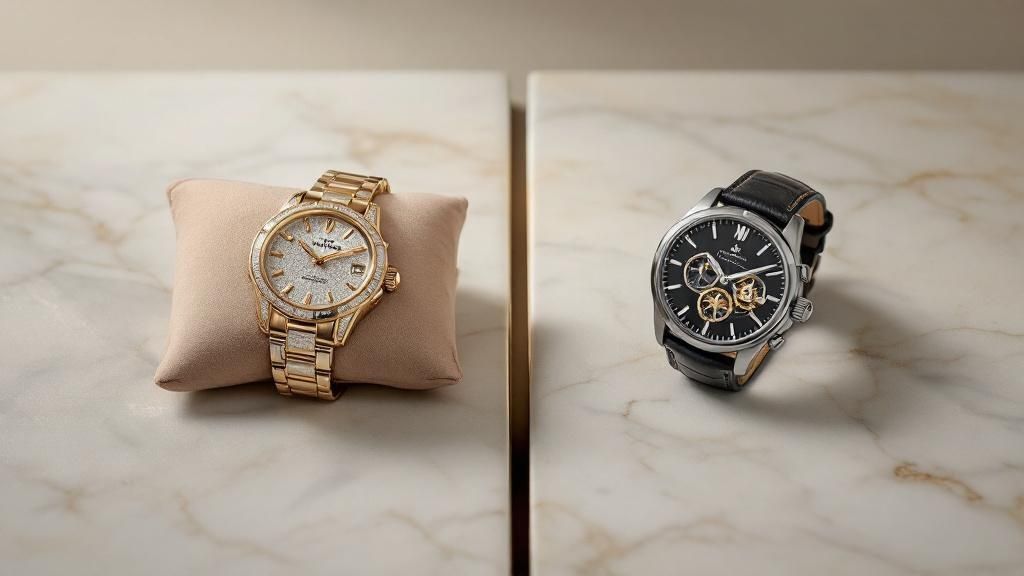
The real difference between luxury and premium boils down to a single question: what is its purpose? Premium is all about being the best-in-class—it’s about superior function and undeniable quality. Luxury, on the other hand, moves beyond function. It’s a world of exclusivity, heritage, and a deep emotional connection.
At its core, all luxury goods are premium, but not all premium goods can be called luxury.
Defining The Divide Between Luxury And Premium
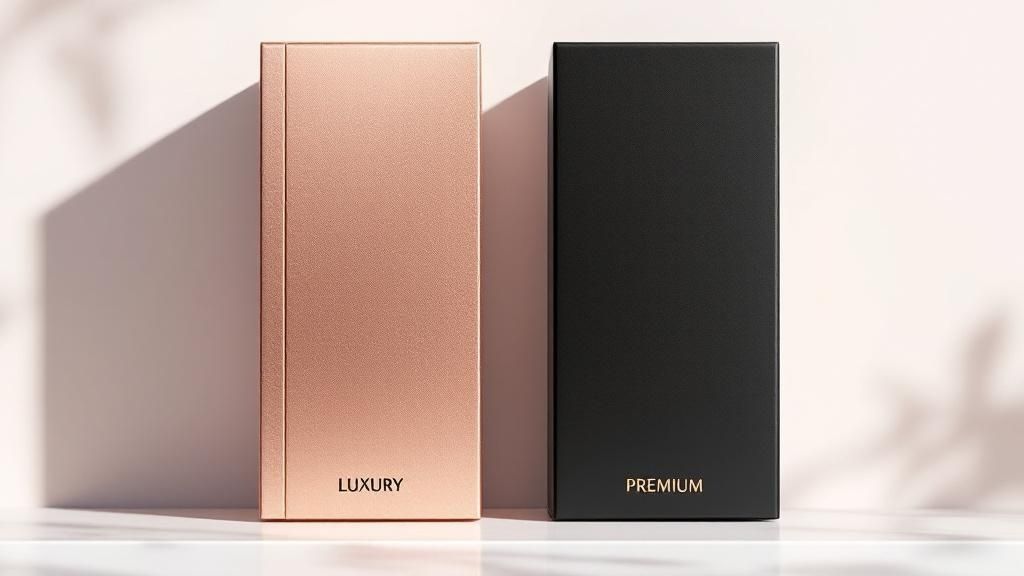
It’s easy to use "premium" and "luxury" as if they mean the same thing, but they actually represent two very different parts of the market. Getting this distinction right is the key to making smarter purchases, whether you’re after top-tier performance or a timeless piece to invest in.
Premium products stand out because of their superior quality, performance, and craftsmanship when compared to standard goods. They are often the best-performing items you can find in their category, built with high-grade materials and advanced engineering. A premium product simply does its job exceptionally well.
Luxury, however, plays a different game entirely—one built on emotion and story. While it certainly includes the high quality you'd expect from a premium item, its real value is rooted in something more intangible.
A luxury item is defined not just by what it is, but by what it represents: a story, a legacy, and a feeling of belonging to an exclusive world.
This is the most important distinction to grasp. Think of it this way: a high-performance coffee maker with precise temperature controls is a premium product. But a handcrafted espresso machine from a century-old Italian brand, made in limited numbers? That’s a luxury item.
To help make these ideas crystal clear, this guide will break down the core attributes that separate these two categories. Exploring how different brands position their goods, like in Main Street Forge's Versus Collection, can also show how product attributes are compared. Our breakdown of a handbag's journey from a premium accessory to a luxury icon further illustrates this point, which you can explore in our guide to https://thefeinheit.com/tote-bags-handbags-2/.
Quick Guide To Luxury vs Premium
To give you a clearer picture, here’s a quick summary of the core distinctions between luxury and premium products at a glance.
| Attribute | Premium Focus | Luxury Focus |
|---|---|---|
| Primary Value | Superior function and performance | Emotional connection and brand story |
| Craftsmanship | High-quality, often mass-produced | Artisanal, often handmade, and rare |
| Availability | Widely accessible | Intentionally scarce and exclusive |
| Price Rationale | Based on quality of materials and R&D | Based on brand heritage and perceived value |
This table helps frame the conversation, but as you'll see, the lines can sometimes blur. Let's dive deeper into what truly sets them apart.
The Evolving Global Landscape of Luxury Goods
To really get the difference between luxury and premium, it helps to understand the massive forces at play behind the scenes. The global luxury goods market isn't some static, dusty old institution; it's a living, breathing arena that shifts with global economies, new tech, and—most importantly—what we value as consumers. Grasping this context is crucial for seeing why brands act the way they do.
A huge part of this story is the explosion of global wealth. The luxury market, valued at a staggering USD 390.17 billion in 2024, is expected to climb to nearly USD 579.26 billion by 2030. A lot of that growth is coming from new money and rising disposable incomes in emerging markets, which are creating fresh, hungry audiences for high-end goods. You can dig into the numbers yourself in this full market research report.
What this means on the ground is that the traditional luxury capitals like Paris and Milan now share the spotlight with vibrant hubs across Asia and the Middle East. Brands can no longer afford to speak to just one type of customer; they have to connect with a diverse, global clientele.
The New Generation of Luxury Buyers
Maybe the biggest shake-up, though, is coming from the new kids on the block: Millennials and Gen Z. These digital natives are hitting their peak spending years, and they don't look at luxury the way their parents did. They're not just buying a handbag or a watch; they're buying into a brand's story, its values, and its community.
This has forced a radical rethink for many old-school brands. The quiet, almost secretive marketing of the past just doesn't cut it anymore. It's being replaced by bold, engaging, and very public digital conversations.
For today's buyers, luxury is less about quiet ownership and more about a shared experience and a visible identity. Authenticity and relevance are now just as critical as heritage and quality.
This shift is precisely why you see legendary fashion houses that once relied on glossy magazines now collaborating with TikTok creators and dropping digital-first collections. They have to meet their new customers where they are—and that's online.
How Brands Are Adapting
To keep up, luxury brands are making smart moves across the board. This isn't just about slapping a new filter on an Instagram post; it touches every part of the business, from the way products are designed to the feeling you get when you walk into a store.
Here’s a look at how they're responding:
- Experiential Retail: Brands are transforming their stores, both physical and digital, into more than just places to shop. They're becoming community hubs that host events, offer bespoke services, and forge real emotional connections with customers.
- Sustainability and Ethics: Younger buyers care deeply about a brand's footprint. As a result, luxury labels are being much more open about their supply chains and social responsibilities, weaving it into the core of their brand narrative.
- Digital Integration: From virtual try-on tools that let you see how a watch looks on your wrist from your couch to exclusive online content, technology is making the world of luxury more interactive and accessible than ever before.
All these changes prove that luxury isn't a fixed idea. It’s constantly evolving with the culture and the economy, which is exactly how it stays so desirable from one generation to the next.
When you get down to it, the real difference between luxury and premium isn't just about the price. It's about something deeper—the philosophy, the materials, and the story woven into the very fabric of the brand. Let's break down what truly sets these two worlds apart.
Craftsmanship: Precision vs. Pedigree
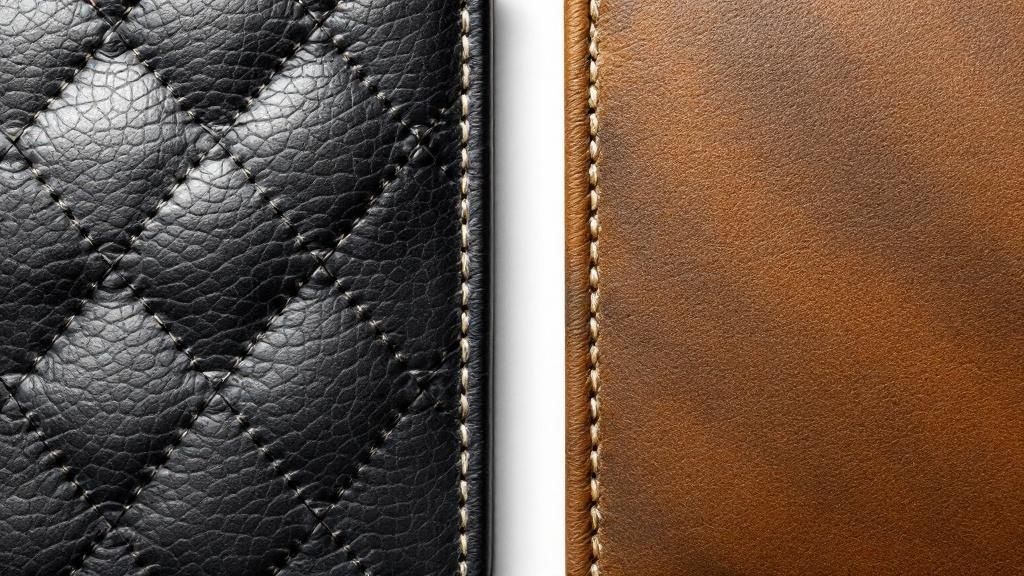
The first place you'll see a major split is in how things are made. A premium product, whether it's a high-end kitchen gadget or a top-tier leather work bag, is all about precision engineering and superior manufacturing processes. The name of the game is consistency. The goal is to produce flawless, high-performing products every single time, often using the latest technology to get there.
Luxury, on the other hand, is a different beast entirely. Here, the story is one of artisanal handwork and generations of tradition. Picture the meticulous hand-stitching on an Hermès Birkin or the painstaking assembly of a Patek Philippe watch. The value isn't just in the final product; it's in the unique touch of a master artisan. In this world, tiny imperfections aren't flaws—they're the very signatures of human hands and authentic craftsmanship.
Materials and Scarcity: The Tangible and The Rare
This difference in philosophy naturally bleeds into the materials themselves. Premium brands are obsessed with function. They'll choose high-grade, reliable materials like aerospace-grade aluminum or tough ballistic nylon because they're built for longevity and performance.
Luxury brands play a different game. They often gravitate toward materials that are rare, exotic, and emotionally charged. We're talking about a specific type of crocodile skin, a rare wood sourced from a single forest, or a custom-developed alloy. The choice is driven as much by the material's story and rarity as its functional durability. It's this very focus on exclusivity that defines the luxury space, much like how unique original artworks derive their value from being one-of-a-kind creations.
Think of it this way: Premium offers strategic accessibility, inviting a broad audience to experience top-tier quality. Luxury, however, practices deliberate scarcity, turning ownership into an exclusive privilege.
This is a core tenet of the luxury business model. A premium brand’s goal is to sell its products to as many qualified customers as it can. A luxury brand does the opposite—it intentionally caps production to fuel desire and reinforce the idea that owning one of its pieces is a rare accomplishment.
The chart below puts some numbers to this, contrasting key market data points between the premium and luxury segments.
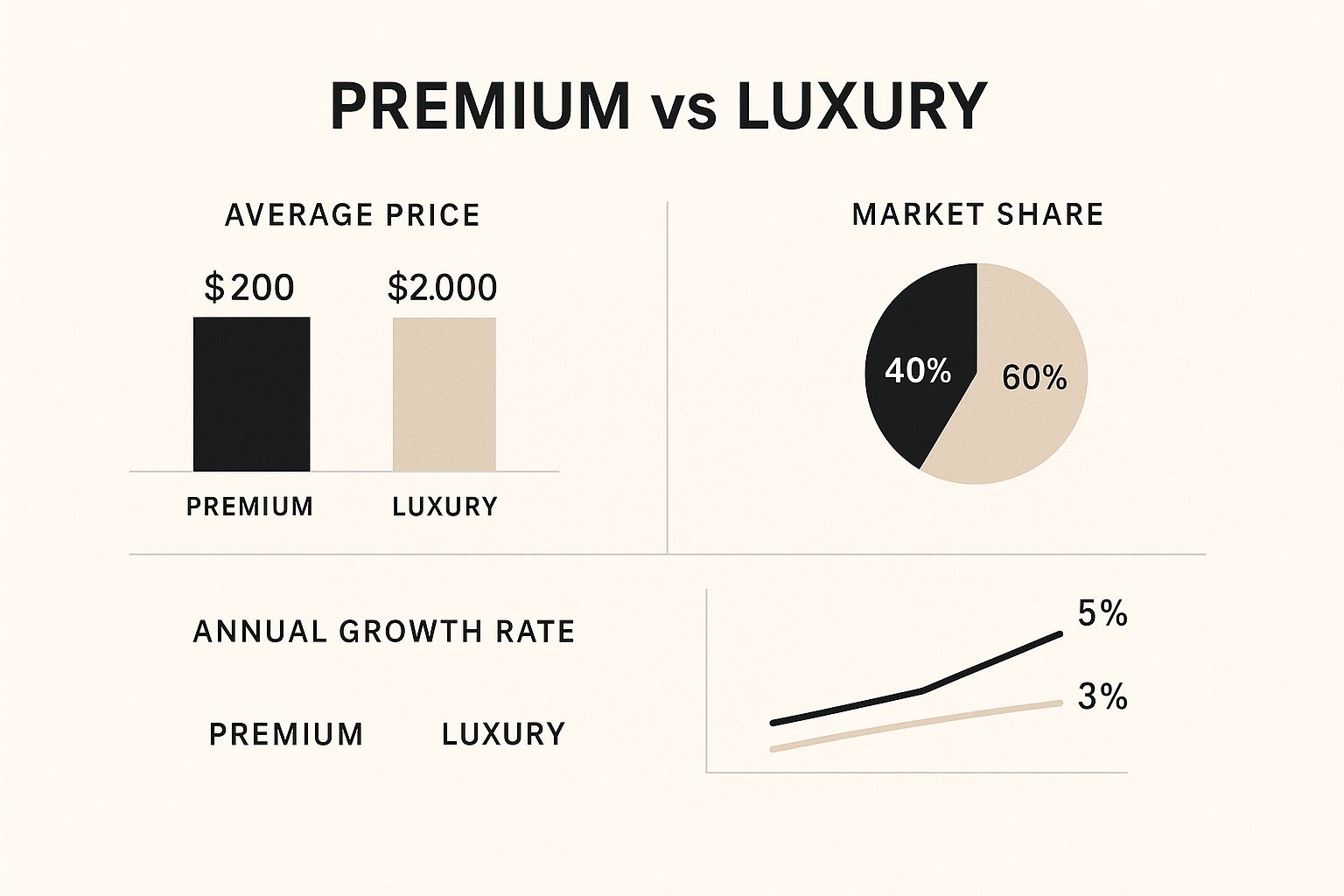
As the data shows, while the luxury market holds a higher price point and market share, the premium sector is growing faster. This points to a rising appetite for quality that’s still within reach.
The Power of Brand Narrative: Innovation vs. Legacy
Finally, we have the story the brand tells. A premium brand builds its narrative around modern innovation and measurable performance. Its story is about being the best at solving a problem, and it has the data, research, and glowing user testimonials to prove it.
A luxury brand’s story is one of timeless heritage and cultural significance. Its narrative is steeped in its founding, its iconic designs, and its deep-rooted association with a certain lifestyle or historical moment. You aren't just buying a product; you're buying a piece of its legacy. This powerful, emotion-fueled storytelling is perhaps the most significant differentiator in the entire luxury versus premium debate.
Understanding Market Share and Industry Players
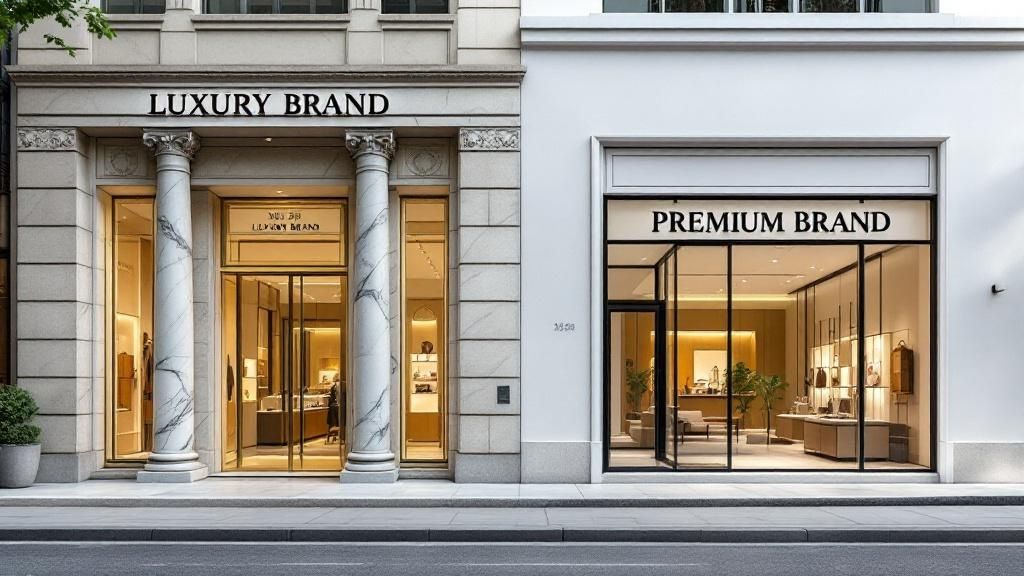
When you start looking at the luxury and premium markets, it’s easy to assume a few massive conglomerates pull all the strings. But the reality, especially in the luxury sector, is far more complex and frankly, more interesting. The landscape is surprisingly fragmented, meaning even the most recognizable brands only hold a small slice of the overall pie.
This structure creates a fiercely competitive environment. It forces every brand to constantly innovate, pushing them to double down on what makes them unique just to stay relevant. Unlike other industries where one or two giants dominate, the luxury world is a bustling global ecosystem. Dozens of influential houses are all fighting for the attention of a very discerning—and limited—clientele.
The real power dynamics become clear when you dig into the numbers. The data paints a picture of a competitive field where no single brand has a chokehold on the market. In fact, you might be surprised by how modest the top players' shares really are.
The luxury market is not a monopoly. It is a highly competitive arena where heritage, innovation, and brand storytelling are the weapons of choice in the battle for consumer loyalty.
This constant fight for relevance means no one can afford to get comfortable. Brands must relentlessly deliver on their promise of exclusivity and superior quality. It's the only way they can maintain their standing and appeal to both their loyal customers and the next generation of shoppers.
How The Market Is Divided
A look at the data shows just how spread out the market truly is. Chanel currently leads the pack with the largest individual market share at 6%, but Dior is right on its heels at 5%. Even industry powerhouses like Gucci and Louis Vuitton each command only about 4% of the total market. This breakdown really highlights the intense rivalry at the very top.
Looking further down the list, other iconic names make their presence known:
- Hermès, Ralph Lauren, and Tommy Hilfiger each have a solid 2% share.
- Household names like Michael Kors, NARS, Prada, and Ray-Ban account for about 1% each.
When you add it all up, these major players collectively represent about 33% of the entire luxury goods market. This leaves a staggering 67% for a huge array of other competitors, from niche artisan workshops to bold, emerging designers. If you want to dive deeper into these figures, these in-depth luxury goods statistics offer a great overview. Ultimately, this fragmentation is what keeps the market so dynamic and diverse, giving consumers an incredibly rich tapestry of choices.
How the Modern Luxury Consumer Is Changing
The old stereotype of the luxury consumer—someone singularly focused on flashy logos and accumulating things for the sake of it—is officially outdated. A new kind of buyer has taken center stage, one who is far more thoughtful, discerning, and intentional. These shoppers are drawing a sharp line in the sand in the luxury vs. premium debate, and they're looking for something much deeper than just a price tag.
This modern mindset is all about substance. Authenticity, a brand's heritage, and a genuine, personal connection now often outweigh the simple desire to own the most expensive object in the room. It’s a huge shift from blind consumption to conscious connection. The story behind the brand is just as important as the stitch quality.
From Products to Experiences
Perhaps the biggest change we're seeing is the massive appetite for experiential luxury. While a beautiful handbag or a fine watch will always have its place, there's a clear move toward valuing memorable experiences over physical possessions. This can be anything from exclusive travel and private access to cultural events to bespoke services that feel completely unique and personal.
This trend has pushed brands to think way beyond their product catalogs. The goal now is to build an entire world around the brand—a lifestyle that customers want to be a part of. It’s less about the transaction and more about creating meaningful moments that resonate with a buyer's identity.
The modern luxury purchase is less about what you have and more about who you are. It's an investment in your personal story and life enrichment, not just a way to acquire another object.
This evolution shows up in the market data, too. In 2025, the luxury goods industry is settling into a more sustainable rhythm, with a projected CAGR of 3.4% between 2024 and 2029. While that's a more measured pace than we've seen in past years, certain segments like experiential services are absolutely booming. You can dig deeper into these insights into luxury industry trends to see how emerging markets like India are also showing powerful demand.
A Focus on Sustainability and Authenticity
Today's luxury buyer is also more conscious than ever. They're not afraid to ask the tough questions about a brand’s ethics, its environmental footprint, and its social commitments. "Authenticity" isn't just some marketing buzzword anymore; for this crowd, it's a dealbreaker.
The smartest brands are getting the message and adapting with real transparency and precision. Here’s what that looks like:
- Targeted Regional Strategies: Luxury means different things in different cultures. Brands are now tailoring their products and marketing to high-growth regions with a much more nuanced touch.
- Personalized Engagement: Using data and tech to offer bespoke recommendations and one-on-one communication is key. Customers want to feel seen and valued, not just marketed to.
- Storytelling with Substance: The most successful brands are telling a clear and genuine story that goes beyond the product itself. They're sharing their heritage, their values, and their purpose.
At the end of the day, the future of luxury belongs to brands that truly understand these new consumer desires. Success is no longer just about making a beautiful product. It's about building a real, lasting relationship with a new generation of savvy, conscious, and experience-hungry buyers.
Making the Right Choice for Your Lifestyle
So, how do you decide? The choice between luxury and premium isn't about which one is inherently "better," but which is better for you. It’s less about a price tag and more about a personal gut check on your values, your budget, and what you want your things to do for you.
The key is to get honest with yourself about what you’re really looking for. Do you need something that performs a specific function exceptionally well, day in and day out? Or are you searching for an object that tells a story, something that holds a deeper meaning or potential investment value?
A premium purchase is an investment in function and reliability. A luxury purchase is an investment in identity, heritage, and emotion.
Once you grasp this distinction, you can make choices that feel right, not just expensive. There are clear moments where one path makes more sense than the other. This simple framework should help you figure out which to choose and when.
When to Choose Premium vs. Luxury
Let's imagine a frequent business traveler. A premium, rock-solid suitcase loaded with smart features—like a built-in scale or wheels that glide like they’re on ice—is a brilliant investment. It solves a real-world headache reliably and makes every trip smoother. The focus here is pure, unadulterated performance.
Now, picture that same traveler planning a once-in-a-lifetime anniversary trip. This is where exploring luxury accommodation makes perfect sense. The goal is no longer just function; it's about crafting an unforgettable experience. The value isn’t just in the room, but in the impeccable service, the unique atmosphere, and the memories you'll talk about for years.
Here’s a practical way to think about it:
- Opt for Premium When: Your main goal is best-in-class performance and durability for something you'll use regularly.
- Invest in Luxury When: You’re prioritizing heritage, potential for value appreciation, and a powerful emotional connection to an item.
Think about building a versatile wardrobe. You might stock up on premium basics because their quality and durability are top-notch for everyday wear. But for those cornerstone statement pieces—the ones that define your style—luxury offers a timeless quality that lasts far beyond a single season. This is the exact philosophy behind building a smart travel capsule wardrobe, where a few select luxury items elevate a foundation of functional, premium pieces.
Got a few more questions? You’re not alone. The line between luxury and premium can be blurry, so let's clear up a few of the most common head-scratchers.
Is All Designer Clothing Considered Luxury?
Not at all. While most luxury houses are led by a famous designer, the term "designer" just means it came from a specific creative mind. Plenty of fantastic designer brands operate squarely in the premium space. They focus on top-notch materials and contemporary style but skip the deep heritage or deliberate scarcity that defines true luxury.
Think of it this way: a beautifully made, modern designer dress is premium. A handcrafted, limited-run gown from a historic Parisian couture house is luxury. The real difference comes down to the scale of production, the level of hand-craftsmanship, and the weight of the brand's legacy.
Key Takeaway: "Designer" tells you who created it, not its status. It takes that special mix of design, exclusivity, heritage, and pure emotional pull to elevate a brand from premium to the realm of luxury.
Can A Premium Brand Become A Luxury Brand?
Absolutely, but it's a marathon, not a sprint. A brand has to do more than just make high-quality stuff. It takes decades of meticulous brand-building, nurturing a rich story, and carefully managing production to create that sense of rarity and intense desire.
It’s like earning a world-class reputation. The brand must grow beyond its practical benefits and become a cultural symbol. Moving from a premium focus on what the product does to a luxury focus on what it represents is a massive transformation that demands incredible time, investment, and unwavering strategic vision.
Is Price The Best Indicator Of Luxury?
Price is part of the picture, but it's a terrible solo indicator in the luxury vs. premium debate. A high price tag might point to premium quality, years of R&D, or cutting-edge tech. Luxury pricing, on the other hand, is often completely un-tethered from the cost of materials. You're paying for brand value, exclusivity, and the feeling it gives you.
A high-tech electric car might be expensive and incredibly premium, but a handcrafted Rolls-Royce, with its century-long legacy and bespoke options, lives in the luxury space. Its price is justified by its story and status, not just its spec sheet.
At Feinheit FZ LLC, we curate a world where you can explore both exceptional premium quality and true luxury heritage. Discover a collection of over 20,000 products from more than 500 brands that set the standard in style and substance. Shop our collections today and find the perfect piece that speaks to your lifestyle.
