Before you can really upgrade your style, you have to figure out what your authentic taste even is. This isn’t about chasing every fleeting trend that pops up on your feed. It’s about digging a little deeper to discover the colors, fits, and silhouettes that genuinely feel like you. The whole point is to find inspiration and then translate it into a practical, everyday look that makes you feel incredible.
Discovering Your Authentic Style Identity
To truly improve your style, you need a clear vision of what you’re aiming for. This isn’t about inventing a new persona from scratch. Far from it. It’s about uncovering the aesthetic you already admire and figuring out how to make it work for your actual life.
A great first step? Become an inspiration collector.
This means moving beyond just aimless scrolling and starting to actively save what resonates with you. Think about characters in movies or TV shows whose style you love. Is it the rugged simplicity of a classic action hero or the polished elegance of a character in a period drama?
Find Your Style Inspiration
Look at people in your real life whose style you admire—maybe it’s a coworker who always looks so effortlessly put-together, a friend with a unique artistic flair, or even a public figure. Analyze what it is you actually like about their look. Is it their clever use of color, their mastery of layering, or the simple fact that their clothes just fit them perfectly?
The goal isn’t to copy someone else’s outfits piece for piece. Instead, you’re looking for recurring themes—the why behind the look. You might discover you’re consistently drawn to minimalist designs, bold accessories, or relaxed tailoring.
Social media is obviously a huge help here. In fact, an overwhelming 78% of consumers say that platforms like Pinterest and Instagram influence what they buy. These platforms have essentially democratized fashion, giving you an endless stream of visual data to mine for your own taste.
Create a Style Mood Board
Once you start gathering ideas, it’s time to create a mood board to see it all in one place. This doesn’t have to be a physical corkboard (unless you want it to be!). A private Pinterest board or even a dedicated folder of screenshots on your computer works just as well.
Save images that catch your eye, and after a while, you’ll start to see patterns emerge. You’ll begin to notice some common threads:
- Colors: Are you saving a lot of earthy neutrals, vibrant jewel tones, or soft pastels?
- Silhouettes: Do you lean towards structured, tailored shapes or more fluid, relaxed fits?
- Textures: Do your saved images feature a lot of soft knits, crisp cotton, or smooth leather?
- Overall Vibe: Is the feeling modern and edgy, classic and timeless, or maybe a little more bohemian and free-spirited?
This visual diary becomes your personal style blueprint. As you start to zero in on these elements, you can look for practical ways to apply them. For example, understanding the basics of how to style a dress can give you ideas for translating your vision into real-world outfits. This is the foundational step that makes every future wardrobe choice more intentional and, most importantly, more authentic.
Conducting a Strategic Wardrobe Audit
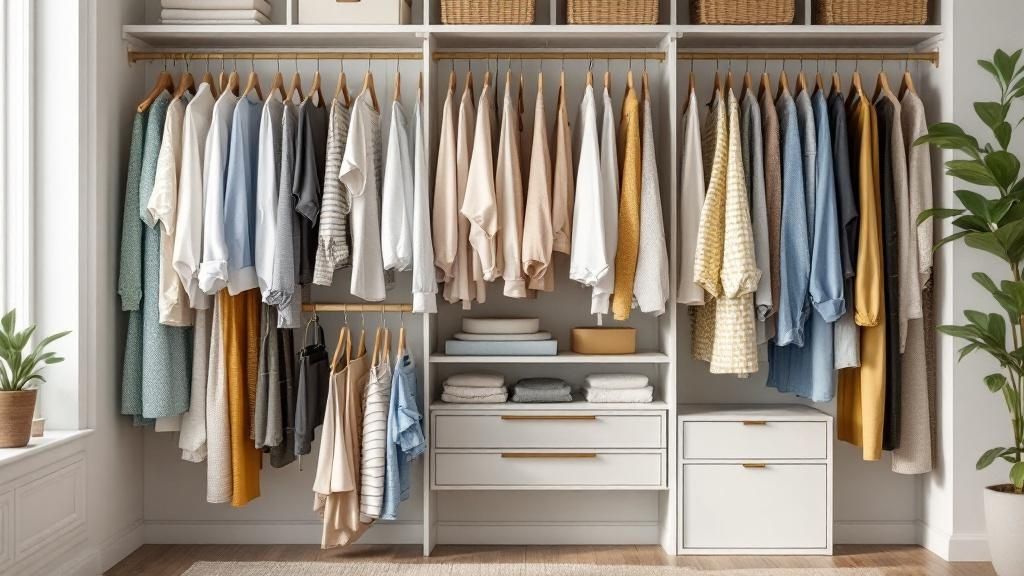
With your style vision in hand, it’s time to face the closet. An honest wardrobe audit is a non-negotiable step because it forces you to bridge the gap between the clothes you own and the person you want to be.
Let’s be real—most of us only wear a tiny fraction of our clothes. Research suggests it’s as low as 20%. That cluttered, chaotic space makes getting dressed a daily source of stress, not a moment of creative expression. The goal here isn’t just to mindlessly toss things out; it’s about making deliberate, strategic decisions.
We’re going to use a simple but brutally effective four-pile system to sort every single thing you own. This method cuts through the noise and helps you assess each piece with clarity and purpose.
The Four-Pile System
First things first: pull everything out of your closet. And I mean everything. Pile it all on your bed or the floor. Now, you’ll create four distinct piles: Keep, Tailor, Consign/Sell, and Donate. Pick up each garment one by one and get ruthless with your questions.
- Does this fit my body right now? Not the body you had five years ago or the one you hope to have next year. Today.
- Does this align with my style identity? Go back to your mood board. Does this piece actually fit the aesthetic, color palette, and vibe you’ve defined?
- Have I worn it in the last 12 months? Barring specific formalwear or seasonal gear, if the answer is no, that’s a massive red flag that it no longer serves you.
This process is about confronting what’s truly valuable in your closet versus what’s just taking up precious real estate. It’s the first real, practical step toward building a wardrobe that works for you, not against you.
Making Smart Decisions
Deciding what goes where can feel overwhelming, but focusing on function simplifies things. Your “Keep” pile should only contain items you genuinely love, that fit you well, and that align with your style goals. These are your workhorses, the foundation of your wardrobe.
The “Tailor” pile is for pieces with high potential. Maybe it’s a fantastic pair of trousers that are just an inch too long, or a blazer you adore that’s a bit boxy in the shoulders. A small, inexpensive alteration can completely transform a garment from “meh” to a star player.
For high-quality items that are in great shape but just aren’t you anymore, the “Consign/Sell” pile is your best friend. This allows you to recoup some of your initial investment, which you can then put toward acquiring pieces you’re actually missing. Check out platforms like The RealReal or Vestiaire Collective for this.
A common mistake is clinging to “aspirational” items that don’t fit your current lifestyle. That cocktail dress for a party you might attend someday? If it’s been collecting dust for years, it’s just visual noise, preventing you from seeing and using the clothes you need for your actual life.
Finally, the “Donate” pile is for everything else—items that are worn out, outdated, or simply not worth the effort of selling. Getting these pieces out of your space is incredibly freeing, both physically and mentally.
Reorganize for Inspiration
Once the great purge is complete, it’s time to put it all back together—but better. Group similar items together: all pants in one section, all shirts in another. I also highly recommend organizing by color within each category; it makes pulling outfits together infinitely easier.
The whole point is to make your best pieces visible and accessible.
When you open your closet and see only clothes that you love, that fit you perfectly, and that make you feel like yourself, getting dressed stops being a chore. It becomes an inspiring daily ritual. This audit isn’t just about decluttering; it’s about uncovering the gaps and building a foundation for intentional, effortless style.
Mastering Fit And The Power Of Tailoring
If there’s one secret that truly stylish people understand, it’s this: fit is everything. An expensive, ill-fitting garment will always look cheaper than an affordable one that fits your body perfectly. Seriously, mastering fit is the single most impactful way to level up your style, and it has absolutely nothing to do with price tags or brand names.
When you’re trying on clothes, the details matter. For a blazer or jacket, the shoulder seam should end exactly where your natural shoulder does—not drooping down your arm or hiking up toward your neck. On a shirt, the buttons should close smoothly without any pulling or gaping across the chest.
Knowing What To Look For
The right fit feels as good as it looks. It allows you to move comfortably without adding unnecessary bulk or feeling constricted. A well-fitting pair of trousers, for example, will sit comfortably at your waist without a belt and fall cleanly to your shoes without excessive bunching at the ankle.
Here are a few quick fit checks you can do right in the dressing room:
- Shoulders: The seam should sit perfectly at the edge of your shoulder bone.
- Sleeves: On a long-sleeved shirt or jacket, the cuff should end right at your wrist bone.
- Pants: The fabric should drape smoothly over your hips and thighs without pulling tightly or looking baggy.
The Magic Of A Good Tailor
Even with a keen eye, off-the-rack clothing is designed for a generic body shape, not your body. This is where tailoring becomes your greatest ally. Finding a reliable local tailor is a game-changing move in your style journey.
Simple, inexpensive alterations can make a world of difference. To really get the most out of tailoring, understanding your precise body measurements is a huge advantage. Learning How to Take Body Measurements For Clothes empowers you to communicate exactly what you need. From there, a skilled tailor can work their magic.
Remember, a $50 pair of trousers tailored to fit you like a glove will always look more polished and expensive than a $500 pair that’s just a little bit off. It’s the ultimate style equalizer.
Not all alterations are created equal, though. Some offer more bang for your buck than others. Here’s a quick guide to the most common, high-impact tweaks a tailor can make.
High-Impact Tailoring Alterations
A guide to the most common and effective clothing alterations that can dramatically improve the fit and look of your wardrobe.
| Alteration | Common Garments | Why It Matters |
|---|---|---|
| Hemming Pants | Trousers, Jeans, Chinos | Ensures pants break cleanly at the shoe, eliminating sloppy bunching. |
| Taking in a Waist | Trousers, Skirts, Dresses, Jeans | Creates a defined silhouette and eliminates the need for a belt to cinch excess fabric. |
| Slimming a Sleeve | Shirts, Blazers, Jackets | Removes excess fabric for a sharper, more modern look. |
| Shortening a Sleeve | Shirts, Blazers, Jackets | Allows a hint of shirt cuff to show and prevents sleeves from looking sloppy. |
| Adjusting Shoulders | Blazers, Jackets, Coats | The most crucial fit point; ensures the garment hangs correctly on your frame. |
Focusing on these key adjustments can transform off-the-rack pieces into clothes that look like they were made just for you. It’s a small investment that pays huge dividends in how you look and feel.
Once you know which pieces work, you can start building a more focused wardrobe. This infographic shows a common breakdown for a capsule wardrobe, where core pieces are selected for maximum versatility.
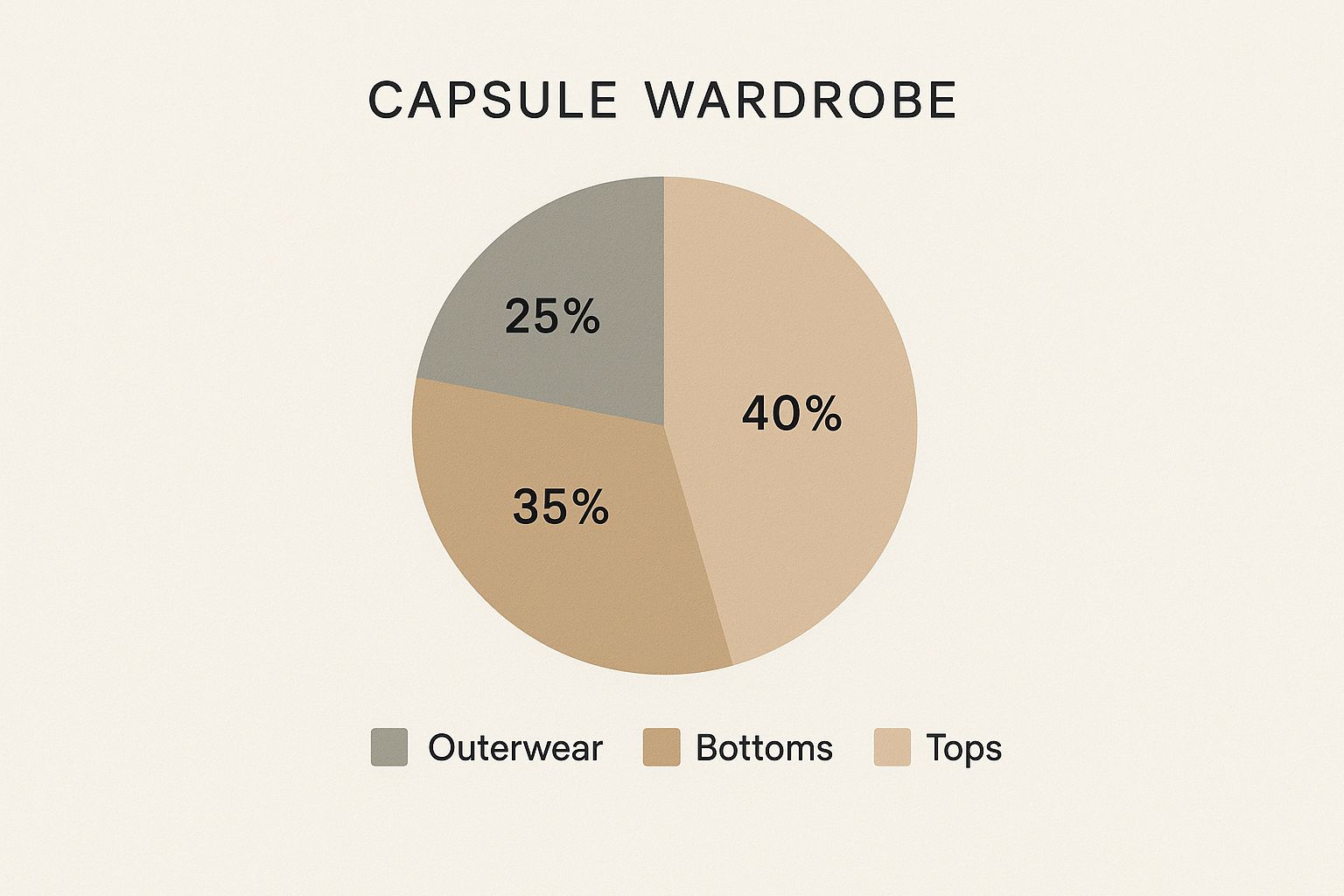
The data here shows how a balanced selection of tops (40%), bottoms (35%), and outerwear (25%) forms the backbone of a versatile and functional closet. By ensuring each of these core items fits perfectly, you create an endlessly flexible foundation for great style.
Building Your Wardrobe With Intention
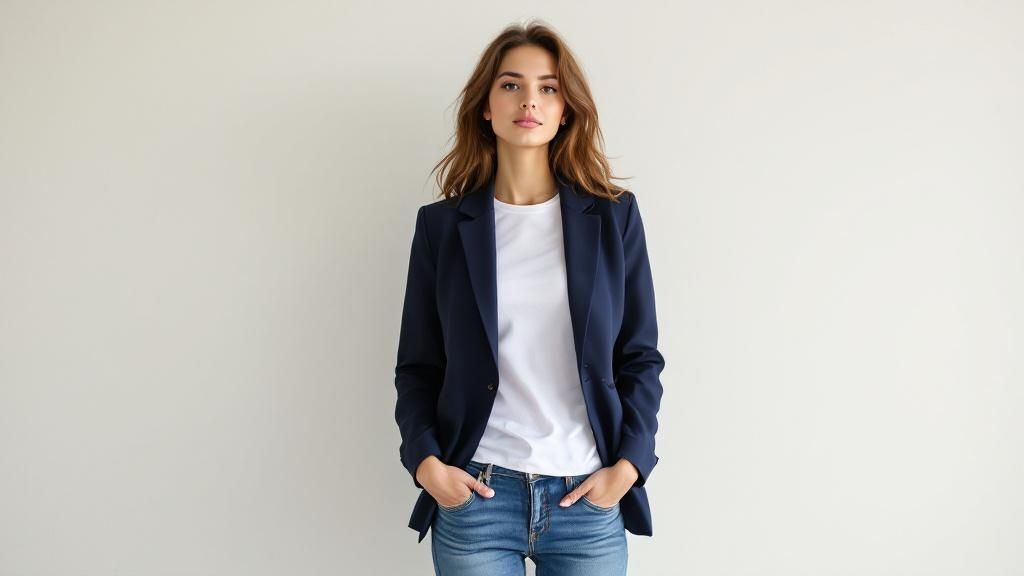
Once you’ve audited your closet and figured out what a great fit actually feels like, you can finally start shopping again. But this time, it’s going to be different. This time, you have a purpose.
Improving your style isn’t about buying more clothes; it’s about buying the right clothes. This is a crucial mindset shift—from chasing quantity to investing in quality. The goal is to find pieces that will serve you for years, not just a single season.
This intentional approach means every purchase has to count. Before you even think about pulling out your wallet, ask yourself a few questions. Does this piece fill a genuine gap you found during your closet audit? Does it align with the style identity you’re building? And, maybe most importantly, is it actually well-made? Learning to spot quality is a skill that will pay you back for the rest of your life.
Focus on Quality Over Quantity
When you’re in a store, it’s time to get hands-on. Don’t just glance at the price tag; feel the fabric. A quality cotton shirt will feel substantial and soft, not thin and scratchy. A good wool sweater will have some density to it and a smooth texture.
Then, look closer at how it’s put together:
- Stitching: Are the seams straight and tight? Look for a high number of stitches per inch. Messy, loose, or fraying threads are an immediate red flag.
- Buttons and Zippers: Do they feel sturdy and secure? A flimsy plastic zipper or a button that’s hanging on by a thread suggests the brand cut corners elsewhere, too.
- Fabric Composition: Take a second to check the care tag. Natural fibers like cotton, wool, silk, and linen generally offer much better durability and breathability than 100% synthetic materials like polyester or acrylic.
A common myth is that quality always comes with an astronomical price tag. While high-end brands often use superior materials, you can absolutely find well-made pieces at various price points if you just know what to look for. Your goal is to buy the best you can afford, making each piece a true investment.
This shift toward smarter, value-driven spending is becoming more widespread. With inflation being a top financial worry for 32% of consumers, a whopping 75% are actively looking for lower-cost, higher-value alternatives. This trend is especially strong among younger shoppers, with 86% of Gen Z and millennials prioritizing value. It’s proof that you don’t need to overspend to build great style. You can read more about these evolving fashion industry trends on Firework.com.
Embrace Secondhand and Vintage Finds
One of the absolute best ways to find high-quality clothing without the high-end price tag is to dive into the world of secondhand shopping. Consignment stores, local thrift shops, and online platforms are treasure troves of gently used designer and vintage gems.
This approach gives you a double win. First, you can often find garments made with superior craftsmanship from an era before fast fashion took over everything. Second, it allows you to build a truly unique wardrobe. You’ll find one-of-a-kind items that no one else has, making your style completely your own. It’s a sustainable, budget-friendly way to seriously elevate your look.
Once you’ve nailed the fit of your clothes, it’s time for the fun part: bringing your style to life with color and accessories. This is where you get to inject your personality, create visual interest, and make every single outfit distinctly yours. It’s the difference between being well-dressed and being genuinely well-styled.
Think of it this way: your core wardrobe is the canvas, and color and accessories are the paint. Mastering these details is how you elevate simple combinations into truly memorable looks.
Find Your Signature Colors
Color has a massive impact on how we look and feel, yet so many of us retreat into a safe zone of black, white, and gray. While neutrals are the backbone of any great wardrobe, color is what gives it a soul. You don’t need a degree in art theory to get this right—just a basic understanding of what makes you shine.
Start by looking back at your mood board. What colors are you naturally drawn to? A simple strategy to get started is the 3:1 ratio: for every three neutral-colored items you own, add one piece in a complementary color.
- Warm Skin Tones (veins look greenish): You’ll likely look incredible in earthy tones. Think olive green, mustard yellow, and rich burnt orange.
- Cool Skin Tones (veins look bluish): Jewel tones are your best friend. Sapphire blue, emerald green, and deep burgundy can make your complexion radiant.
This approach ensures you have a versatile foundation of basics while also having vibrant, impactful pieces to mix in. Your outfits will start to feel intentional and cohesive, not like you just threw something on.
Accessorize with Purpose
Accessories aren’t afterthoughts; they’re the finishing touch that pulls an entire look together. A well-chosen belt, watch, or piece of jewelry can take a simple t-shirt and jeans from basic to effortlessly chic. The secret is to choose each piece with purpose, making sure it adds something meaningful to the outfit.
A common mistake is piling on too many accessories at once, which just creates visual clutter. The goal is completion, not competition. Choose one or two focal points and let them shine without overwhelming the rest of your look.
A classic leather belt, for instance, can cinch the waist of a shapeless dress to give you a more defined silhouette. A bold statement necklace draws the eye upward and adds a pop of color to a plain top. Even something as practical as a handbag can be a powerful style tool, tying an entire color scheme together.
Knowing what’s trending in the world of accessories can also help you make modern, relevant choices. Today, AI-powered forecasting is a huge source for this kind of info. Some platforms use machine learning to scan millions of images to see what’s bubbling up. For Spring/Summer 2025, they’ve pinpointed trends like Boho Chic in Suede, various shades of yellow, and cute sportswear. Some predictions even show that specific details, like asymmetry, are set to grow in popularity by 7%. You can learn more about these 2025 fashion forecasts on Heuritech.com.
Real-World Examples of Smart Accessorizing
Let’s make this practical. Imagine a simple, timeless outfit: dark-wash jeans and a classic white button-down shirt. It’s a clean slate. Now, watch how accessories can completely change its vibe.
- The Professional Look: Add a tailored navy blazer, a classic brown leather belt with a simple silver buckle, a minimalist watch, and a pair of sharp leather loafers. The look is instantly polished, put-together, and ready for a business-casual office.
- The Weekend Casual Look: Ditch the blazer for a denim jacket. Tie a colorful silk scarf around your neck or handbag, layer a few delicate gold necklaces, and slip on some clean white sneakers. The outfit is now relaxed, stylish, and full of personality.
In both scenarios, the core clothing pieces stayed exactly the same. It was the intentional selection of accessories that completely redefined the character of the look. This is the power you unlock when you start paying attention to the details.
Of course, here is the rewritten section, crafted to sound like it was written by an experienced human expert and aligned with the provided style examples.
Your Style Questions, Answered
As you start refining your personal style, questions are bound to bubble up. That’s not just normal—it’s a great sign you’re on the right track. Here are some of the most common ones I hear, with straightforward answers to help you move forward with confidence.
How Long Does It Take to Truly Improve Your Style?
This is a journey, not a weekend project. You can absolutely feel a massive difference in just a few weeks, especially after cleaning out your closet and getting your most-worn pieces tailored. That initial boost is powerful.
But developing a style that feels like a second skin—that deep, authentic confidence—usually takes a few months of paying attention and trying new things. The goal isn’t to reach a finish line. It’s to enjoy the process of figuring out what makes you feel like the best version of yourself. Be patient and have fun with it.
Can I Improve My Style on a Tight Budget?
Absolutely. In fact, some of the most stylish people I know operate on a shoestring budget. Great style has almost nothing to do with price tags. Instead, it’s all about a simple, powerful trifecta: fit, secondhand shopping, and versatility.
A small investment in tailoring can make a £30 pair of trousers look like they were custom-made. Thrift and consignment shops are absolute goldmines for high-quality fabrics and unique finds at a fraction of the original price. And when you do buy something, ask yourself if you can wear it with at least three other things you already own.
A well-fitted thrifted blazer will always look more polished and put-together than an ill-fitting designer one. Fit is the great equalizer, making style accessible at any budget.
How Do I Get Inspired Without Just Copying Outfits?
This is a fantastic question. The trick is to look for the why behind a great outfit, not just the what. When you see a look you love, don’t just rush to find the exact pieces. Pause and analyze it like a detective.
- Is it the interesting silhouette that caught your eye? Maybe the play between a tight top and wide-leg trousers?
- Do you love the unexpected color combination?
- Is it the masterful mix of casual and formal pieces, like sneakers with a silk skirt?
Start a Pinterest board or a saved folder on your phone. After a week or two, you’ll start to see patterns emerge. These recurring themes—like “monochromatic looks,” “relaxed tailoring,” or “bold accessories”—are your personal style principles. You can then use those principles to build outfits from your own closet that feel completely, authentically you.
What Is the One Thing I Can Do Today?
Focus on fit. Right now. Go to your closet, pull out your absolute favorite thing to wear, and take a hard look at how it fits. I’m willing to bet it drapes perfectly, doesn’t pull or sag, and makes you feel incredible.
Now, grab something you almost never wear. Ask the same questions. More often than not, the difference between a wardrobe hero and a closet orphan comes down to fit.
Your single most impactful move is to take one to three of your most-worn items to a local tailor. It could be for something as simple as hemming your jeans or taking in the waist of your favorite trousers. The confidence you’ll feel when your clothes fit you perfectly is immediate and game-changing. It’s the fastest way to see—and feel—a real difference.
At Feinheit FZ LLC, we believe that true style is an expression of your authentic self. Explore our curated collection of over 20,000 products from more than 500 luxury and contemporary brands to find those perfect, timeless pieces that will elevate your wardrobe. Begin your style journey with us at https://thefeinheit.com.
