
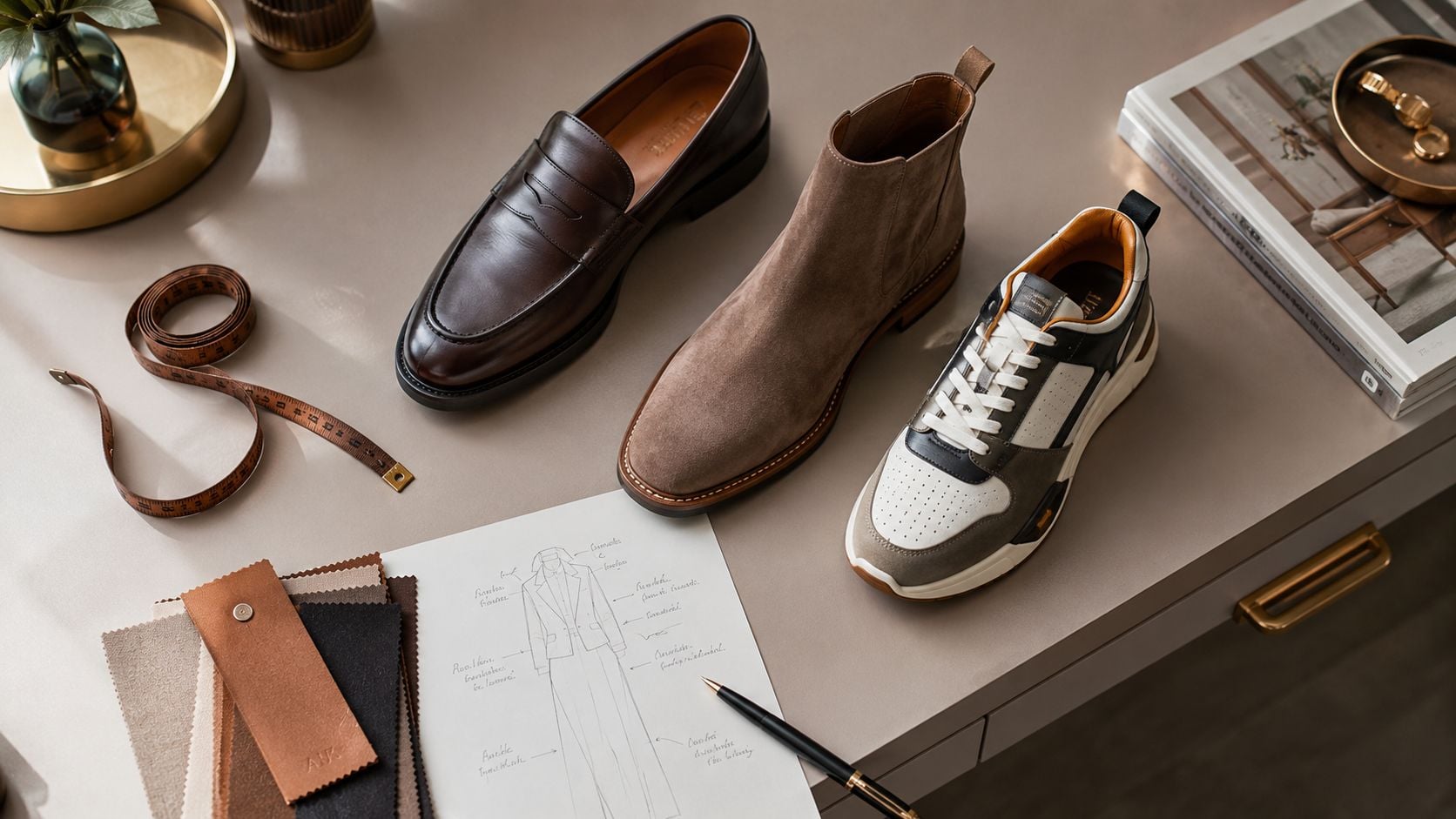
You're standing in front of a decision that looks simple and usually isn't. The shoes you're considering all look good online, the brand name feels safe, and the price tag makes you want to move fast. That's exactly how people end up with designer shoes that look right for ten minutes and feel wrong for years.
The better question is harsher and more useful, how to choose the perfect designer shoes for your style when you want them to work as part of your wardrobe, not just sit there looking expensive. Comfort and versatility now outrank pure status for many affluent shoppers, and that shift is the right one. BoF Insights reported that 72% of surveyed high-net-worth individuals now look for more comfortable shoes, 63% are more likely to seek versatile designer shoes, and more than half want more statement shoes than before, while the global designer-shoe market is projected to grow from $31 billion to $40 billion by 2027 (BoF Insights report). The point is obvious, a shoe has to earn its place across outfits, settings, and seasons.
Why Most Designer Shoe Choices Miss the Point
Shopping for designer shoes often starts in the wrong place. People begin with a trusted brand, then scroll until a silhouette looks appealing, then convince themselves the shoe will work because the label carries weight. This centers the label rather than the wearer, and it is why so many expensive pairs end up boxed after one event.
Brand first is the wrong order
A shoe can look polished and still miss its job. If it does not fit the shape of your foot, work with the way you dress, or hold up to the occasions you attend, it is not a strategic piece. It is a costly object with a logo on it.
Use a harder lens. Ask whether the shoe will expand your options across work, dinners, travel, and formal events. If it will not, keep moving. A useful designer shoe is one you can return to without inventing a reason to wear it.
Practical rule: If you can only picture the shoe in one outfit, it is too narrow for a serious wardrobe.
Luxury footwear also is not bought in a vacuum. In 2023, luxury footwear revenue reached US$29.15 billion, with 78.30% of sales still happening in physical retail and US$6.33 billion online (RunRepeat summary). That split matters because fit, feel, and in-person evaluation still shape good buying decisions. The right pair has to survive real life, not just look convincing on a product page.
The Fit Test Every Shoe Must Pass
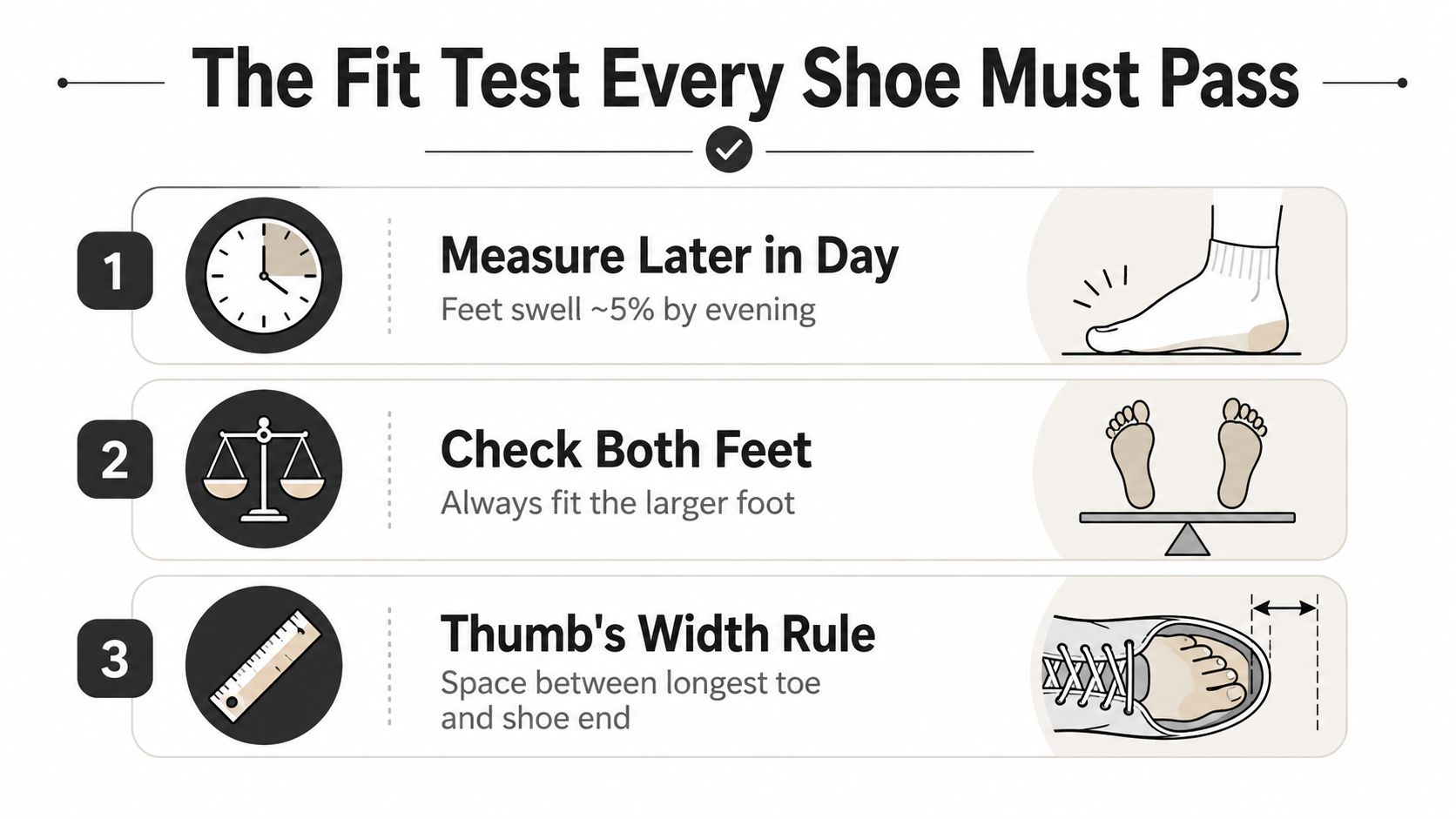
Fit is engineering, not optimism. Measure late in the day, because feet swell as the day goes on, and one guide notes that swelling can reach up to 5% by afternoon. Measure both feet, then fit the larger one, because many people have one foot up to ½ size longer or wider than the other (Alibaba fit guide).
Stand, walk, and turn
A shoe can fool you while you're sitting down. Stand in it first, then walk a few steps, then turn. That's where the failures show up. The toe box shouldn't compress your toes, the heel shouldn't slip, and the shoe should feel balanced as you move.
Another useful rule from expert guidance is the clearance test. A properly fitted dress shoe should leave 3–5 mm of space beyond the longest toe when you're standing, with zero heel slippage and no lateral compression across the forefoot (Alibaba dress-shoe guide). If the heel counter doesn't grip securely, or if the shoe bends too easily at the heel, walk away. That's weak structure, not broken-in charm.
Width matters as much as length
Don't let sizing labels distract you. Width changes the whole experience, especially in designer shoes that run narrow or have a sculptural shape. Look for standardized width options such as N, M/B, W/D, and WW/EE when you compare across brands (Cedar and Lily Clothier).
A shoe that “almost fits” in length but crushes the forefoot is still the wrong shoe.
And no, leather will not save a bad fit. It can help with small pressure points, but if the shoe is too small, stretching won't make it wearable. That's a common trap, and it's expensive one.
Reading Craftsmanship the Way Buyers Do
A high price doesn't tell you much by itself. Craftsmanship does. What matters in the hand and under the eye is whether the shoe looks built, not just decorated.
What to check before you hand over the card
Start with the stitching. You want even spacing, clean lines, and no loose ends. Then check the sole finishing, the consistency of logos or engravings, and how the upper meets the sole. Sloppy joins and uneven finishing are not minor flaws, they're signs the shoe will age badly.
Materials matter, but they matter less than construction. Calfskin, suede, and exotic finishes can all be used well or poorly. The better question is whether the shoe has the internal structure to hold its shape and whether it can be repaired later. That's where construction types like Goodyear, Blake, and cemented become useful. They don't just describe how the shoe was made, they tell you a lot about repairability and expected lifespan.
What the hand should tell you
Pick up the shoe and look at the heel counter. It should hold shape instead of collapsing like soft packaging. Press the upper-to-sole bond and see whether it feels secure. If the shoe looks delicate in the wrong way, it probably is.
Buyer's rule: Ignore the slogan on the box and inspect the mechanics of the shoe.
The strongest buying habit is to separate marketing language from visible engineering. “Handmade in Italy” can be true and still irrelevant if the stitching, sole finish, or heel structure are weak. If you're paying for a strategic piece, the construction has to earn the number.
Matching Shoes to the Wardrobe You Actually Wear
The best shoe isn't the loudest one. It's the one that fits the rhythm of your week. Some shoes should lead the outfit, others should support it, and that decision comes before color, heel height, or decoration.
Lead the outfit or support it
If your wardrobe is mostly structured, fitted, and neutral, a shoe can carry more personality. If your clothes already do a lot visually, the shoe should step back. That's the basic lead-versus-support decision, and it keeps your outfits from fighting themselves.
Vamp height changes the line of the leg. Lower vamps visually lengthen the leg line, while higher vamps shorten it, so don't treat that detail as decorative trivia. Heel shape and toe-box geometry also change how much of the foot is visible and how polished the whole silhouette feels.
Three real wardrobe scenarios
For a workday wardrobe, choose a shoe that works with trousers, a skirt hem, and a blazer without needing a special occasion. For a travel-light capsule, pick a pair that can move from airport to dinner without looking misplaced. For a formal calendar, go with a silhouette that still reads clean at the hemline and doesn't need heavy styling to make sense.
The point is frequency of use, not fantasy use. A shoe that only works once a season is expensive clutter unless that one event is central to your life. A better purchase is the one that shows up repeatedly because it belongs.
Heritage Houses Versus Emerging Designers
Heritage and newer labels solve different problems. Heritage houses often give you more refined lasts, more consistent materials, repair networks, and silhouettes that already know how to live in a wardrobe. Emerging designers often give you fresher shapes, sharper identity, and a more immediate point of view.
Use each one for the right job
Choose heritage for foundation pieces you'll repeat for years. Those are the shoes that need to hold up to regular wear and survive shifts in styling. Choose emerging designers for accent pieces that refresh a stable base, especially when you want a more distinctive profile without rebuilding your whole wardrobe.
The right label depends on the use case, not the reputation. A strong archive doesn't matter if the last doesn't suit your foot. A new name doesn't matter if the return policy is weak and the sizing is unpredictable.
Ask the same questions either way
- Return and exchange terms: Check whether you can test the fit without being trapped.
- Resoling and repair options: A shoe without a repair path is a shorter investment.
- Sizing consistency: Compare the brand against pairs you already own, not against hope.
- Authentication and provenance: Make sure the seller can verify what you're buying.
Feinheit FZ LLC fits into that same practical framework as one retail option, because it offers authenticated designer clothing, shoes, bags, and accessories through selected luxury and premium brands. That matters only insofar as the seller supports confidence at the point of purchase, which is the standard.
Investment Thinking Versus Trend Chasing
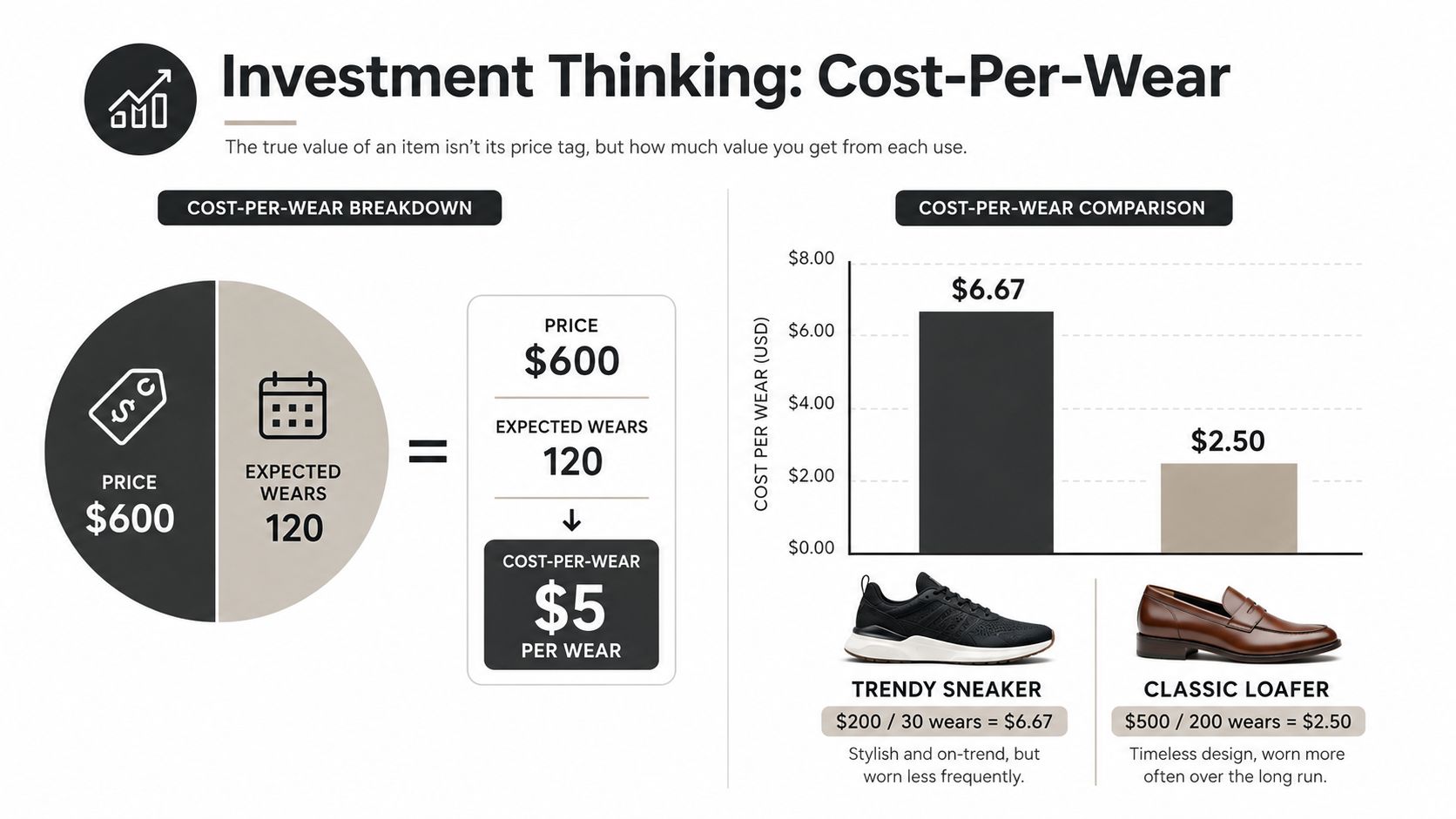
Cost-per-wear is the cleanest way to stop overpaying for fashion that won't work hard. It's just price divided by realistic wears over a realistic lifespan, adjusted for how you live. That math often punishes trend pieces faster than buyers expect.
The math changes the conversation
One $900 shoe worn 200 times costs $4.50 per wear. Three $300 trend pieces worn 30 times each cost $10 per wear across the set, and you still end up with three shoes that may all feel dated at the same time. The inversion is obvious once you stop thinking in purchase price and start thinking in use.
Trend-forward shoes also carry a sharper obsolescence risk. They can look right this season and feel tired sooner than expected, which hurts both resale and wardrobe flexibility. A less-hyped silhouette from a heritage house can outperform a loud fashion shoe if it keeps showing up in real outfits.
The questions that matter more than the logo
Before you buy, ask whether the shoe can be resoled, whether it can accommodate orthotics if needed, and whether it can survive your actual use case. If the answer is no on any of those points, it's a weak style investment, no matter how good the campaign looks.
If you're comparing options and want a wider market view, the sale page for designer shoes on sale can be useful as a pricing reference, but only after you've decided what kind of shoe deserves your money. Price is the last filter, not the first one.
Buying With Confidence and Caring for What You Choose
Buy the shoe like you expect to keep it. That means checking return and exchange terms, verifying authenticity and provenance, and confirming repair pathways before you commit. Keep the original packaging and receipts, because resale value depends on documents as much as condition.
What to do the day the shoes arrive
Try them on at home late in the day, not in the morning when your feet are at their smallest. Walk on a clean surface, check the heel grip, and make sure the toe box still feels open once you've stood in them for a while. If anything feels borderline, don't talk yourself into it.
The care routine is simple and essential. Rotate pairs between wears so moisture doesn't build up in one shoe. Use shoe trees for structure. Condition the material on a schedule that matches the leather or suede, and take the shoe to a cobbler when the sole or heel starts showing strain instead of waiting until the damage is obvious.
For product imagery, fit reviews, and catalog workflows, MerchLoom's batch image processing tips are useful background if you're comparing visuals across options and want to be more systematic. That kind of discipline helps before the purchase, but protection starts after you own the shoe.
One detail from thefeinheit's offering belongs in the buying conversation too, because it reflects the kind of seller that supports ownership confidence. The brand emphasizes guaranteed authenticity, complimentary worldwide shipping on qualifying orders, and dedicated support, which are all practical concerns when you're buying a shoe that should last.
At theFeinheit, luxury is about finding pieces that multiply your options, not consume your budget. One strategic investment beats five impulse purchases. Explore our collection of over 13,000 products from 160+ leading brands to build wardrobe infrastructure that endures. Discover your power at theFeinheit.
If you want designer shoes that work as hard as the rest of your wardrobe, start with fit, then inspect construction, then judge whether the silhouette suits your life. Visit Feinheit FZ LLC and choose shoes that support real outfits, real wear, and real ownership confidence.