
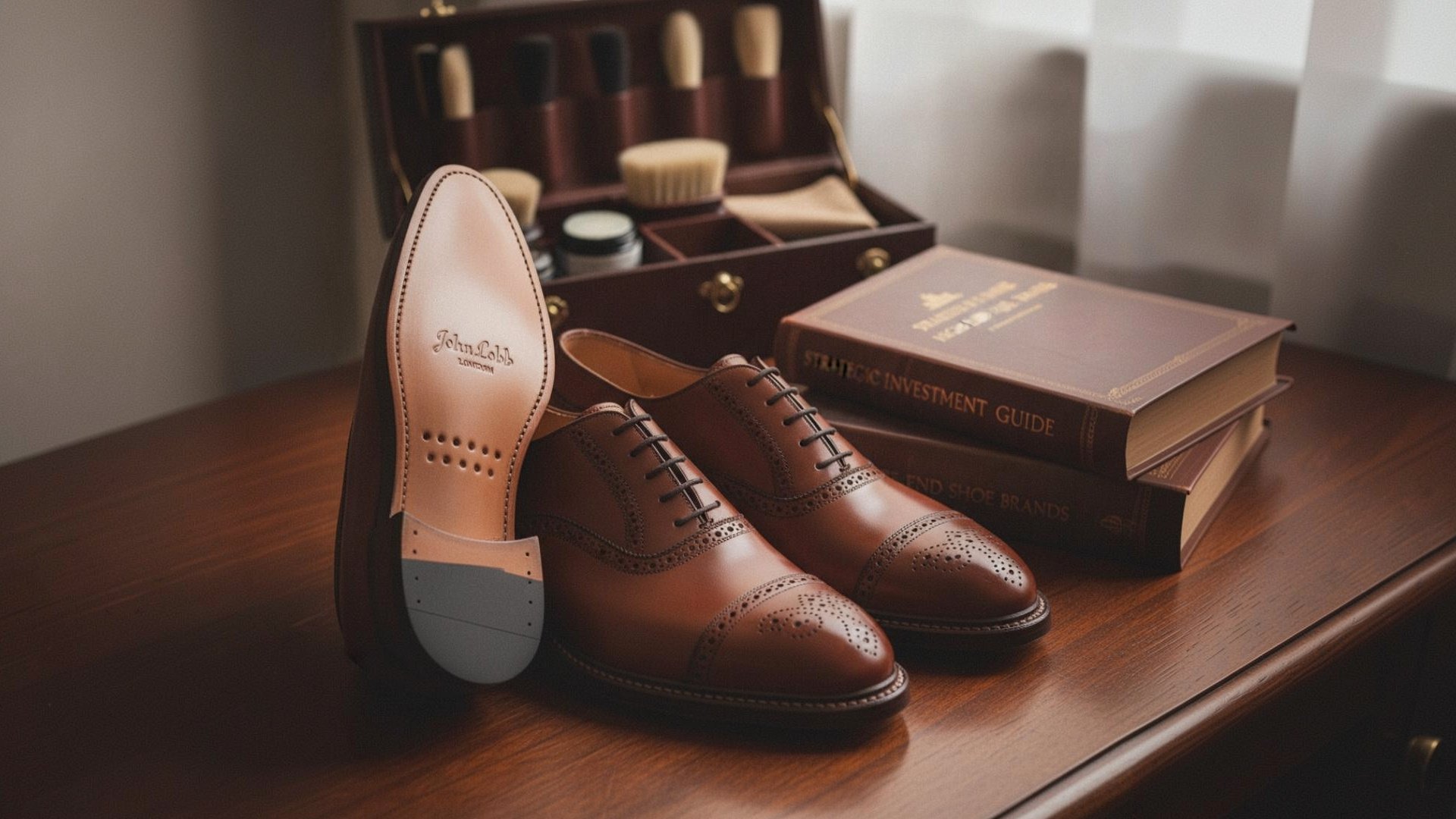
Most advice about high end shoe brands gets the first principle wrong. It treats price as proof of quality, and logo visibility as proof of taste. Neither tells you much about whether a shoe will hold shape, fit consistently, accept maintenance well, or keep earning its place in your rotation years from now.
The better lens is engineering. Look at the last, the leather selection, the sole configuration, the finishing discipline, and the brand's willingness to support ownership after purchase. That's where long-term value lives. A shoe that works across tailoring, formal settings, and polished casual use becomes a foundation piece. Its cost-per-wear math improves every time you reach for it without second-guessing the decision.
That logic also explains why the category is so top-heavy. A 2026 projection says the top ten luxury footwear brands, including Gucci, Prada, Chanel, Balenciaga, Christian Louboutin, Jimmy Choo, Salvatore Ferragamo, Manolo Blahnik, Alexander McQueen, and Valentino, control between 35% and 40% of worldwide luxury footwear sales, according to this luxury footwear market share summary. Buyers keep returning to houses that have already earned trust.
That preference for workmanship over noise is the same instinct behind Haute Black's watchmaking experiences. You're buying the process, not just the object.
1. John Lobb
John Lobb is the cleanest answer for someone who wants high end shoe brands to function as wardrobe infrastructure, not decoration. The house does refined ready-to-wear exceptionally well, and its made-to-order and bespoke services give you a path upward once you know your fit and preferences. If your work requires authority without visible effort, start here.
The appeal is restraint. Models like the Lopez loafer and the City line sit in that rare zone where the proportions read formal, but never stiff. John Lobb understands that conservative shape is an advantage when you want one pair to multiply your options across suiting, business travel, client dinners, and ceremonies.
Where John Lobb earns its place
Use John Lobb's official site to study how the brand separates ready-to-wear from more personalized programs. That structure matters because it lets you enter at the level that makes sense, then refine your choices once you know which last works for your foot.
- Best use case: Formal offices, boardrooms, weddings, and any environment where understatement signals professional authority.
- Strong buying logic: Calf and suede options, leather or rubber sole choices, and broad U.S. retail visibility make try-ons easier than with many niche shoemakers.
- Main trade-off: You're paying heavily for finishing discipline and consistency, not experimentation.
Practical rule: Buy John Lobb when you already know you prefer quiet footwear that disappears into the rest of the outfit while making everything around it look more resolved.
If you're building around cost-per-wear thinking, this strategic summer investment guide is the right companion mindset. The point isn't to own more shoes. It's to own the pairs that cover the most ground with the least friction.
Who should skip it
Don't choose John Lobb if you want visible flair, aggressive patina, or fashion-led shape. Other brands on this list do that better. John Lobb is for the buyer who sees footwear as a structural decision and wants sizing consistency once the right last is established.
There's also a price reality. The brand's bespoke territory sits at the far end of the market, and existing coverage often notes bespoke shoes from makers like John Lobb can exceed the highest luxury brackets without offering reliable mainstream cost-per-wear analysis, as discussed in this video commentary on high-end footwear pricing. That doesn't make the purchase irrational. It means you should buy it for precision and longevity of use, not for the comfort of easy financial justification.
2. Berluti
Berluti is what you buy when subtle construction isn't enough and you want finish to carry emotional weight too. Among high end shoe brands, it has one of the clearest visual identities. The patinated Venezia leather and Scritto detailing give the shoes a signature without relying on loud hardware or oversized branding.
That makes Berluti unusually specific. If John Lobb is your quiet operator, Berluti is your controlled statement. It still works in formal wardrobes, but it changes the center of gravity. People notice the surface treatment first.
Why Berluti works for the right buyer
The strength of Berluti is that its ready-to-wear, made-to-order, and bespoke tiers all feed the same idea. You're buying shape plus finish. Use Berluti's official website to compare categories, because the difference between a disciplined everyday pair and a more expressive one often comes down to patina depth, toe shape, and leather treatment rather than silhouette alone.
A smart Berluti purchase usually falls into one of two lanes:
- First lane: A dark, restrained patina for tailoring, business dinners, and evening use.
- Second lane: A more pronounced finish for buyers whose personal presence benefits from visible individuality.
- Avoid this mistake: Don't pay Berluti prices for a model whose hand-finished surface you don't actively value. The patina is the point.
Berluti makes sense when you want the shoe to carry part of the conversation.
The trade-off you should accept upfront
Berluti is expensive even by top-tier standards, and the value depends almost entirely on whether its aesthetic language matches your wardrobe. If you wear mostly severe business tailoring and avoid surface variation, much of what you're paying for will go unused. If your wardrobe includes textured jackets, darker jewel tones, or richer leather accessories, Berluti starts to look much more rational.
This also sits inside a wider trust issue in online luxury footwear. Verification guidance remains weak across the category, especially for fashion-led and collectible shoes, while a 2024 to 2026 trend summary points to a 35% increase in demand for ultra-luxury sneakers among Gen Z in a market where buyers often lack clear authenticity standards beyond logos, according to this LinkedIn market commentary. Berluti isn't a sneaker-first brand, but the lesson carries over. Buy from channels that can support ownership confidence, not just access.
3. Edward Green
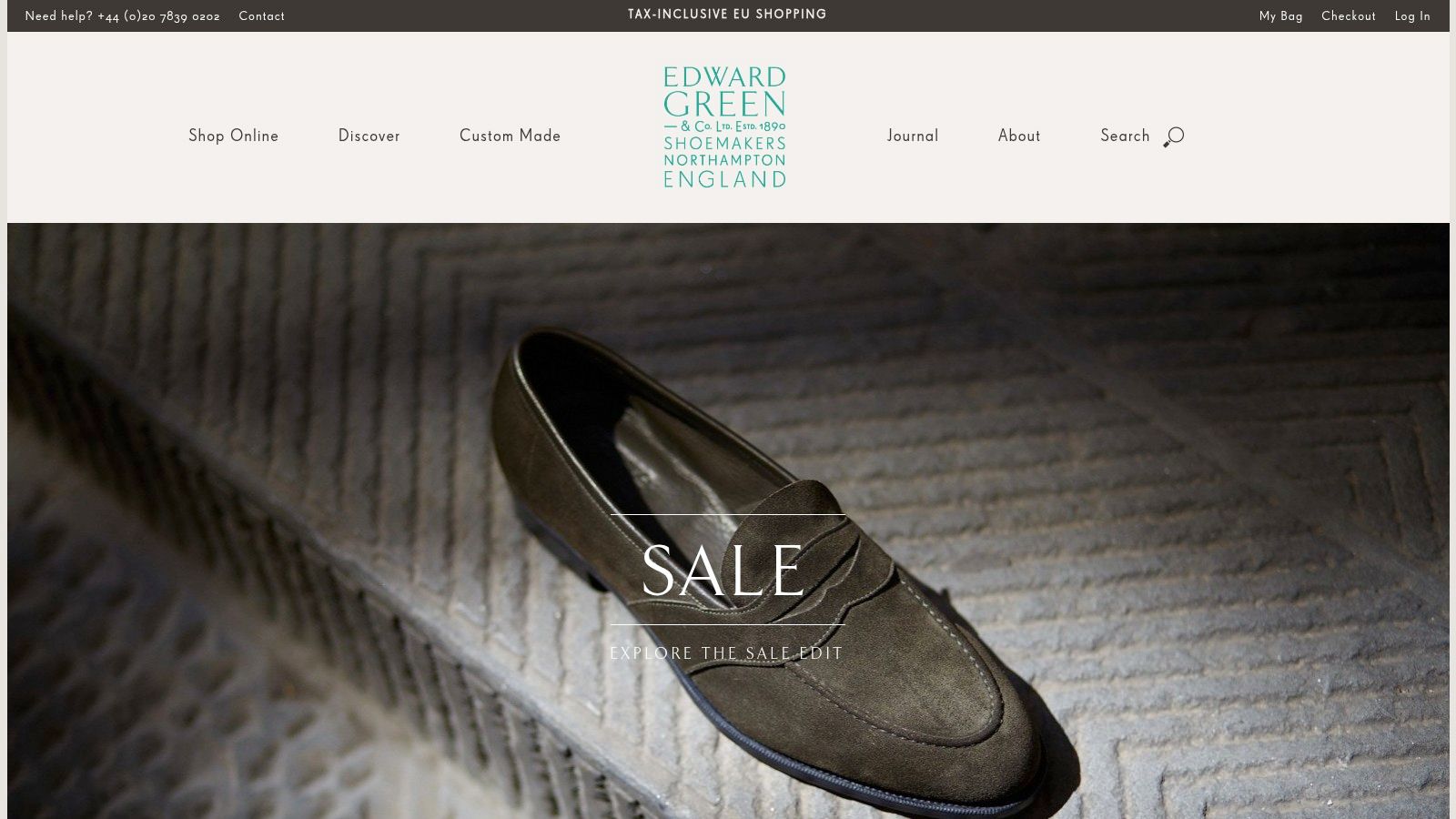
Edward Green is the recommendation I give to buyers who care most about discipline. Not flash. Not novelty. Discipline. Its bench-made Goodyear-welted shoes from Northampton have a level of control that experienced buyers notice immediately in the lines, stitching, leather selection, and finishing consistency.
This is one of the safest serious purchases in the category. Models like the Piccadilly loafer and the Dover split-toe have enough identity to matter, but not so much personality that they trap you in narrow use cases. They pair as well with tailoring as they do with polished casual trousers and knitwear.
Fit first, then model
Go to Edward Green's official website with one question in mind. Which last suits your foot? The brand's strength isn't only its finishing. It's the seriousness around fit guidance, width options, and shape distinctions.
That matters more than most buyers admit. A beautifully made shoe you tolerate isn't an investment. It's an expensive object you avoid wearing.
- Best first purchase: A dark loafer or cap-toe model with the broadest context flexibility.
- Why enthusiasts stay loyal: The finishing is consistently refined, and the brand doesn't chase short-lived design language.
- What to watch: If you want bold Italian energy or more experimental styling, Edward Green will feel too restrained.
Buying filter: Choose Edward Green when your priority is repeat wear across formal and polished casual contexts, with as little fit uncertainty as possible.
Where it sits in the market
Edward Green benefits from a wider consumer pattern in luxury footwear. In the U.S. luxury footwear segment, high-end shoe brands such as Gucci, Prada, and Loro Piana posted a 68% user satisfaction score on craftsmanship and material durability, versus a 54% average for the broader category, based on 2,400-plus respondents in the Grand View Research Voice of Consumer report on U.S. footwear. Edward Green wasn't named in that benchmark, but the implication is useful. Buyers in this tier do recognize a meaningful difference in workmanship.
That's exactly where Edward Green earns its keep. Not in spectacle. In ownership confidence.
4. Gaziano & Girling
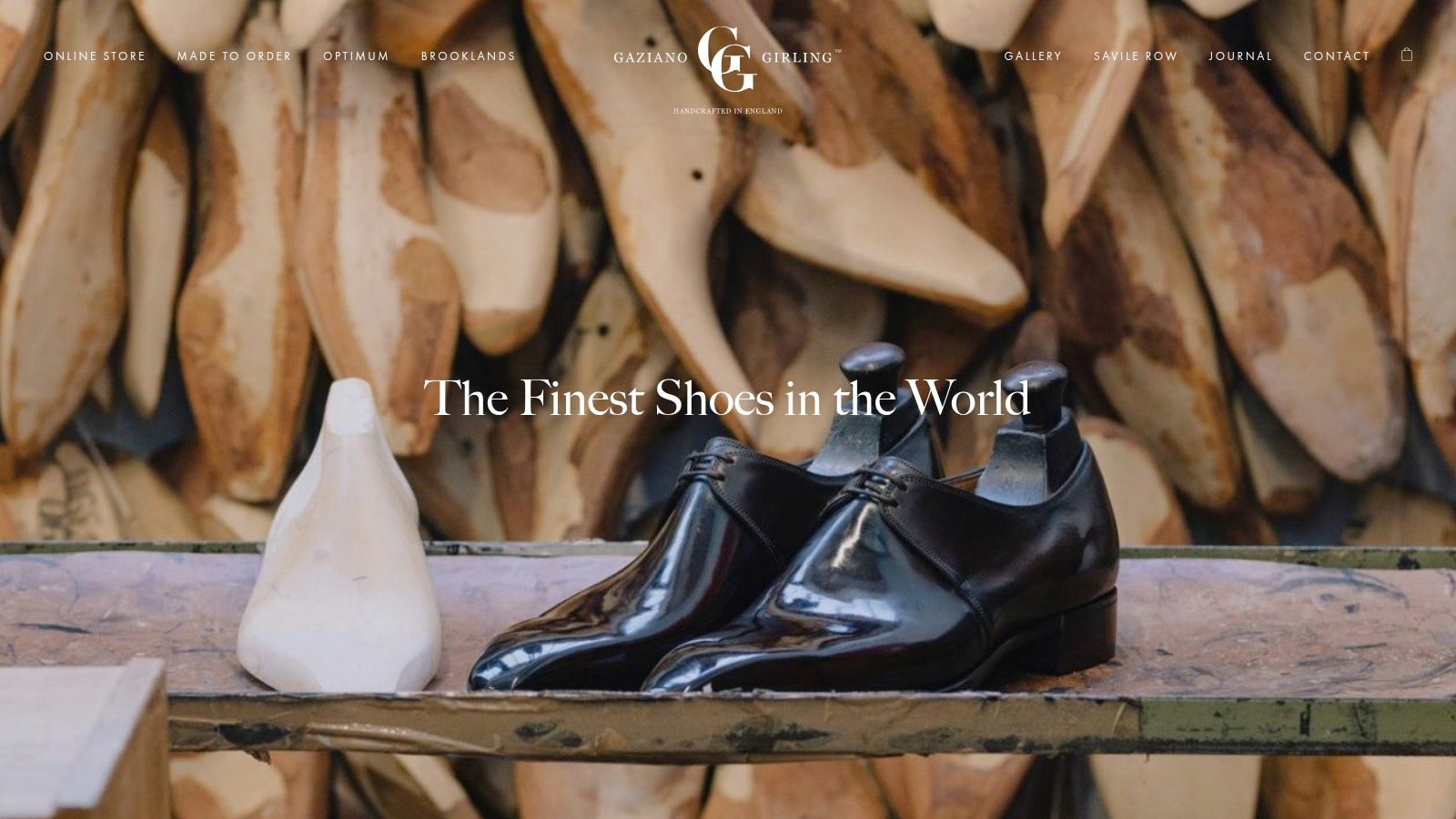
Gaziano & Girling is for the buyer who respects British shoemaking but finds some heritage houses too predictable. This brand brings bespoke-informed intensity into ready-to-wear. The waists are sharper, the lasts are more sculpted, and the overall silhouette has more drama without slipping into gimmick.
That difference shows up immediately in models built on lasts such as TG73 and MH71. The shoes have tension. They look drawn rather than merely assembled. If your tailoring is trim, your trousers break cleanly, and you care about line from ankle to toe, Gaziano & Girling makes a stronger visual argument than many older rivals.
What you're really paying for
Use Gaziano & Girling's official website to compare ready-to-wear, made-to-order, and full bespoke. The brand is unusually transparent about model details, and that helps experienced buyers separate meaningful construction choices from decorative extras.
A few reasons it stands out:
- Distinctive silhouette: The brand's lasts and beveled waists create a more assertive shape than traditional British makers.
- Bespoke influence: Even ready-to-wear often feels informed by a fitter's eye rather than a mass-market compromise.
- Ownership detail: Lasted shoe trees included on many ready-to-wear models support shape retention from day one.
Who gets the most value
Gaziano & Girling works best for collectors and repeat buyers, not first-time dress shoe shoppers. The sleeker shapes can be less forgiving, and the buying process requires more self-knowledge. You need to know whether your foot agrees with narrow, elegant proportions.
If it does, the result can be exceptional. The shoes project intent. They sharpen personal presence in a way that broad, rounder models do not.
Some shoes complete an outfit. Gaziano & Girling can define it.
The obvious downside is purchase friction for international buyers. Pricing is often presented in GBP, and you need to think through shipping, taxes, and exchange rates before treating the listed figure as final. That extra complexity is worth accepting only if the shape itself is central to why you're buying.
5. Santoni
Santoni is the practical Italian on this list. It doesn't ask you to commit to one rigid footwear identity. Instead, it gives you a broad menu of formal shoes, loafers, smart-casual options, and sneakers with a coherent house language built around sleek shape and hand-finished leather.
For many buyers, that breadth is a strength. High end shoe brands often become too narrow once you move from ceremony dressing to ordinary life. Santoni is one of the few names that can credibly serve both the formal side of your wardrobe and the parts of your week that need softer polish.
The smart way to buy Santoni
Start with Santoni's official website and ignore the temptation to browse by mood. Browse by role. Ask which pair will absorb the most use in your schedule.
That usually means one of three things:
- A formal anchor: A polished Oxford or derby if your calendar still includes suits and evening events.
- A flexible workhorse: A loafer or monk that moves between tailoring and refined casual dressing.
- A modern bridge: A leather sneaker if your environment is relaxed but still image-conscious.
Why it works
Santoni's hand-polished and hand-colored finish gives even simpler designs enough depth to feel considered. The Italian proportions are usually cleaner and more fluid than many English counterparts, which helps if your wardrobe includes softer tailoring, open-collar shirts, or lighter seasonal fabrics.
The caution is quality variation across lines. That isn't unusual in a broad brand, but it does matter. If you want the strongest investment logic, stay focused on the top end of the assortment and evaluate each model on construction and shape rather than assuming every pair performs at the same level.
Santoni is strongest when you need one brand to cover formal discipline and upscale casual use without changing your visual language.
This is also where Santoni can outperform more revered names in real life. Not because it's more prestigious, but because context flexibility often matters more than pedigree.
6. Christian Louboutin
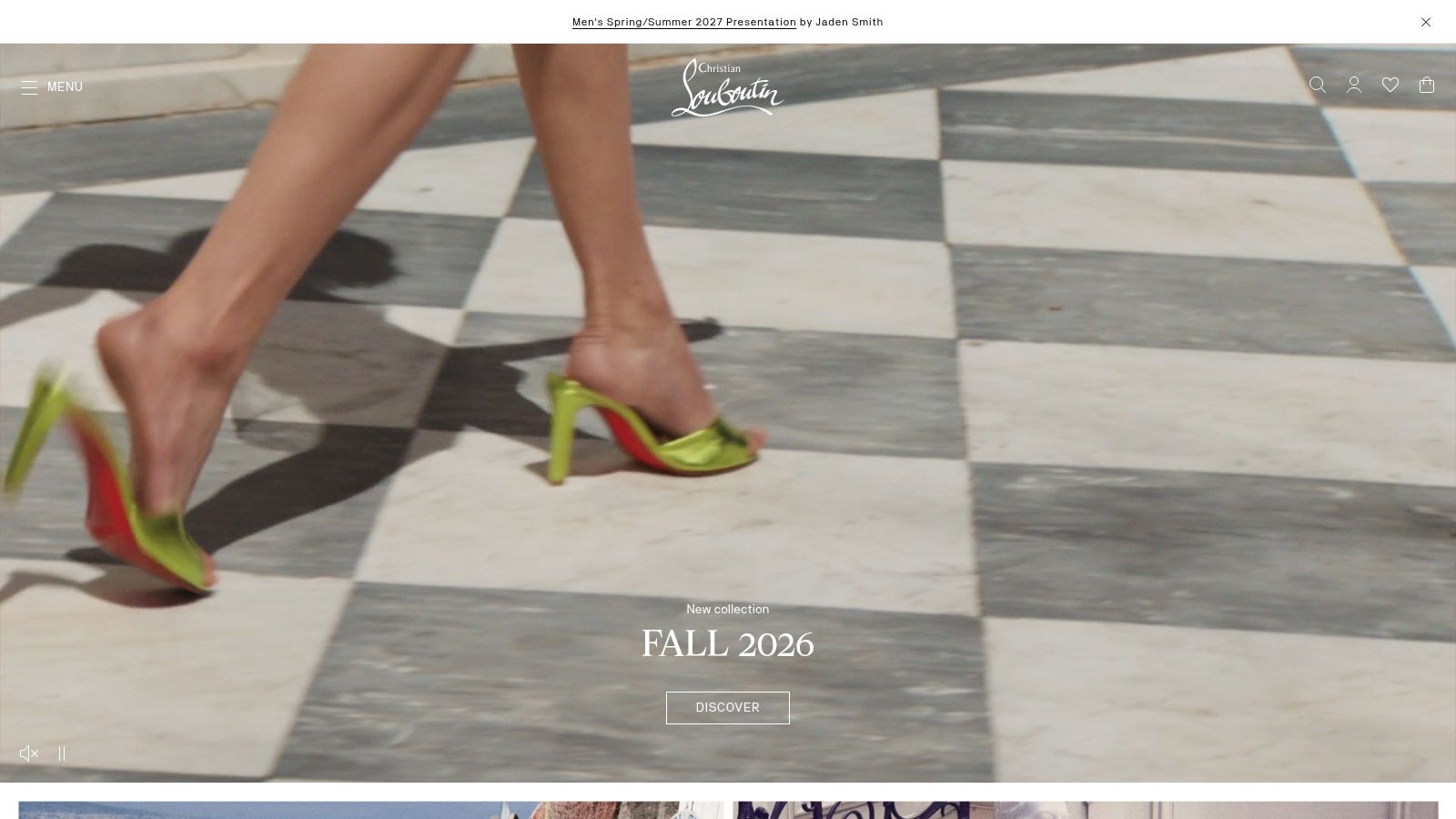
Christian Louboutin belongs on this list for one reason. Recognition has utility when the setting rewards it. If you attend events, fashion-led dinners, gallery openings, launches, or any room where visible brand language carries social weight, Louboutin can be a rational purchase.
That doesn't make every model a strategic piece. It means you should buy the brand selectively. The red lacquered sole is powerful, but it also narrows context flexibility. Some pairs work as signature evening footwear. Others are too dependent on season-specific energy to justify repeated wear.
Buy Louboutin for impact, not coverage
Use Christian Louboutin's U.S. site with strict discipline. The assortment includes men's and women's sneakers, loafers, boots, lace-ups, and heels, but the best purchases are usually the ones where the brand's visual identity aligns with a clear role in your wardrobe.
Think in these terms:
- Best category: Event shoes and statement evening pairs.
- Works for: Buyers who want personal presence to register immediately.
- Weakest use case: Quiet, daily professional wardrobes where visible branding works against you.
The investment case, realistically
Louboutin isn't the brand I'd choose for maximum cost-per-wear across ordinary life. It is the brand I'd choose when one pair needs to carry the visual load in rooms where subtlety disappears. That's a narrower form of utility, but it's still utility.
The legal history around the red sole also reinforces how central that single design element is to the brand's identity. A recent analysis of French litigation reviewed how Christian Louboutin's shoes and related design features have been protected in court, including disputes tied to its signature visual language, as explained in this legal review of Louboutin's copyright and trademark protection in France. That matters because you're not just buying a heel or loafer. You're buying one of the most recognizable visual codes in footwear.
For wider feet, caution is sensible. Several dress shapes run slim, and the brand is least forgiving when fit is even slightly off.
7. Manolo Blahnik
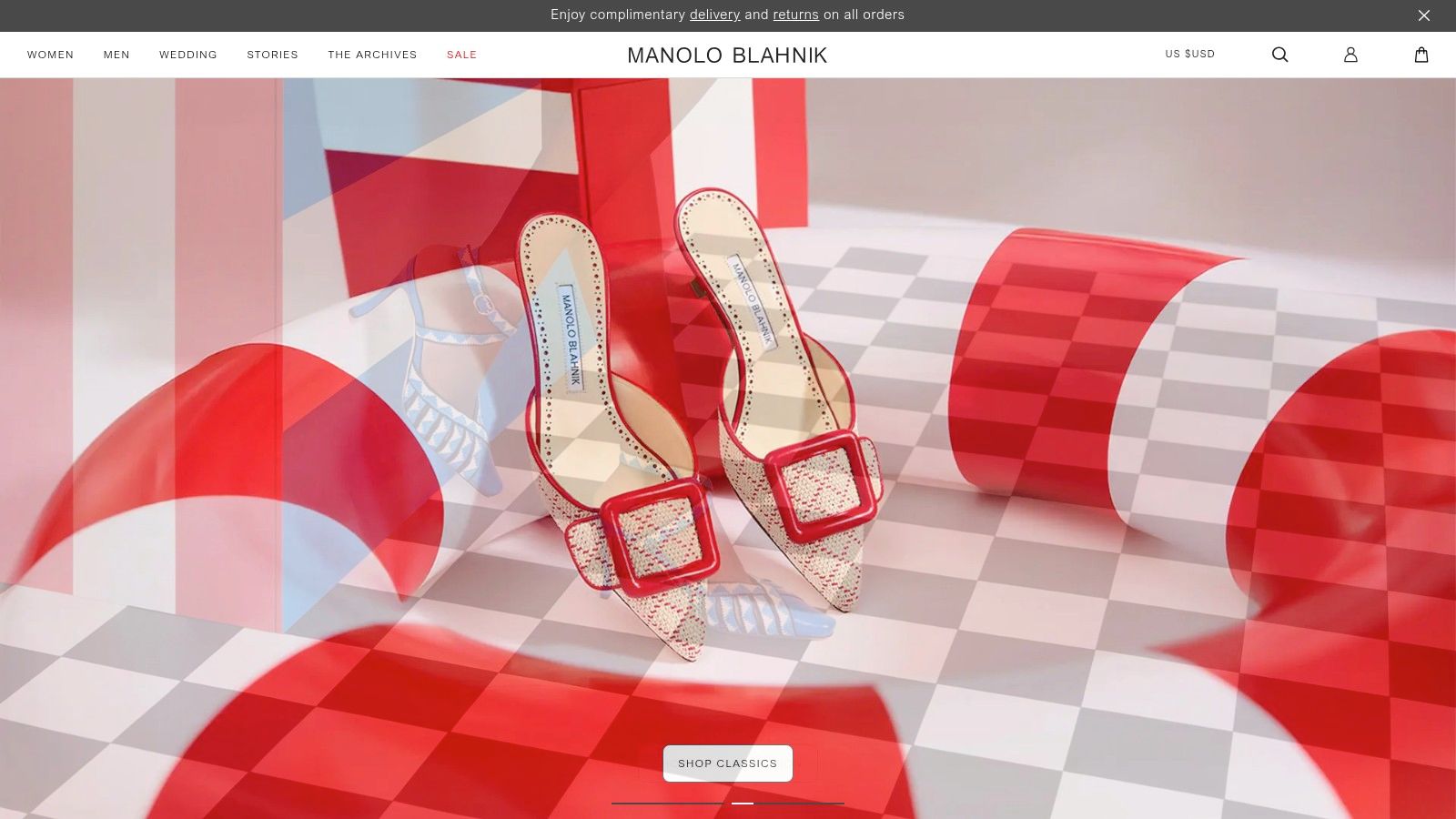
Manolo Blahnik is the specialist pick. It isn't trying to be all things to all wardrobes, and that's part of its value. For formal events, weddings, evening dressing, and shoes that need to communicate elegance without bulk, few brands have a stronger claim.
The core strength is silhouette. Pumps, slingbacks, and embellished evening styles from Manolo Blahnik retain relevance because the brand understands line better than most of the market. The shoes don't need to shout. The shape does the work.
Where Manolo Blahnik earns repeat use
Browse Manolo Blahnik's official website with category discipline. The brand's Timeless Icons offering is especially useful because it separates enduring signatures from transient seasonal noise.
That's where the investment logic gets clearer:
- Best purchase type: An icon silhouette you can return to for weddings, galas, black-tie events, and formal dinners.
- Why it keeps value in a wardrobe: The design language resists looking dated because it relies on proportion, not novelty.
- What limits it: Most lasts are dress-focused and narrow in purpose. This is not rugged footwear, and it's not casual infrastructure.
The right buyer for this brand
Manolo Blahnik works best for someone who already understands the role of occasion-specific shoes. If your life includes recurring formal events, the brand can justify itself through repeated high-impact use. If your wardrobe is mostly casual or office-relaxed, the same pair may spend too much time stored to make sense.
That said, there's a category reality in its favor. Manolo Blahnik appears among the ten brands projected to dominate global luxury footwear sales in 2026, grouped within the set controlling between 35% and 40% of the market in the previously cited market-share summary. You don't need to buy based on scale, but scale at this level usually reflects durable consumer trust.
A formal shoe doesn't need broad utility if it solves a recurring problem better than anything else in your closet.
Top 7 Luxury Shoe Brands Comparison
| Brand | Craftsmanship / Complexity | Price / Investment | Expected Outcomes | Ideal Use Cases | Key Advantages |
|---|---|---|---|---|---|
| John Lobb | High, bench/Bespoke & RTW, refined English‑French finishing | Very high | Long‑lasting, understated finish and reliable fit once last known | Formal/business and classic wardrobes | Exceptional finishing, consistent sizing, MTO/bespoke options |
| Berluti | High, hand‑patinated Venezia leather and atelier techniques | Very high | Unique hand patina and statement leather appearance over time | Fashion‑led luxury and statement formal pieces | Distinctive patinas, strong brand identity, bespoke services |
| Edward Green | High, traditional Northampton bench‑made Goodyear welt | High | Durable, well‑fitting shoes with refined British silhouettes | Tailoring, elevated casual and long‑term investments | Meticulous finishing, multiple lasts/widths, clear sizing guidance |
| Gaziano & Girling | High, bespoke‑informed RTW with sculpted lasts | High–Very high (GBP pricing) | Striking, sculpted silhouettes with bespoke quality in RTW | Collectors and buyers seeking bold, sartorial shapes | Dramatic lasts/waists, bespoke quality transferred to RTW |
| Santoni | Medium–High, hand‑polishing/hand‑coloring across wide lines | Mid–High (varies by line) | Versatile styles; durability varies by model/line | Dress, smart‑casual, and upscale sneakers | Sleek Italian styling, broad assortment, accessible entry points |
| Christian Louboutin | Medium, fashion‑driven construction with signature elements | High | High‑visibility, trend‑forward pieces; variable longevity by model | Fashion events, statement footwear and seasonal looks | Iconic red soles, strong retail/e‑commerce presence |
| Manolo Blahnik | High (women's dress focus), refined pumps and embellished work | High | Timeless, elegant dress shoes suited to formal occasions | Weddings, galas, formal events and fashion classics | Enduring silhouettes, strong dresswear heritage and craftsmanship |
Making a Strategic Footwear Investment
The mistake is thinking all expensive shoes solve the same problem. They don't. John Lobb and Edward Green are disciplined answers for formal authority and long-term repeat wear. Berluti and Gaziano & Girling serve buyers who want shape or finish to become part of their identity. Santoni is the practical bridge for people who need one brand to handle multiple contexts. Christian Louboutin and Manolo Blahnik are occasion-driven purchases, and they make sense when visibility or evening precision is part of the brief.
The strongest buying decisions come from role clarity. Buy the pair that covers a real gap in your rotation, fits the contexts you live in, and can stay in use long enough for cost-per-wear math to improve with every outing. Ignore prestige for its own sake. Focus on whether the brand's construction language, shape, after-purchase support, and context flexibility match your life.
That's also why it's useful to separate footwear into functions. You need quiet formal authority, polished daily range, expressive statement footwear, and event-specific precision. Most buyers don't need seven brands. They need two or three very well-chosen pairs from the right brands. A conservative loafer, a disciplined lace-up, and one evening or statement option will often do more for personal presence than a shelf full of poorly considered purchases.
Storage, maintenance, and buying channel matter too. A great shoe loses value quickly if the fit is wrong, the sole type doesn't match your use, or the seller can't support ownership confidence. If you buy online, prioritize retailers and brand channels that make authenticity and returns clear. That's especially important in categories where visual branding and collectible demand can distort judgment.
At theFeinheit, luxury is about finding pieces that multiply your options, not consume your budget. One strategic investment beats five impulse purchases. Explore our collection of over 13,000 products from 160+ leading brands to build wardrobe infrastructure that endures. Discover your power at theFeinheit.
If you want a contrast in summer footwear thinking, Yzy slides for summer show the opposite end of the spectrum. Minimal structure, immediate comfort, narrow use case. High-end shoes should be judged by a different standard. Feinheit FZ LLC is one relevant option if you want to shop authentic designer footwear through a single retail platform with broad brand coverage.
If you're ready to make a measured purchase instead of another impulse buy, explore Feinheit FZ LLC for authentic designer footwear and broader wardrobe pieces built around long-term use, context flexibility, and ownership confidence.